Showing posts with label Phoenix. Show all posts

Monday, July 20, 2026

Image of the Day: Marking Half a Century Since America First Landed on the Red Planet...

NASA's Viking 1 lander successfully touched down on Mars 50 years ago today.

NASA

Today marks 50 years since NASA reached the surface of Mars with the safe landing of its Viking 1 lander. Viking 1's sister craft Viking 2 triumphantly set foot on the Red Planet less than three months later...on September 3, 1976.

Over the next five decades, America would send more robotic probes to the Martian surface: Mars Pathfinder and its Sojourner rover in 1997, the Spirit and Opportunity rovers in 2004, the Phoenix Mars lander in 2008, the Curiosity Mars rover in 2012, the InSight Mars lander in 2018, and the Perseverance Mars rover with its Ingenuity Mars helicopter in 2021.

When will the next U.S. Mars landing occur? The Mars Sample Return mission was originally scheduled to launch this year. Alas, that was not meant to be.

Instead, three Mars helicopters dubbed Skyfall will be sent to the Red Planet courtesy of the nuclear-powered Space Reactor-1 Freedom mission in late 2028. Stay tuned!

Thursday, February 29, 2024

Goodnight, Odysseus... Thanks for Putting My Message on the Moon!

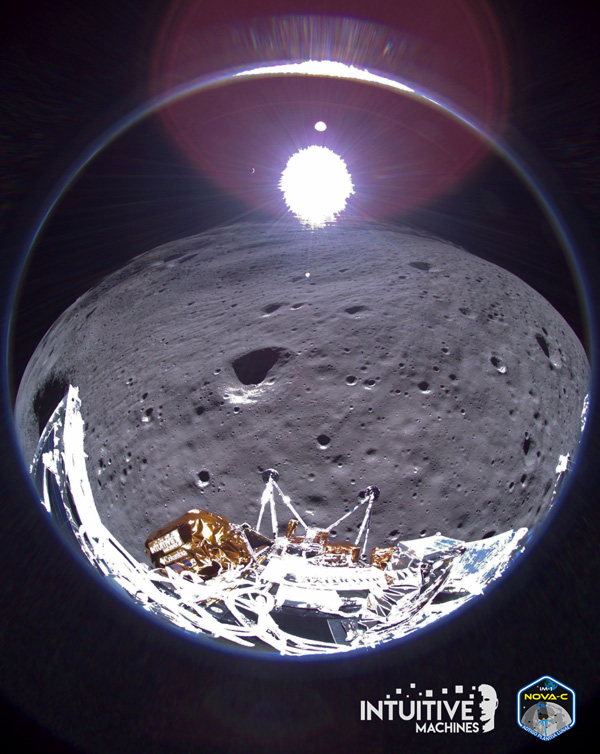
A photo of Intuitive Machines' Odysseus lander on the surface of the Moon.
Intuitive Machines

Happy Leap Day, everyone! Just thought I'd share these images that were released by Intuitive Machines this week as its Odysseus ('Odie') lunar lander was put to sleep due to low battery power today...nevertheless completing the successful seven-day IM-1 mission.

This mission was very significant to me. To NASA, this was the United States' first landing on the Moon since Apollo 17 in 1972. To the burgeoning commercial space industry, this was the first privately-built spacecraft to successfully touch down on the lunar surface.

And to myself, Odie's accomplishment marked the conclusion of me waiting around 15 years for a lander mission to come along that would put my virtual presence on the surface of the Moon! NASA's Lunar Reconnaissance Orbiter—which bears a microchip containing my name as well as those of 1.6 million other people—has been revolving around Earth's natural satellite since June of 2009.

But it wouldn't be till IM-1 this month that my dream of looking up at the Moon and thinking about how I had a presence intact on its surface, courtesy of a Lunagram message (shown at the very bottom of this Blog entry) that I submitted to a company named Lunaprise back on Christmas Day of 2020, became a reality.

Much thanks to Intuitive Machines, NASA (whose Commercial Lunar Payload Services initiative for the Artemis program made IM-1 a reality), SpaceX (which flawlessly launched Odie to the Moon on February 15), Lunaprise and the Arch Mission Foundation (which helped provide the NanoFiche disc that contains Lunagrams as well as the Arch Mission's Lunar Library) for giving me the opportunity to be a part of this historic endeavor!

There are other Moon-bound spacecraft, such as NASA's VIPER rover and Firefly's Blue Ghost lander, that will hopefully bring my presence to other locales on the lunar surface over the next two years. But it will be Odysseus, just like NASA's Phoenix lander (which was the first robotic probe to land my name on Mars back in 2008), that will be the lunar explorer I'm most fond of.

Ad Lunam.

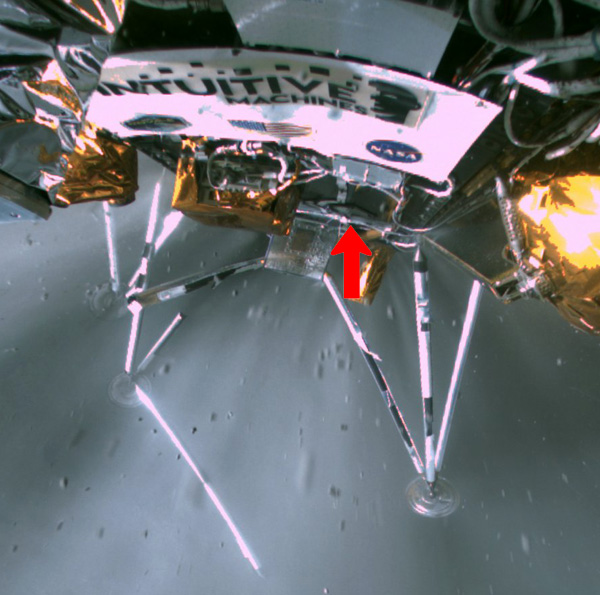
A photo of the NanoFiche disc, which contains my Lunagram as part of the Arch Mission Foundation's Lunar Library, attached to the Odysseus lander.
Intuitive Machines

A photo of the Odysseus lander, with the NanoFiche disc attached to its side, before the spacecraft was encapsulated by the twin payload fairings of its SpaceX Falcon 9 rocket.
SpaceX

This final photo that was transmitted by Odysseus to Earth on February 29, 2024, shows the spacecraft as it descended towards the lunar surface for a landing...on February 22, 2024.

The NanoFiche disc is visible above one of Odysseus' landing legs as the spacecraft touched down on the Moon...on February 22, 2024. The rough landing damaged the leg to the left.
Intuitive Machines

My Lunagram message (with most of its details blurred out) that's now on the surface of the Moon...thanks to the Odysseus spacecraft and the Lunar Library aboard it.

Thursday, January 04, 2024

Fly Your Name Aboard VIPER to the Lunar Surface!

An artist's concept of NASA's VIPER rover on the surface of the Moon.
NASA Ames / Daniel Rutter

NASA Invites Public to Send Names Aboard Artemis Robotic Moon Rover (Press Release)

NASA is inviting people to send their names to the surface of the Moon aboard the agency’s first robotic lunar rover, VIPER – short for Volatiles Investigating Polar Exploration Rover. The rover will embark on a mission to the lunar South Pole to unravel the mysteries of the Moon’s water and better understand the environment where NASA plans to land the first woman and first person of color under its Artemis program.

As part of the Send Your Name with VIPER campaign, NASA will accept names received before 11:59 p.m. EST on March 15. Once collected, the agency will take the names and attach them to the rover.

To add your name, visit:

https://www.nasa.gov/send-your-name-with-viper

The site also enables participants to create and download a virtual souvenir – a boarding pass to the VIPER mission featuring their name – to commemorate the experience. Participants are encouraged to share their requests on social media using the hashtag #SendYourName.

“With VIPER, we are going to study and explore parts of the Moon’s surface no one has ever been to before – and with this campaign, we are inviting the world to be part of that risky yet rewarding journey,” said Nicola Fox, associate administrator, Science Mission Directorate at NASA Headquarters in Washington. “Just think: Our names will ride along as VIPER navigates across the rugged terrain of the lunar South Pole and gathers valuable data that will help us better understand the history of the Moon and the environment where we plan to send Artemis astronauts.”

This campaign is like other NASA projects that have enabled tens of millions of people to send their names to ride along with Artemis I, several Mars spacecraft, and the agency’s upcoming Europa Clipper mission. It draws from the agency’s long tradition of shipping inspirational messages on spacecraft that have explored our solar system and beyond.

“Our VIPER is a game-changer,” said Daniel Andrews, VIPER’s project manager at NASA’s Ames Research Center in California’s Silicon Valley. “It’s the first mission of its kind, expanding our understanding of where lunar resources could be harvested to support a long-term human presence on the Moon.”

In late 2024, Astrobotic Technologies’ Griffin Mission One is scheduled to deliver VIPER to the lunar surface after launching aboard a SpaceX Falcon Heavy rocket from Cape Canaveral Space Force Station in Florida. Once there, VIPER will rely on its solar panels and batteries for its roughly 100-day mission to survive extreme temperatures and challenging lighting conditions, while powering a suite of science instruments designed to gather data about the characteristics and concentrations of lunar ice and other possible resources.

NASA’s VIPER delivery is part of its CLPS (Commercial Lunar Payload Services) initiative under the Artemis program. With CLPS, as well as with human exploration near the lunar South Pole, NASA will establish a long-term cadence of Moon missions in preparation for sending the first astronauts to Mars.

The rover is part of the LDEP (Lunar Discovery and Exploration Program), managed by the Science Mission Directorate at the agency’s headquarters and is executed through the Exploration Science Strategy and Integration Office. In addition to managing the mission, NASA Ames leads the mission’s science, systems engineering, real-time rover surface operations and flight software.

The rover hardware is designed and built by NASA’s Johnson Space Center in Houston, while the instruments are provided by NASA Ames, the agency’s Kennedy Space Center in Florida, and commercial partner Honeybee Robotics in Altadena, California.

****

My participation certificate for NASA's VIPER mission.

Sunday, November 26, 2023

On This Day in 2018: The InSight Lander Safely Touches Down on Mars...

An image of the Martian surface that was taken by a camera mounted to the robotic arm aboard NASA's InSight lander...on November 26, 2018.
NASA / JPL - Caltech

It was five years ago today that InSight (Interior Exploration using Seismic Investigations, Geodesy and Heat Transport)—NASA's successor to the Phoenix spacecraft that safely landed on Mars back in 2008—triumphantly touched down on the Red Planet.

InSight's goal for its mission, which began with a launch from California's Vandenberg Air Force Base over six months earlier (on May 5), was to study the Martian interior using two primary instruments: a seismometer (the Seismic Experiment for Interior Structure, or SEIS) and a heat probe (the Heat Flow and Physical Properties Package, or HP3). HP3, sadly, didn't accomplish its mission due to it being unable to penetrate the surprisingly-sticky soil at InSight's landing site.

SEIS, on the other hand, detected up to 1,300-plus marsquakes during its prolific, 4-year-long mission!

As shown below, it was an honor to have a virtual presence on InSight...along with other successful robotic Mars explorers like Phoenix as well as the Curiosity and Perseverance rovers. I've also submitted my name to fly on the Mars Sample Return mission, though it remains to be seen when this one will launch!

Happy Sunday.

The white arrow denotes the location of two small microchips that bear the names of 2.4 million people (including me) who submitted them online in 2015 and 2017, respectively.
NASA / JPL - Caltech

My participation certificate for NASA's InSight Mars mission.

Monday, August 07, 2023

Even with Its Mission Ended, Phoenix's Successor Continues to Make New Discoveries About the Red Planet...

A selfie that NASA's InSight Mars lander took with its robotic arm on December 6, 2018...10 days after arriving at the Red Planet.
NASA / JPL - Caltech

NASA InSight Study Finds Mars Is Spinning Faster (News Release)

Data sent by the spacecraft before it retired last December has provided new details about how fast the planet rotates and how much it wobbles.

Scientists have made the most precise measurements ever of Mars’ rotation, for the first time detecting how the planet wobbles due to the “sloshing” of its molten metal core. The findings, detailed in a recent Nature paper, rely on data from NASA’s InSight Mars lander, which operated for four years before running out of power during its extended mission in December 2022.

To track the planet’s spin rate, the study’s authors relied on one of InSight’s instruments: a radio transponder and antennas collectively called the Rotation and Interior Structure Experiment, or RISE. They found that the planet’s rotation is accelerating by about 4 milliarcseconds per year² – corresponding to a shortening of the length of the Martian day by a fraction of a millisecond per year.

It’s a subtle acceleration, and scientists aren’t entirely sure of the cause. But they have a few ideas, including ice accumulating on the polar caps or post-glacial rebound, where landmasses rise after being buried by ice.

The shift in a planet’s mass can cause it to accelerate a bit like an ice skater spinning with their arms stretched out, then pulling their arms in.

“It’s really cool to be able to get this latest measurement – and so precisely,” said InSight’s principal investigator, Bruce Banerdt of NASA’s Jet Propulsion Laboratory in Southern California. “I’ve been involved in efforts to get a geophysical station like InSight onto Mars for a long time, and results like this make all those decades of work worth it.”

How RISE Works

RISE is part of a long tradition of Mars landers using radio waves for science, including the twin Viking landers in the 1970s and the Pathfinder lander in the late ’90s. But none of those missions had the advantage of InSight’s advanced radio technology and upgrades to the antennas within NASA’s Deep Space Network on Earth.

Together, these enhancements provided data about five times more accurate than what was available for the Viking landers.

In the case of InSight, scientists would beam a radio signal to the lander using the Deep Space Network. RISE would then reflect the signal back.

When scientists received the reflected signal, they would look for tiny changes in frequency caused by the Doppler shift (the same effect that causes an ambulance siren to change pitch as it gets closer and farther away). Measuring the shift enabled researchers to determine how fast the planet rotates.

“What we’re looking for are variations that are just a few tens of centimeters over the course of a Martian year,” said the paper’s lead author and RISE’s principal investigator, Sebastien Le Maistre at the Royal Observatory of Belgium. “It takes a very long time and a lot of data to accumulate before we can even see these variations.”

The paper examined data from InSight’s first 900 Martian days – enough time to look for such variations.

Scientists had their work cut out for them to eliminate sources of noise: Water slows radio signals, so moisture in the Earth’s atmosphere can distort the signal coming back from Mars. So can the solar wind, the electrons and protons flung into deep space from the Sun.

“It’s a historic experiment,” said Le Maistre. “We have spent a lot of time and energy preparing for the experiment and anticipating these discoveries. But despite this, we were still surprised along the way – and it’s not over, since RISE still has a lot to reveal about Mars.”

Martian Core Measurements

RISE data was also used by the study authors to measure Mars’ wobble – called its nutation – due to sloshing in its liquid core. The measurement allows scientists to determine the size of the core: Based on RISE data, the core has a radius of roughly 1,140 miles (1,835 kilometers).

The authors then compared that figure with two previous measurements of the core derived from the spacecraft’s seismometer. Specifically, they looked at how seismic waves traveled through the planet’s interior – whether they reflected off the core or passed through it unimpeded.

Taking all three measurements into account, they estimate the core’s radius to be between 1,112 and 1,150 miles (1,790 and 1,850 kilometers). Mars as a whole has a radius of 2,106 miles (3,390 kilometers) – about half the size of Earth’s.

Measuring Mars wobble also provided details about the shape of the core.

“RISE’s data indicate the core’s shape cannot be explained by its rotation alone,” said the paper’s second author, Attilio Rivoldini of the Royal Observatory of Belgium. “That shape requires regions of slightly higher or lower density buried deep within the mantle.”

While scientists will be mining InSight data for years to come, this study marks the final chapter for Banerdt’s role as the mission’s principal investigator. After 46 years with JPL, he retired on August 1.

Source: Jet Propulsion Laboratory

****

Thursday, May 25, 2023

On This Day in 2008: The Phoenix Spacecraft Successfully Lands on Mars...

The Phoenix lander with the Martian Northern Plains in the backdrop.
James Canvin / NASA / JPL - Caltech / University of Arizona / Texas A&M University

15 years ago today, NASA's Phoenix Mars lander safely touched down on the Northern Plains of the Red Planet...successfully carrying out a mission that resulted in the confirmation of water ice beneath the soil of the Martian arctic.

Phoenix's mission lasted for almost six months—until NASA received a final radio signal from the spacecraft on November 2, 2008.

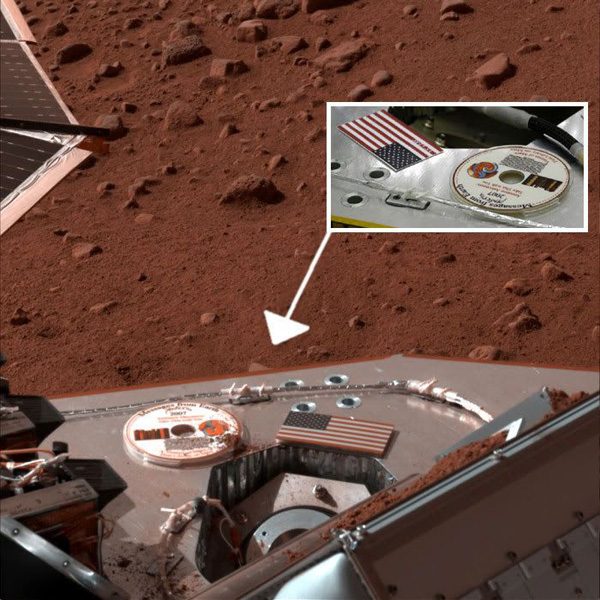
Sitting on Phoenix's flight deck as a legacy to this exciting endeavor is the Phoenix DVD.

Fabricated by The Planetary Society—a non-profit space advocacy group based in the California city of Pasadena (a few miles away from NASA's Jet Propulsion Laboratory)—the Phoenix DVD is a silicate disc designed to last for up to 500 years on the Martian surface!

The Phoenix DVD contains the names of 250,000 people who submitted them online between late 2006 and early 2007, as well as the literary works of such sci-fi authors as Isaac Asimov. This collection aboard the disc has been called the Visions of Mars by The Planetary Society.

It is a tremendous feeling to be a part of this time capsule on Mars' Northern Plains... Hail, Phoenix!

One of the first images to be beamed back from Phoenix in May of 2008 is this photo of the spacecraft's flight deck.  The inner pic shows the Phoenix DVD that was installed on the deck prior to launch in August of 2007.
Richard Par / NASA / JPL - Caltech / University of Arizona / The Planetary Society

Artwork of NASA's Phoenix Mars lander and a photo of the Phoenix DVD.
NASA / The Planetary Society

My certificate for NASA's Phoenix Mars mission.

Thursday, December 16, 2021

The Latest Update on the Mars Sample Return Mission...

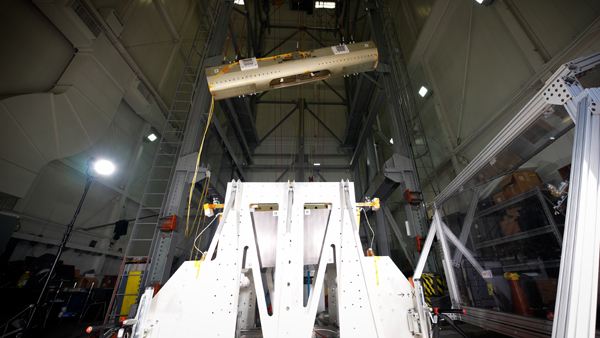
At NASA's Jet Propulsion Laboratory near Pasadena, California, a mockup version of the Mars Ascent Vehicle is released from a launch system that will be used during the 2026 Mars Sample Return mission.
NASA / JPL - Caltech

NASA Begins Testing Robotics to Bring First Samples Back From Mars (News Release - December 13)

Engineers are developing the crucial hardware needed for a series of daring space missions that will be carried out in the coming decade.

Testing has already begun on what would be the most sophisticated endeavor ever attempted at the Red Planet: bringing rock and sediment samples from Mars to Earth for closer study.

The multi-mission Mars Sample Return campaign began when NASA’s Perseverance rover landed on Mars this past February to collect Martian rock samples in search of ancient microscopic life. Out of Perseverance’s 43 sample tubes, four have been filled with rock cores and one with Martian atmosphere. Mars Sample Return seeks to bring select tubes back to Earth, where generations of scientists will be able to study them with powerful lab equipment far too large to send to Mars.

Getting those samples into terrestrial labs would take a decade and involve European partners and multiple NASA centers. ESA (the European Space Agency) is developing a rover for the effort, with engineers at NASA’s Glenn Research Center in Cleveland, Ohio, designing its wheels. The rover would transfer samples to a lander, being developed at NASA’s Jet Propulsion Laboratory in Southern California, that would use a robotic arm (developed by ESA) to pack the samples into a small rocket, called a Mars Ascent Vehicle, being designed by NASA’s Marshall Space Flight Center in Huntsville, Alabama.

The rocket would launch from the lander to deliver the sample capsule to an ESA spacecraft orbiting Mars. Inside the orbiter, the capsule would be prepared for delivery to Earth by hardware that a team led by NASA’s Goddard Space Flight Center in Greenbelt, Maryland, is developing. This preparation would include sealing the sample capsule within a clean container to trap any Martian material inside, sterilizing the seal, and placing the sealed container into an Earth-entry capsule before the return trip to Earth.

The Lander

To develop the lander, as well as the system that would help launch the sample-laden rocket from it, engineers at NASA’s JPL are drawing from a long history of Mars exploration: JPL has led nine successful Mars landings, including rovers and stationary landers. But the Sample Retrieval Lander would be the largest, heaviest spacecraft of its type to ever go to Mars, and the Mars Ascent Vehicle launching from it would be the first rocket ever fired off another planet.

This is where the testing comes in.

To carry and launch the Mars Ascent Vehicle, the lander needs to be a sturdy platform, weighing about 5,291 pounds (2,400 kilograms) – almost twice as heavy as Perseverance, which was lowered to the Martian surface with cables from a rocket-powered jet pack. The Sample Retriever Lander wouldn’t have a jet pack; its legs would have to absorb the impact of touchdown, relying on retrorockets to slow its descent, similar to recent Mars lander missions like InSight and Phoenix.

That’s why Pavlina Karafillis has been dropping a prototype lander – repeatedly – in a warehouse-like space at JPL. As test engineer for the Sample Retrieval Lander’s legs, she and her colleagues have been using high-speed cameras to observe this prototype’s legs slam onto a base. QR-code-like marks on each of the prototype’s “feet” help the cameras track the legs’ motion. The team uses slow-motion video to continually update their computer models, which help them understand how energy would be dispersed throughout the lander.

“The last step of the journey is really important,” Karafillis said. “There’s all kinds of landing conditions you have to take into account, like rocks, or really soft sand, or coming in at an angle. This is why we have to do all this testing.”

Source: Jet Propulsion Laboratory

****

Friday, August 06, 2021

Perseverance Update: Issues Arise as the Mars Rover Sets Out to Collect Its First Rock Specimen...

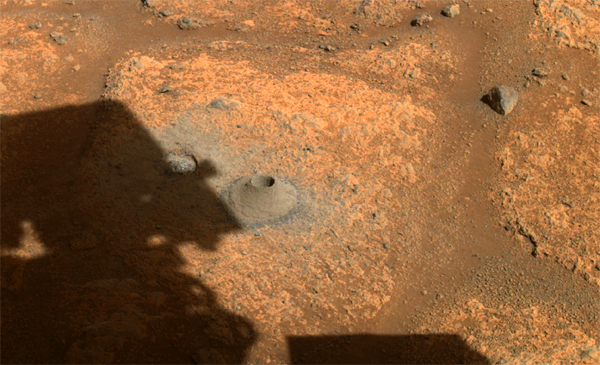
A close-up of the 'paver rock' where NASA's Perseverance Mars rover drilled a hole in preparation for its first rock-sampling attempt...on August 6, 2021.
NASA / JPL - Caltech

NASA’s Perseverance Team Assessing First Mars Sampling Attempt (Press Release)

Data sent to Earth by NASA’s Perseverance rover after its first attempt to collect a rock sample on Mars and seal it in a sample tube indicate that no rock was collected during the initial sampling activity.

The rover carries 43 titanium sample tubes, and is exploring Jezero Crater, where it will be gathering samples of rock and regolith (broken rock and dust) for future analysis on Earth.

“While this is not the ‘hole-in-one’ we hoped for, there is always risk with breaking new ground,” said Thomas Zurbuchen, associate administrator of NASA’s Science Mission Directorate in Washington. “I’m confident we have the right team working this, and we will persevere toward a solution to ensure future success.”

Perseverance’s Sampling and Caching System uses a hollow coring bit and a percussive drill at the end of its 7-foot-long (2-meter-long) robotic arm to extract samples. Telemetry from the rover indicates that during its first coring attempt, the drill and bit were engaged as planned, and post-coring the sample tube was processed as intended.

“The sampling process is autonomous from beginning to end,” said Jessica Samuels, the surface mission manager for Perseverance at NASA’s Jet Propulsion Laboratory in Southern California. “One of the steps that occurs after placing a probe into the collection tube is to measure the volume of the sample. The probe did not encounter the expected resistance that would be there if a sample were inside the tube.”

The Perseverance mission is assembling a response team to analyze the data. One early step will be to use the WATSON (Wide Angle Topographic Sensor for Operations and eNgineering) imager – located at the end of the robotic arm – to take close-up pictures of the borehole. Once the team has a better understanding of what happened, it will be able to ascertain when to schedule the next sample collection attempt.

“The initial thinking is that the empty tube is more likely a result of the rock target not reacting the way we expected during coring, and less likely a hardware issue with the Sampling and Caching System,” said Jennifer Trosper, project manager for Perseverance at JPL. “Over the next few days, the team will be spending more time analyzing the data we have, and also acquiring some additional diagnostic data to support understanding the root cause for the empty tube.”

Previous NASA missions on Mars have also encountered surprising rock and regolith properties during sample collection and other activities. In 2008, the Phoenix mission sampled soil that was "sticky" and difficult to move into onboard science instruments, resulting in multiple tries before achieving success. Curiosity has drilled into rocks that turned out to be harder and more brittle than expected. Most recently, the heat probe on the InSight lander, known as the “mole,” was unable to penetrate the Martian surface as planned.

“I have been on every Mars rover mission since the beginning, and this planet is always teaching us what we don’t know about it,” said Trosper. “One thing I’ve found is, it’s not unusual to have complications during complex, first-time activities.”

First Science Campaign

Perseverance is currently exploring two geologic units containing Jezero Crater’s deepest and most ancient layers of exposed bedrock and other intriguing geologic features. The first unit, called the “Crater Floor Fractured Rough,” is the floor of Jezero. The adjacent unit, named “Séítah” (meaning “amidst the sand” in the Navajo language), has Mars bedrock as well, and is also home to ridges, layered rocks, and sand dunes.

Recently, the Perseverance science team began using color images from the Ingenuity Mars Helicopter to help scout for areas of potential scientific interest and to look for potential hazards. Ingenuity completed its 11th flight Wednesday, Aug. 4, traveling about 1,250 feet (380 meters) downrange of its current location so that it could provide the project aerial reconnaissance of the southern Séítah area.

The rover’s initial science foray, which spans hundreds of sols (or Martian days), will be complete when Perseverance returns to its landing site. At that point, Perseverance will have traveled between 1.6 and 3.1 miles (2.5 and 5 kilometers) and may have filled up to eight of its sample tubes.

Next, Perseverance will travel north, then west, toward the location of its second science campaign: Jezero Crater’s delta region. The delta is the fan-shaped remains of the confluence of an ancient river and a lake within Jezero Crater. The region may be especially rich in carbonate minerals. On Earth, such minerals can preserve fossilized signs of ancient microscopic life and are associated with biological processes.

More About the Mission

A key objective for Perseverance’s mission on Mars is astrobiology, including the search for signs of ancient microbial life. The rover will characterize the planet’s geology and past climate, pave the way for human exploration of the Red Planet, and be the first mission to collect and cache Martian rock and regolith.

Subsequent NASA missions, in cooperation with ESA (European Space Agency), would send spacecraft to Mars to collect these sealed samples from the surface and return them to Earth for in-depth analysis.

The Mars 2020 Perseverance mission is part of NASA’s Moon to Mars exploration approach, which includes Artemis missions to the Moon that will help prepare for human exploration of the Red Planet.

JPL, which is managed for NASA by Caltech in Pasadena, California, built and manages operations of the Perseverance rover.

****

Thursday, March 25, 2021

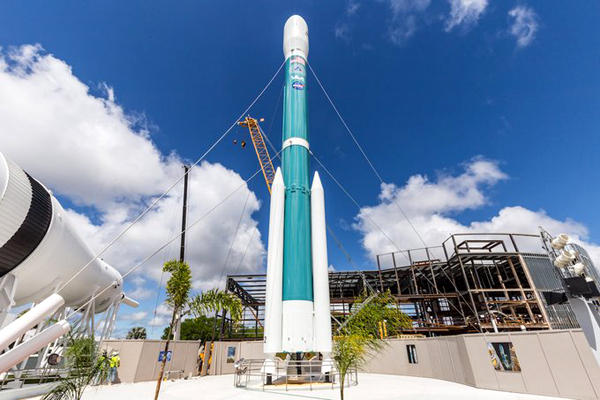
Photo of the Day: The Delta 2 Is Now Immortalized at the Rocket Garden in Florida...

A retired Delta 2 launch vehicle is now on display in the Rocket Garden at the Kennedy Space Center Visitor Complex in Florida...as of March 23, 2021.
United Launch Alliance

Just thought I'd share this image of the Delta 2 rocket that is now on display in the 'Rocket Garden' at the Kennedy Space Center Visitor Complex in Florida! This retired launch vehicle was officially unveiled to the public two days ago...and now joins space shuttle Atlantis on my list of historic vehicles that I want to see when I make another trip to NASA's Kennedy Space Center (KSC) in Florida.

I was planning to re-visit KSC this year to see the Space Launch System (SLS) stand tall at Launch Complex 39B, but 1.) The COVID-19 pandemic gave me second thoughts about flying to Florida—a Republican-run coronavirus hotspot—this year (even when I hopefully get vaccinated next month), 2.) The first launch of SLS on Artemis 1 will most likely be postponed to early 2022 after it took two attempts to conduct a successful Green Run hot fire test at Stennis Space Center in Mississippi, and 3.) I just put the finishing touches on paying off a major credit card debt using my $1,400 stimulus payment last week. (Thank you, President Biden!) But I might change my mind.

So why am I fond of the Delta 2, you ask? It was responsible for launching Mars Pathfinder, the Phoenix Mars lander, the Kepler telescope and the Dawn spacecraft to the cosmos over the past 25 years. Click on this page to know why these missions—among many, many more—mean so much to me! Happy Thursday.

Friday, January 15, 2021

InSight Update: The Lander's Heat Probe Will Cease Operations on the Red Planet...

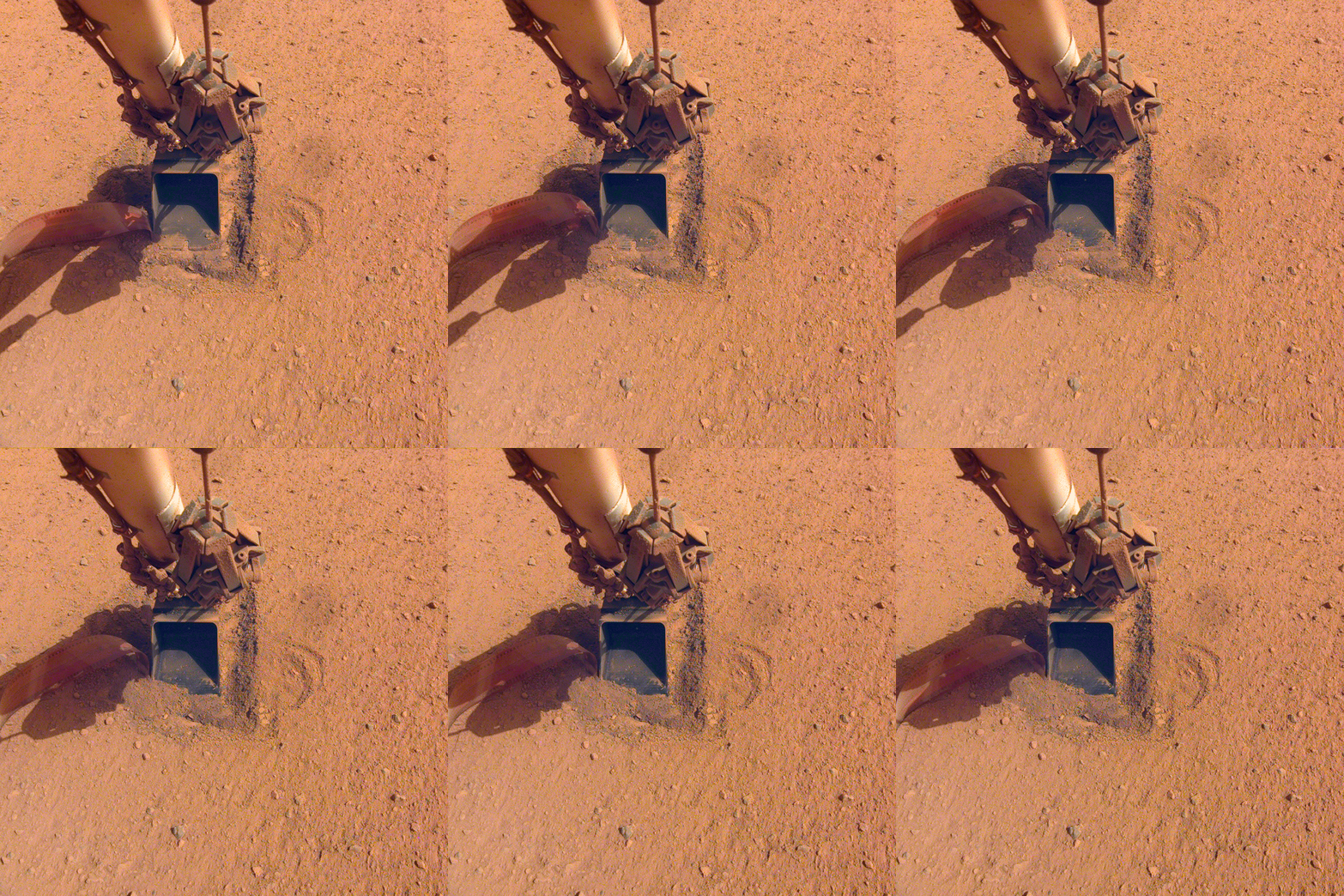
An animated GIF showing the InSight Mars lander's robotic arm pressing down on the self-digging 'mole' (not visible) as it burrows into the Martian soil...on January 9, 2021.
NASA / JPL - Caltech

NASA InSight's ‘Mole' Ends Its Journey on Mars (News Release - January 14)

The heat probe hasn’t been able to gain the friction it needs to dig, but the mission has been granted an extension to carry on with its other science.

The heat probe developed and built by the German Aerospace Center (DLR) and deployed on Mars by NASA’s InSight lander has ended its portion of the mission. Since Feb. 28, 2019, the probe, called the “mole,” has been attempting to burrow into the Martian surface to take the planet’s internal temperature, providing details about the interior heat engine that drives the Mars’ evolution and geology. But the soil’s unexpected tendency to clump deprived the spike-like mole of the friction it needs to hammer itself to a sufficient depth.

After getting the top of the mole about 2 or 3 centimeters under the surface, the team tried one last time to use a scoop on InSight’s robotic arm to scrape soil onto the probe and tamp it down to provide added friction. After the probe conducted 500 additional hammer strokes on Saturday, Jan. 9, with no progress, the team called an end to their efforts.

Part of an instrument called the Heat Flow and Physical Properties Package (HP3), the mole is a 16-inch-long (40-centimeter-long) pile driver connected to the lander by a tether with embedded temperature sensors. These sensors are designed to measure heat flowing from the planet once the mole has dug at least 10 feet (3 meters) deep.

“We’ve given it everything we’ve got, but Mars and our heroic mole remain incompatible,” said HP3’s principal investigator, Tilman Spohn of DLR. “Fortunately, we’ve learned a lot that will benefit future missions that attempt to dig into the subsurface.”

While NASA’s Phoenix lander scraped the top layer of the Martian surface, no mission before InSight has tried to burrow into the soil. Doing so is important for a variety of reasons: Future astronauts may need to dig through soil to access water ice, while scientists want to study the subsurface’s potential to support microbial life.

“We are so proud of our team who worked hard to get InSight’s mole deeper into the planet. It was amazing to see them troubleshoot from millions of miles away,” said Thomas Zurbuchen, associate administrator for science at the agency’s headquarters in Washington. “This is why we take risks at NASA – we have to push the limits of technology to learn what works and what doesn’t. In that sense, we’ve been successful: We’ve learned a lot that will benefit future missions to Mars and elsewhere, and we thank our German partners from DLR for providing this instrument and for their collaboration.”

Hard-Earned Wisdom

The unexpected properties of the soil near the surface next to InSight will be puzzled over by scientists for years to come. The mole’s design was based on soil seen by previous Mars missions – soil that proved very different from what the mole encountered. For two years, the team worked to adapt the unique and innovative instrument to these new circumstances.

“The mole is a device with no heritage. What we attempted to do – to dig so deep with a device so small – is unprecedented,” said Troy Hudson, a scientist and engineer at NASA’s Jet Propulsion Laboratory in Southern California who has led efforts to get the mole deeper into the Martian crust. “Having had the opportunity to take this all the way to the end is the greatest reward.”

Besides learning about the soil at this location, engineers have gained invaluable experience operating the robotic arm. In fact, they used the arm and scoop in ways they never intended to at the outset of the mission, including pressing against and down on the mole. Planning the moves and getting them just right with the commands they were sending up to InSight pushed the team to grow.

They’ll put their hard-earned wisdom to use in the future. The mission intends to employ the robotic arm in burying the tether that conveys data and power between the lander and InSight’s seismometer, which has recorded more than 480 marsquakes. Burying it will help reduce temperature changes that have created cracking and popping sounds in seismic data.

There’s much more science to come from InSight, short for Interior Exploration using Seismic Investigations, Geodesy, and Heat Transport. NASA recently extended the mission for two more years, to Dec. 2022. Along with hunting for quakes, the lander hosts a radio experiment that is collecting data to reveal whether the planet’s core is liquid or solid. And InSight’s weather sensors are capable of providing some of the most detailed meteorological data ever collected on Mars. Together with weather instruments aboard NASA's Curiosity rover and its new Perseverance rover, which lands on Feb. 18, the three spacecraft will create the first meteorological network on another planet.

More About the Mission

JPL manages InSight for NASA’s Science Mission Directorate. InSight is part of NASA’s Discovery Program, managed by the agency’s Marshall Space Flight Center in Huntsville, Alabama. Lockheed Martin Space in Denver built the InSight spacecraft, including its cruise stage and lander, and supports spacecraft operations for the mission.

A number of European partners, including France’s Centre National d’Études Spatiales (CNES) and the German Aerospace Center (DLR), are supporting the InSight mission. CNES provided the Seismic Experiment for Interior Structure (SEIS) instrument to NASA, with the principal investigator at IPGP (Institut de Physique du Globe de Paris). Significant contributions for SEIS came from IPGP; the Max Planck Institute for Solar System Research (MPS) in Germany; the Swiss Federal Institute of Technology (ETH Zurich) in Switzerland; Imperial College London and Oxford University in the United Kingdom; and JPL. DLR provided the Heat Flow and Physical Properties Package (HP3) instrument, with significant contributions from the Space Research Center (CBK) of the Polish Academy of Sciences and Astronika in Poland. Spain’s Centro de Astrobiología (CAB) supplied the temperature and wind sensors.

Source: NASA.Gov

Thursday, April 11, 2019

Beresheet Update: If At First You Don't Succeed...

A selfie that Israel's Beresheet lunar lander took while it was only 14 miles (22 kilometers) above the Moon's surface...on April 11, 2019.
SpaceIL

Unfortunately, Israel will have to temporarily settle for being the seventh nation to successfully place a spacecraft in orbit around the Moon after its Beresheet lander fell short of safely touching down on the lunar surface today...which would've made it only the fourth country (behind the United States, Russia and China) to accomplish this feat. 12:25 PM, Pacific Daylight Time (10:25 PM, Israeli Time) would've marked the moment that Beresheet softly landed at Mare Serenitatis (the "Sea of Serenity") after its 20-minute descent from lunar orbit. Instead, the flight team at SpaceIL—which developed and operated the four-legged robotic probe—lost contact with the lander just as it came within 489 feet (149 meters) of the Moon's surface. Issues with the main engine plagued Beresheet in its final moments of descent. And just as the main engine came back online and began firing again, it was too late.

On the plus side, the XPRIZE Foundation will still reward SpaceIL with $1 million after it came close to landing the first privately-funded spacecraft on the Moon. This should obviously be the seed money for the construction of Beresheet's successor. However, based on what I read about its now-defunct predecessor, Beresheet 2 (not its official name) should make up for known issues in the previous lander by having more redundancy in its systems, use star trackers that aren't sensitive to glaring sunlight, and possibly utilize another thruster for its main engine (the engine on the original Beresheet is a British-made thruster intended for use on satellites). Of course, now is not the time to point fingers at anyone or anything as Beresheet's flight team is still analyzing data to see what truly went wrong with the lander just as it was on the verge of making history.

All I can say is, rise from the ashes Beresheet—just like how NASA's Phoenix lander rose from the ashes of the Mars Polar Lander, which was lost in 1999...and how Mars Odyssey and the Mars Reconnaissance Orbiter (which are still sending back stunning photos from the Red Planet) are the successors (along with the now-silent Mars Global Surveyor) to NASA's Mars Observer, which fell silent just 3 days before it was to enter Martian orbit in 1993. Space exploration is hard. But when rocket scientists are giving a second chance to redo a space mission that suffered a heartbreaking setback, it can be glorious. I hope the nation of Israel will give the Beresheet mission another opportunity to truly become the historic endeavor it was destined to be. Carry on.

An image, which was supposedly the final one taken before its unfortunate demise, that the Beresheet spacecraft took as it continued its descent towards the lunar surface...on April 11, 2019.
SpaceIL

Thursday, February 14, 2019

Happy Valentine's Day! Yet Another Update from the Surface of Mars...

An image of the InSight lander's robotic arm placing the Heat Flow and Physical Properties Package on the surface of Mars...on February 12, 2019.
NASA / JPL

NASA's InSight Prepares to Take Mars' Temperature (News Release - February 13)

NASA's InSight lander has placed its second instrument on the Martian surface. New images confirm that the Heat Flow and Physical Properties Package, or HP3, was successfully deployed on Feb. 12 about 3 feet (1 meter) from InSight's seismometer, which the lander recently covered with a protective shield. HP3 measures heat moving through Mars' subsurface and can help scientists figure out how much energy it takes to build a rocky world.

Equipped with a self-hammering spike, mole, the instrument will burrow up to 16 feet (5 meters) below the surface, deeper than any previous mission to the Red Planet. For comparison, NASA's Viking 1 lander scooped 8.6 inches (22 centimeters) down. The agency's Phoenix lander, a cousin of InSight, scooped 7 inches (18 centimeters) down.

"We're looking forward to breaking some records on Mars," said HP3 Principal Investigator Tilman Spohn of the German Aerospace Center (DLR), which provided the heat probe for the InSight mission. "Within a few days, we'll finally break ground using a part of our instrument we call the mole."

HP3 looks a bit like an automobile jack but with a vertical metal tube up front to hold the 16-inch-long (40-centimeter-long) mole. A tether connects HP3's support structure to the lander, while a tether attached to the top of the mole features heat sensors to measure the temperature of the Martian subsurface. Meanwhile, heat sensors in the mole itself will measure the soil's thermal conductivity - how easily heat moves through the subsurface.

"Our probe is designed to measure heat coming from the inside of Mars," said InSight Deputy Principal Investigator Sue Smrekar of NASA's Jet Propulsion Laboratory in Pasadena, California. "That's why we want to get it below ground. Temperature changes on the surface, both from the seasons and the day-night cycle, could add 'noise' to our data."

The mole will stop every 19 inches (50 centimeters) to take a thermal conductivity measurement of the soil. Because hammering creates friction and releases heat, the mole is first allowed to cool down for a good two days. Then it will be heated up by about 50 degrees Fahrenheit (10 degrees Celsius) over 24 hours. Temperature sensors within the mole measure how rapidly this happens, which tells scientists the conductivity of the soil.

If the mole encounters a large rock before reaching at least 10 feet (3 meters) down, the team will need a full Martian year (two Earth years) to filter noise out of their data. This is one reason the team carefully selected a landing site with few rocks and why it spent weeks choosing where to place the instrument.

"We picked the ideal landing site, with almost no rocks at the surface," said JPL's Troy Hudson, a scientist and engineer who helped design HP3. "That gives us reason to believe there aren't many large rocks in the subsurface. But we have to wait and see what we'll encounter underground."

However deep it gets, there's no debating that the mole is a feat of engineering.

"That thing weighs less than a pair of shoes, uses less power than a Wi-Fi router and has to dig at least 10 feet [3 meters] on another planet," Hudson said. "It took so much work to get a version that could make tens of thousands of hammer strokes without tearing itself apart; some early versions failed before making it to 16 feet [5 meters], but the version we sent to Mars has proven its robustness time and again."

Source: Jet Propulsion Laboratory

****

An artist's concept of NASA's InSight lander on the surface of Mars.
NASA / JPL

Monday, December 31, 2018

The Final Post of 2018: Reliving 2008 (and then some)...

My tandem instructor and I exit the aircraft 13,000 feet above the city of Oceanside in California...on October 4, 2018.

Just thought I'd end this year by pointing out how 2018 reminded me of 2008...a year that I look back on favorably for personal reasons. 2008 was memorable because a spacecraft carrying a DVD that bears my name (NASA's Phoenix lander) successfully touched down on Mars, I attended my 10-year high school reunion in Pasadena, CA, I went to Florida and took part in a cruise (to the Bahamas) for the first time, and I did so many viewings of The Dark Knight in movie theaters because it was such an awesome film.

SpaceX's Falcon Heavy rocket lifts off on its maiden flight from Launch Complex 39A at NASA's Kennedy Space Center in Florida...on February 6, 2018.
SpaceX

In regards to 2018, my name landed on Mars for the third time (via two small microchips aboard the InSight spacecraft over a month ago; my name is also on the Curiosity rover as it safely arrived at the Red Planet in 2012), I attended a dinner cruise in Newport Beach, CA, to mark my 20-year high school reunion two months ago, I went to Florida and took part in a second cruise (to the Panama Canal and other locales in Central America) last March, and I watched The Dark Knight in Universal City (twice during the summer) after the movie was theatrically re-released for its 10-year anniversary.

The Hayabusa2 spacecraft's shadow is visible on the surface of Ryugu after a target marker (the white point inside the green circle) containing the names of 180,000 people (including me) successfully landed on the asteroid...on October 25, 2018 (Japan Time).
JAXA

Along with the highlights listed above, this entry also includes some non-personal events as well as cool, exciting activities that I did this year [namely, going skydiving in San Diego County for my 39th birthday (as shown in the pic at the very top of this entry)...and finally meeting 5-time NBA champ Kobe Bryant (as shown in the image at the bottom of this post)]. Check out the photos throughout this entry...and have a safe and happy New Year!


MARS LANDINGS

The Martian northern plain, with one of Phoenix's solar panels and a portion of the lander's flight deck visible in the foreground.
NASA / JPL - Caltech

NASA's Phoenix lander arrival (at Mars' north polar region): May 25, 2008

NASA's InSight lander arrival (at Elysium Planitia): November 26, 2018

One of InSight's twin solar panels and its flight deck are visible in this image taken by a camera on the spacecraft's robotic arm...on December 7, 2018.
NASA / JPL - Caltech


THE DARK KNIGHT

Batman (Christian Bale) surveys the wreckage following the death of Rachel Dawes (Maggie Gyllenhaal) in THE DARK KNIGHT.

1st Theatrical Viewing: July 18, 2008

1st Theatrical Viewing (for 10-year anniversary release): August 26, 2018

About to watch THE DARK KNIGHT on IMAX at Universal Cinema AMC in CityWalk...on August 26, 2018.


OLYMPICS

Fireworks erupt above Bird Nest Stadium in Beijing, China, during the Olympic opening ceremony on August 8, 2008.

2008 Summer Games (in Beijing, China): August 8 - 24, 2008

2018 Winter Games (in Pyeongchang, South Korea): February 9 - 25, 2018

The closing ceremony for the 2018 Winter Games is held inside inside the Pyeongchang Olympic Stadium in South Korea...on February 25, 2018.
Chang W. Lee / The New York Times


CARIBBEAN CRUISES

Posing with the Bahamas' Atlantis Resort behind me...on August 17, 2008.

Bahamas cruise (from Fort Lauderdale, Florida): August 13 - 18, 2008

Panama Canal cruise (from Miami, Florida): March 11 - 23, 2018

Sailing through the Gatun Locks in the Panama Canal...on March 15, 2018.


CLASS OF 1998 REUNIONS

Taking a pic with fellow high school classmates Sarina and Adam at our 10-year reunion in Pasadena, CA...on October 25, 2008.

10-year high school reunion (in Pasadena, CA): October 25, 2008

20-year high school reunion (in Newport Beach, CA): October 6, 2018

Taking a group photo during the post-reunion gathering at On the Rocks Bar & Grill in Newport Beach, CA...on October 6, 2018.


And lastly, it only took 11 years to meet the Mamba...on October 23, 2018!

Posing with Kobe Bryant during a photo op inside Barnes & Noble bookstore at The Grove in Los Angeles...on October 23, 2018.

Saturday, November 24, 2018

T-Minus 2 DAYS Till InSight Arrives on Mars!

At this moment two days from now, NASA's InSight lander will have hopefully touched down on the surface of Mars. Around 12:01 PM, Pacific Standard Time (3:01 PM, Eastern Standard Time) on November 26, which is Cyber Monday, NASA should receive radio confirmation that the 3-legged robotic probe landed at Elysium Planitia...a broad plain located near the equator of the Red Planet. Just like the Phoenix lander a decade ago and the Curiosity rover 6 years ago, I plan to witness this exciting event during a viewing party near downtown Pasadena in California. More details about this on Monday—assuming everything goes as planned and I'm blogging nothing but good news when I get home! Carry on.

An artist's concept of NASA's InSight Mars lander about to touch down on the surface of the Red Planet.
NASA

Thursday, October 25, 2018

Hayabusa2 Update: My Name Is On An Asteroid!

Hayabusa2's shadow is visible on the surface of Ryugu after a target marker (the white point inside the green circle) containing the names of 180,000 people successfully landed on the asteroid...on October 25, 2018 (Japan Time).
JAXA

Earlier today, Japan's Hayabusa2 spacecraft successfully conducted a third touchdown rehearsal at asteroid Ryugu in preparation for a sample retrieval attempt that will occur sometime early next year. During the rehearsal, Hayabusa2 got as close as 39 feet (12 meters) to the surface—before ascending to a home position more than 6 miles (10 kilometers) above Ryugu. During this third rehearsal, Hayabusa2 released a target marker (one of five that it is equipped with) that helped track the orbiter's distance from the asteroid's surface. While successfully being a vital navigation aid for Japan's robotic probe, the target marker served another awesome purpose.

A pre-launch snapshot of three of the five target markers that the Hayabusa2 spacecraft is equipped with for its mission at asteroid Ryugu.
JAXA

Inside each of the five target markers aboard Hayabusa2 is a film strip containing the names of 180,000 people...including me! These names were submitted online between April and August of 2013. Along with Mars (courtesy of the Phoenix lander, the Curiosity rover and hopefully InSight when it arrives at the Red Planet on November 26), Ryugu is now the second planetary body beyond Earth in our solar system that I have a virtual presence on. So cool! When Hayabusa2 departs from Ryugu in December of next year to return samples back to Earth (in December of 2020), at least two target markers will be left behind on the asteroid's surface. And Ryugu will continue its 475-day orbit around the Sun with 180,000 monikers gracing its soil. Okay, I'll stop waxing poetic for now. Happy Thursday!

A strip of film, containing around 180,000 names submitted through the Internet in 2013, that is one of five placed inside target markers to be used by Hayabusa2 at asteroid Ryugu.
JAXA My participation certificate for the Hayabusa2 mission.

Saturday, October 20, 2018

BepiColombo Is Now Headed to the First Rock from the Sun!

A European Ariane 5 rocket carrying the Mercury-bound BepiColombo spacecraft launches from Guiana Space Centre in Kourou, French Guiana...on October 19, 2018 (Pacific Time).
2018 ESA - CNES - Arianespace

At 6:45 PM, Pacific Daylight Time (9:45 PM, Eastern Daylight Time) yesterday, a European Ariane 5 rocket blasted off from Guiana Space Centre in Kourou, French Guiana...sending the BepiColombo spacecraft on a 7-year journey to Mercury. A joint mission by the European Space Agency (ESA) and the Japan Aerospace Exploration Agency (JAXA), BepiColombo will arrive at the planet in early December of 2025...but not before conducting six flybys of Mercury along the way. Comprising BepiColombo are three components: the Mercury Transfer Module (which will propel BepiColombo on its 7-year trip via four ion thrusters), ESA's Mercury Planetary Orbiter (MPO) and JAXA's Mercury Magnetospheric Orbiter (a.k.a. the MIO satellite). It is upon arrival at Mercury around December 5, 2025, that MIO will separate from MPO to enter its own orbit around the desolate world. The BepiColombo mission will last through May 1, 2027—and possibly through May 1, 2028 if it's granted an extended mission.

A snapshot of one of the Mercury Transfer Module's (MTM) twin solar arrays...taken by a camera aboard MTM on October 19, 2018 (Pacific Time).
ESA / BepiColombo / MTM – CC BY-SA 3.0 IGO

Aboard the MIO satellite is a memory card bearing the names and messages of 6,494 people (including one by me), which were submitted online earlier this year. Just as an FYI, Japan allowed folks to send their names and messages to the Moon via the Kaguya orbiter in 2007, and it allowed folks to fly their names and messages to Venus via the IKAROS solar sail in 2010, and the Akatsuki spacecraft in 2015. So Japan is responsible for sending folks like me on a virtual journey to three planetary bodies in our solar system [my name is at Mars courtesy of NASA's Phoenix, Curiosity and MAVEN spacecraft (and the InSight lander next month, hopefully)]! Thanks JAXA. And Godspeed on your voyage, Bepi! Happy Saturday.

My name and message, plus those of 6,493 others, are on a memory card that was placed aboard Japan's MIO satellite that's riding on the BepiColombo spacecraft to Mercury.

A JAXA technician displays the memory card that holds the names and messages of 6,494 people that is flying aboard Japan's MIO satellite to Mercury.
JAXA

A red circle denotes the location of the memory card after it was attached to JAXA's MIO satellite that is now headed to Mercury.
JAXA

A red circle denotes the location of the memory card after it is covered by thermal insulation on JAXA's MIO satellite that is now headed to Mercury.
JAXA