Tuesday, May 31, 2011

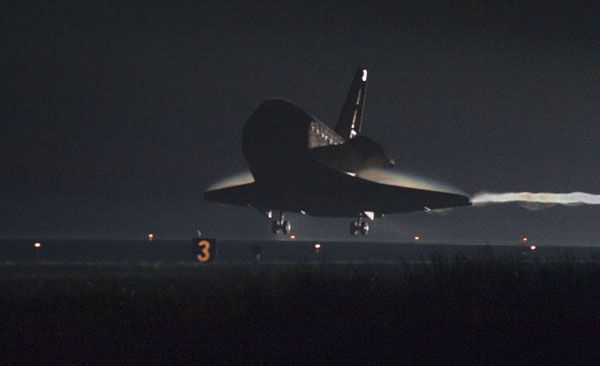
Space shuttle Endeavour lands at Kennedy Space Center in Florida for the final time on June 1, 2011 (Eastern Time).
NASA / Chuck Tintera

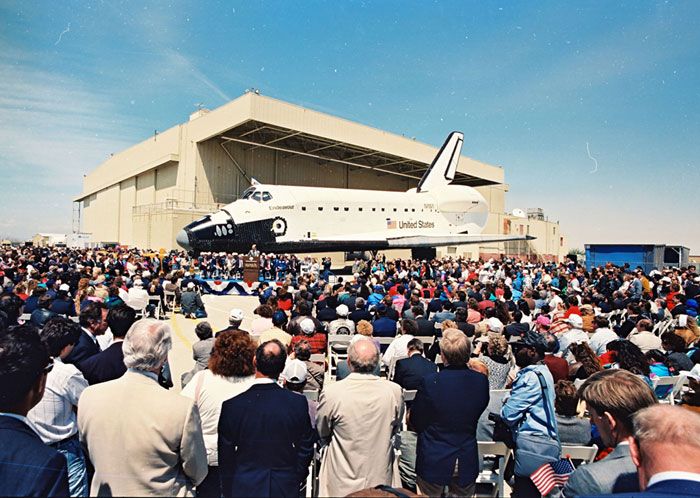
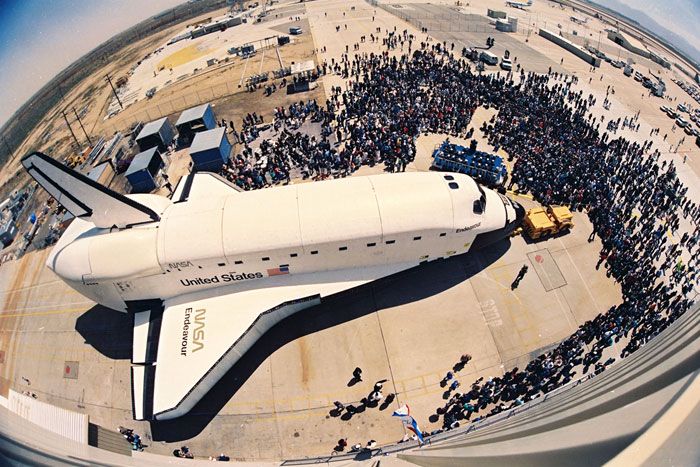
NEXT STOP: LOS ANGELES! Congratulations to the 6-member crew of mission STS-134 for completing a successful 16-day flight to the International Space Station, as well as bringing to an end space shuttle Endeavour's final voyage into low-Earth orbit. For the rest of the year, Endeavour will undergo decommissioning at NASA's Kennedy Space Center (KSC) in Florida before the orbiter is transported to her last destination sometime in 2012: the California Science Center in downtown Los Angeles. I totally can’t wait to see the 'jewel' of the space shuttle fleet [which is what Endeavour was called when she was unveiled to the public at her assembly facility (in Palmdale, California) 20 years ago] in person once she finally goes on display at the museum.

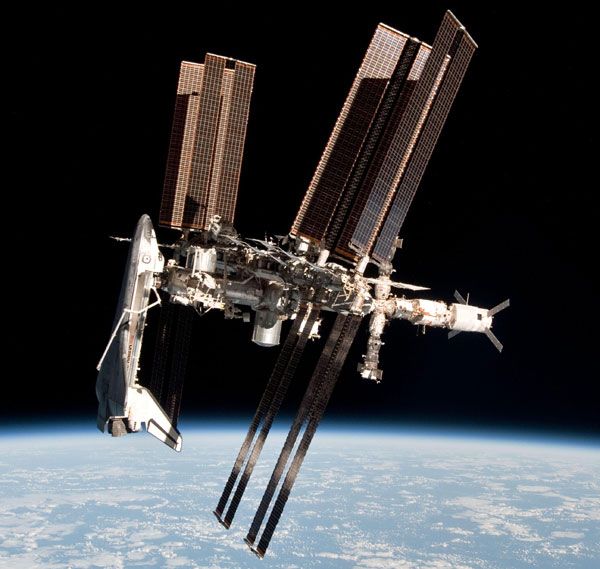
The International Space Station (ISS) with space shuttle Endeavour docked to it, as seen from a Russian Soyuz vehicle after it undocked from the ISS on May 23, 2011.
Roscosmos / ESA / NASA

Up next for her own finale: space shuttle Atlantis...which was slowly making her way to KSC’s Launch Complex 39A around the time Endeavour touched down in Florida. In the next hour or so, Atlantis will be situated on the pad to begin preparations for STS-135, the final flight of the space shuttle program. Within two months, a momentous 30-year era in human spaceflight will come to a close. Let’s hope it ends safely and triumphantly.

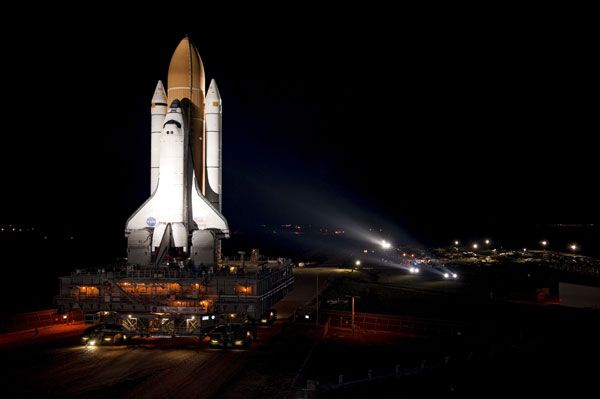
Space shuttle Atlantis rolls out of the Vehicle Assembly Building at Kennedy Space Center in Florida on May 31, 2011.
NASA / Kim Shiflett

Saturday, May 28, 2011

Sketches I made back in high school.

PARMAN’S PAGE Update... A few weeks ago, I created two new subsections to the Artworks page of my website, which you can view by clicking on the red links below. All of these illustrations were done back in high school (Class of '98, yo!), so you’re right to wonder why I haven't been continuing my talent of drawing as opposed to always blogging about space stuff here (especially considering the fact I suck at math and got a ‘D’ in my Astronomy class during my first semester in college). Anyways... Enjoy!


LINKS:
Drawings I made in my AP Studio Art class in high school
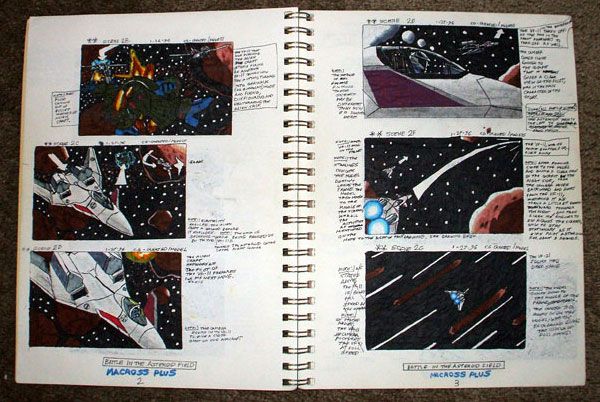
Storyboard artwork I created for the Japanese anime Macross Plus

A sketchbook containing my storyboard drawings for MACROSS PLUS.

Wednesday, May 25, 2011

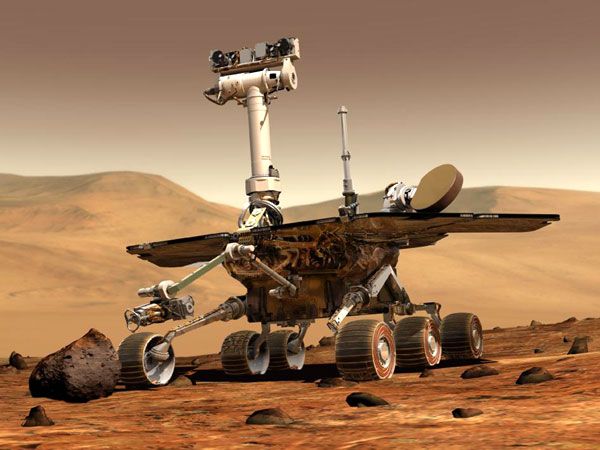
An artist's concept of a Mars Exploration Rover.
NASA / JPL / Cornell University

FAREWELL, SPIRIT... Today also marks the 3-year anniversary of the Phoenix lander's arrival on Mars.

****

NASA's Spirit Rover Completes Mission on Mars (Press Release)

NASA has ended operational planning activities for the Mars rover Spirit and transitioned the Mars Exploration Rover Project to a single-rover operation focused on Spirit's still-active twin, Opportunity.

This marks the completion of one of the most successful missions of interplanetary exploration ever launched.

Spirit last communicated on March 22, 2010, as Martian winter approached and the rover's solar-energy supply declined. The rover operated for more than six years after landing in January 2004 for what was planned as a three-month mission. NASA checked frequently in recent months for possible reawakening of Spirit as solar energy available to the rover increased during Martian spring. A series of additional re-contact attempts ended today, designed for various possible combinations of recoverable conditions.

"Our job was to wear these rovers out exploring, to leave no unutilized capability on the surface of Mars, and for Spirit, we have done that," said Mars Exploration Rover Project Manager John Callas of NASA's Jet Propulsion Laboratory, Pasadena, Calif.

Spirit drove 4.8 miles (7.73 kilometers), more than 12 times the goal set for the mission. The drives crossed a plain to reach a distant range of hills that appeared as mere bumps on the horizon from the landing site; climbed slopes up to 30 degrees as Spirit became the first robot to summit a hill on another planet; and covered more than half a mile (nearly a kilometer) after Spirit's right-front wheel became immobile in 2006. The rover returned more than 124,000 images. It ground the surfaces off 15 rock targets and scoured 92 targets with a brush to prepare the targets for inspection with spectrometers and a microscopic imager.

"What's really important is not only how long Spirit worked or how far Spirit drove, but also how much exploration and scientific discovery Spirit accomplished," Callas said.

One major finding came, ironically, from dragging the inoperable right-front wheel as the rover was driving backwards in 2007. That wheel plowed up bright white soil. Spirit's Alpha Particle X-ray Spectrometer and Miniature Thermal Emission Spectrometer revealed that the bright material was nearly pure silica.

"Spirit's unexpected discovery of concentrated silica deposits was one of the most important findings by either rover," said Steve Squyres of Cornell University, Ithaca, N.Y., principal investigator for Spirit and Opportunity. "It showed that there were once hot springs or steam vents at the Spirit site, which could have provided favorable conditions for microbial life."

The silica-rich soil neighbors a low plateau called Home Plate, which was Spirit's main destination after the historic climb up Husband Hill. "What Spirit showed us at Home Plate was that early Mars could be a violent place, with water and hot rock interacting to make what must have been spectacular volcanic explosions. It was a dramatically different world than the cold, dry Mars of today," said Squyres.

The trove of data from Spirit could still yield future science revelations. Years of analysis of some 2005 observations by the rover's Alpha Particle X-ray Spectrometer, Miniature Thermal Emission Spectrometer and Moessbauer Spectrometer produced a report last year that an outcrop on Husband Hill bears a high concentration of carbonate. This is evidence of a wet, non-acidic ancient environment that may have been favorable for microbial life.

"What's most remarkable to me about Spirit's mission is just how extensive her accomplishments became," said Squyres. "What we initially conceived as a fairly simple geologic experiment on Mars ultimately turned into humanity's first real overland expedition across another planet. Spirit explored just as we would have, seeing a distant hill, climbing it, and showing us the vista from the summit. And she did it in a way that allowed everyone on Earth to be part of the adventure."

Source: Jet Propulsion Laboratory

****

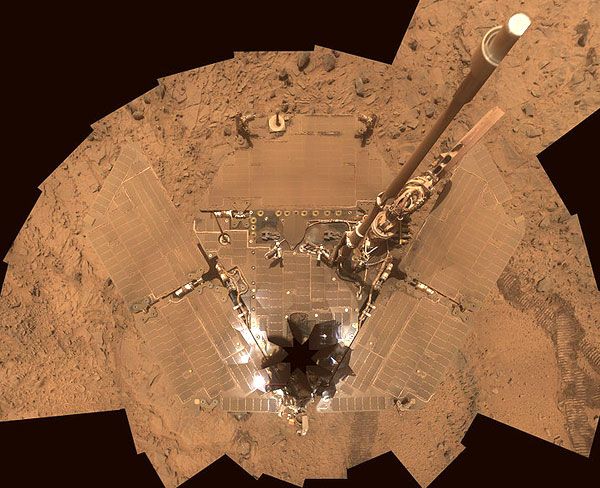
A self-portrait of the Spirit rover, now covered in Martian dust, in October of 2007.
NASA / JPL - Caltech / Cornell
Tuesday, May 24, 2011

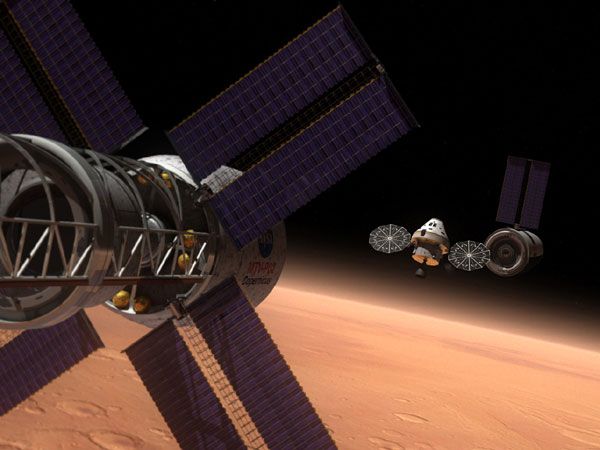
An artist's concept of the Multi-Purpose Crew Vehicle (MPCV) in orbit above Mars.
NASA

ORION (or Whatever-You-Now-Call-It) Update...

****

NASA Announces Key Decision For Next Deep Space Transportation System (Press Release)

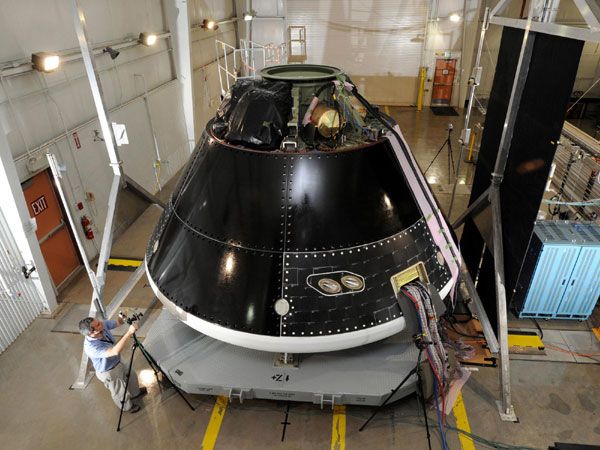
WASHINGTON -- NASA has reached an important milestone for the next U.S. transportation system that will carry humans into deep space. NASA Administrator Charles Bolden announced today that the system will be based on designs originally planned for the Orion Crew Exploration Vehicle. Those plans now will be used to develop a new spacecraft known as the Multi-Purpose Crew Vehicle (MPCV).

"We are committed to human exploration beyond low-Earth orbit and look forward to developing the next generation of systems to take us there," Bolden said. "The NASA Authorization Act lays out a clear path forward for us by handing off transportation to the International Space Station to our private sector partners, so we can focus on deep space exploration. As we aggressively continue our work on a heavy lift launch vehicle, we are moving forward with an existing contract to keep development of our new crew vehicle on track."

Lockheed Martin Corp. will continue working to develop the MPCV. The spacecraft will carry four astronauts for 21-day missions and be able to land in the Pacific Ocean off the California coast. The spacecraft will have a pressurized volume of 690 cubic feet, with 316 cubic feet of habitable space. It is designed to be 10 times safer during ascent and entry than its predecessor, the space shuttle.

"This selection does not indicate a business as usual mentality for NASA programs," said Douglas Cooke, associate administrator for the agency's Exploration Systems Mission Directorate in Washington. "The Orion government and industry team has shown exceptional creativity in finding ways to keep costs down through management techniques, technical solutions and innovation."

Source: NASA.Gov

****

Work being done on the MPCV at Lockheed Martin's Vertical Testing Facility in Colorado.
Lockheed Martin

Saturday, May 21, 2011

Concept artwork of Megatron in TRANSFORMERS: DARK OF THE MOON.

MORE IMAGES OF THE DAY... Below are screenshots from the 3-D trailer of Transformers: Dark of the Moon that is now playing in front of Pirates of the Caribbean: On Stranger Tides at theaters nationwide. The image above is of Megatron...who sports a new look in TF3. You can view the 3-D trailer (which isn't in 3-D here) at the end of this journal entry.

Optimus Prime and Ratchet investigate what remains of the Ark, which crash-landed on Earth's moon, in TRANSFORMERS: DARK OF THE MOON.

Bumblebee once again saves Sam Witwicky's life in TRANSFORMERS: DARK OF THE MOON.

Optimus Prime takes part in a battle for Chicago in TRANSFORMERS: DARK OF THE MOON.

Optimus Prime takes on the 'Driller' in TRANSFORMERS: DARK OF THE MOON.

Thursday, May 19, 2011

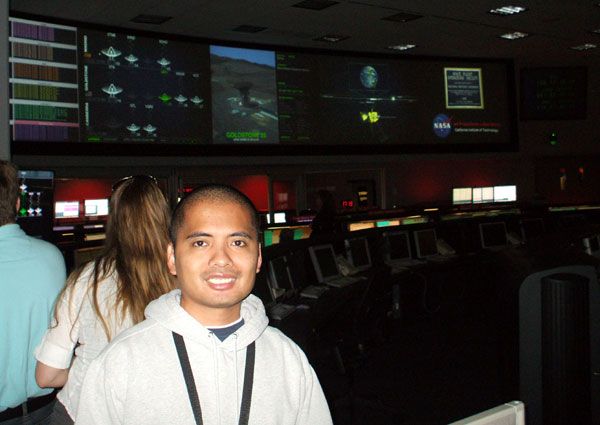
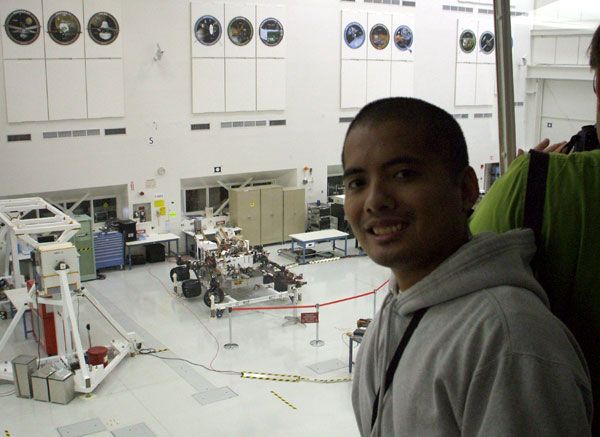
Posing inside the Space Flight Operations Facility at NASA's Jet Propulsion Laboratory, on May 15, 2011.

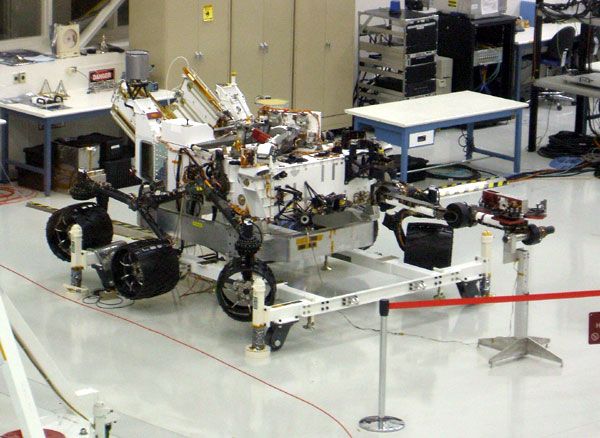
LAST SUNDAY, I attended the Open House at NASA’s Jet Propulsion Laboratory (JPL) near Pasadena, California. This is the seventh time since 1992 I attended the annual event, and I must say this trip is my favorite one so far...the main reason being that the Curiosity Mars rover is basically complete and ready for launch (this November) when she was put on display inside JPL's Spacecraft Assembly Facility. Also, I got to be on the ground floor of the Space Flight Operations Facility (a.k.a. the 'Mission Control' for scores of spacecraft flying around in our solar system), shown above. I took pictures inside the SFOF back in 2006, but that was inside a small viewing room at the back of the control center. To be standing right next to the computers that monitor distant spacecraft such as Cassini, Dawn and Mars spacecraft such as the Opportunity rover was very cool. Anyways, click on the red link below to see more photos that I took at the Open House. Hopefully I’ll be back at JPL on June 6. I’d elaborate on this, but I don’t wanna jinx it. That is all.

LINK: Photos I took at the 2011 JPL Open House

The CURIOSITY Mars rover on display inside the Spacecraft Assembly Facility.

Posing with the Curiosity rover behind me.

Tuesday, May 17, 2011

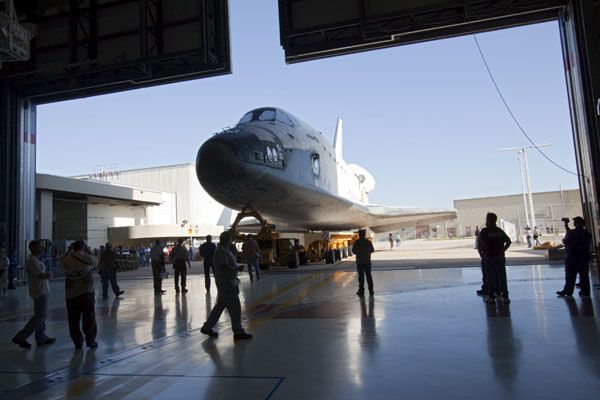
In preparation for being transported to the VAB to undergo STS-135 launch preparations, Atlantis emerges from her OPF at Kennedy Space Center in Florida, on May 17, 2011.
NASA / Jack Pfaller

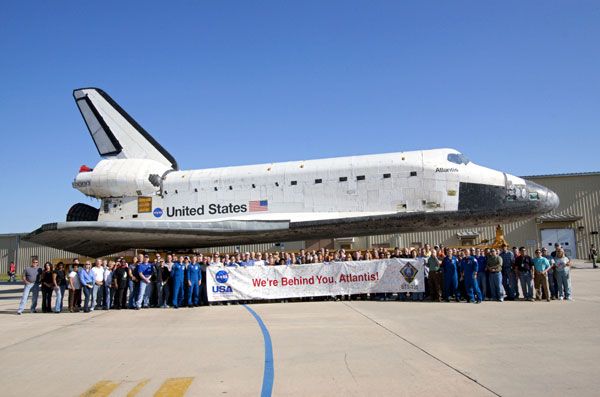
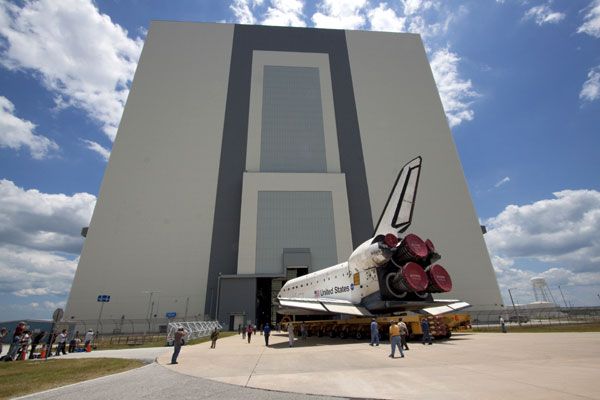
IMAGES OF THE DAY... Earlier this morning, Atlantis was brought out of her Orbiter Processing Facility (OPF) to be transported to the Vehicle Assembly Building (VAB) at Kennedy Space Center in Florida...where she will be mated with her external fuel tank and twin solid rocket boosters for flight STS-135. Launch is targeted for mid-July. Atlantis' return to Earth 12 days later will mark the end of the 30-year-old space shuttle program.

Kennedy Space Center workers take a group photo with space shuttle Atlantis during her rollover to the VAB, on May 17, 2011.
NASA / Jack Pfaller

Space shuttle Atlantis is about to enter the VAB to begin STS-135 launch preparations on May 17, 2011.
NASA / Jack Pfaller

Monday, May 16, 2011

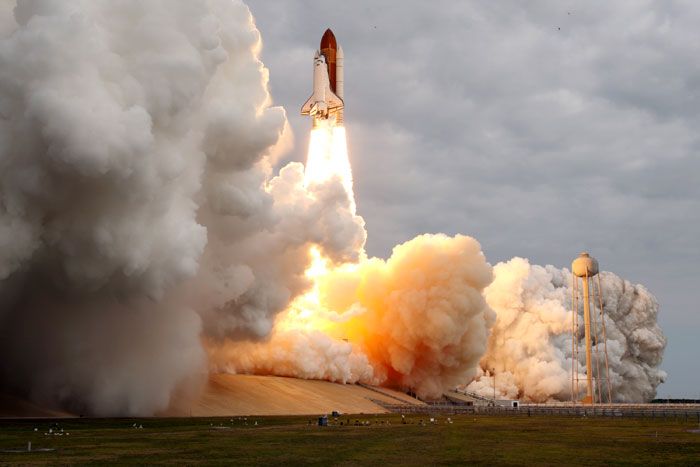
Space shuttle Endeavour launches from Kennedy Space Center in Florida on her final voyage to the International Space Station, on May 16, 2011.
NASA

ENDEAVOUR’S FINAL ACT... Earlier this morning, NASA’s youngest space shuttle orbiter took off on her final mission to install a large physics experiment known as the Alpha Magnetic Spectrometer to the International Space Station (ISS). Endeavour will dock with the ISS this Wednesday...and the crew of STS-134 will embark on its main objectives for this flight before heading back home on June 1st. Here’s hoping that the mission is extremely successful, and that Endeavour safely returns to Earth more than 2 weeks from now. ‘Cause after that, she will be prepped at Kennedy Space Center in Florida for her trip to Los Angeles next year...where Endeavour will find her final retirement home at the California Science Center. Can’t wait to pay a visit after she gets there.

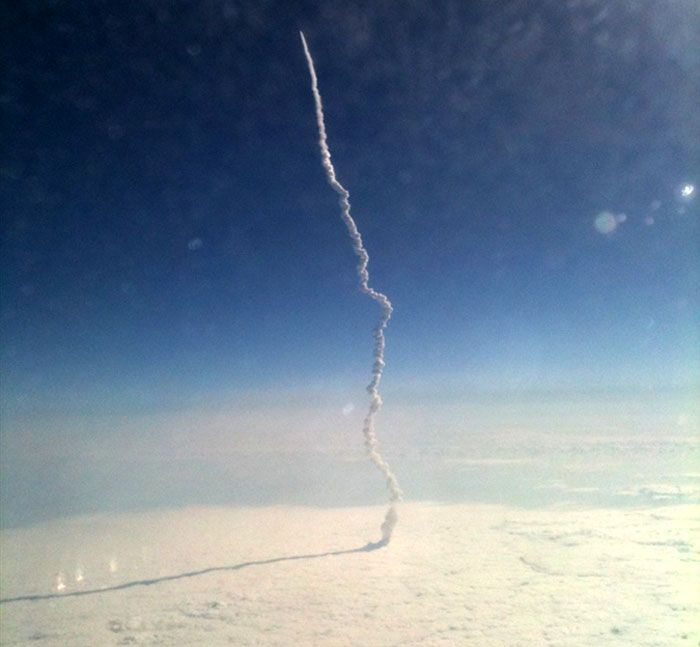
As seen onboard a passing airliner, space shuttle Endeavour emerges from a cloud deck after launching from Kennedy Space Center in Florida on her final voyage to the International Space Station, on May 16, 2011.
Stefanie Gordon

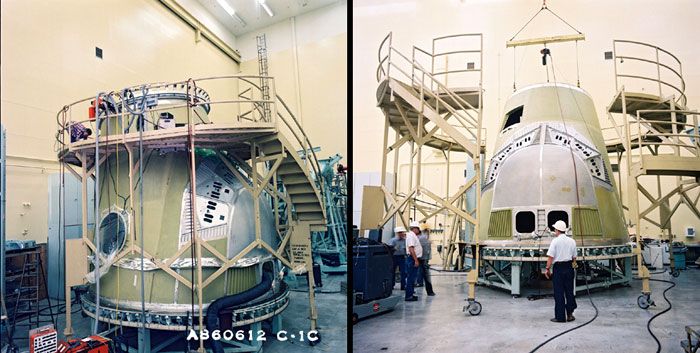
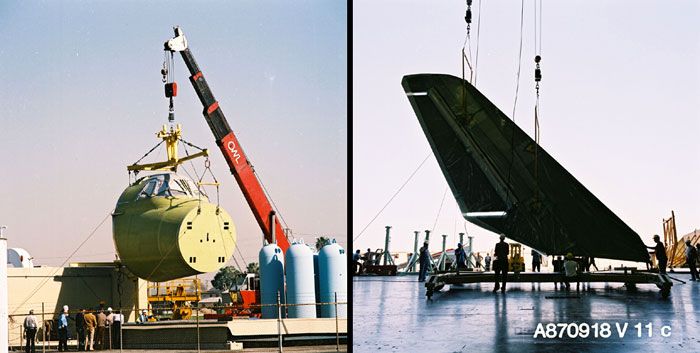
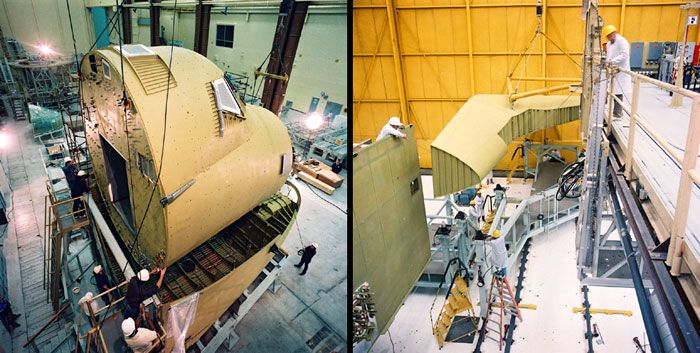
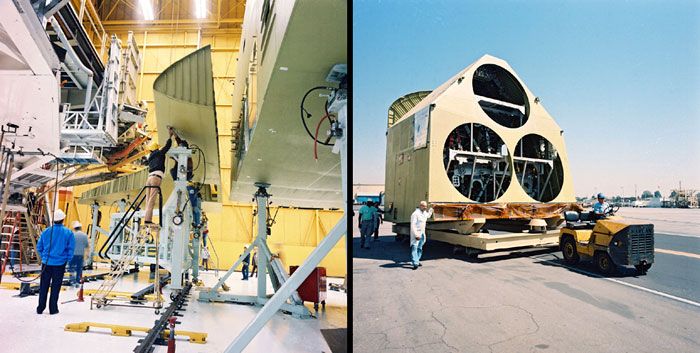
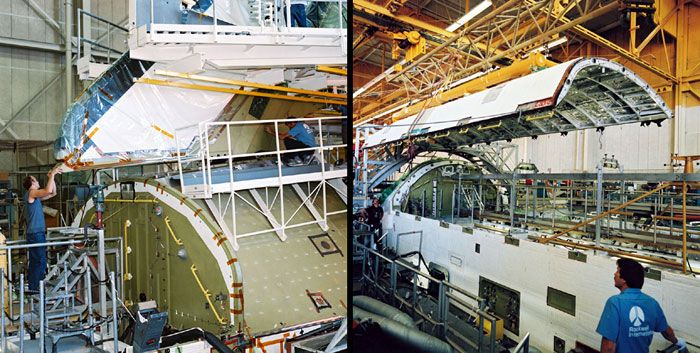
Below are construction photos of Endeavour, courtesy of Space.com. Visit that website for more pics.

Construction photos of space shuttle Endeavour.
Boeing

Construction photos of space shuttle Endeavour.
Boeing

Construction photos of space shuttle Endeavour.
Boeing

Construction photos of space shuttle Endeavour.
Boeing

Construction photos of space shuttle Endeavour.
Boeing

Space shuttle Endeavour is unveiled to the public in Palmdale, California, on April 25, 1991.
Boeing

Space shuttle Endeavour is unveiled to the public in Palmdale, California, on April 25, 1991.
Boeing

Wednesday, May 11, 2011

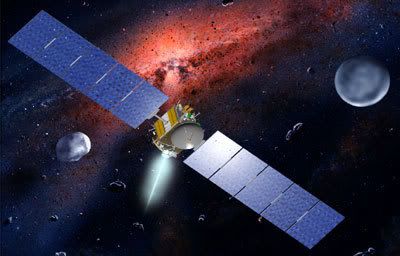
An artist concept of Dawn in the Asteroid Belt.

DAWN Update...

****

NASA's Dawn Captures First Image of Nearing Asteroid (Press Release)

PASADENA, Calif. -- NASA's Dawn spacecraft has obtained its first image of the giant asteroid Vesta, which will help fine-tune navigation during its approach. Dawn is expected to achieve orbit around Vesta on July 16, when the asteroid is about 188 million kilometers (117 million miles) from Earth.

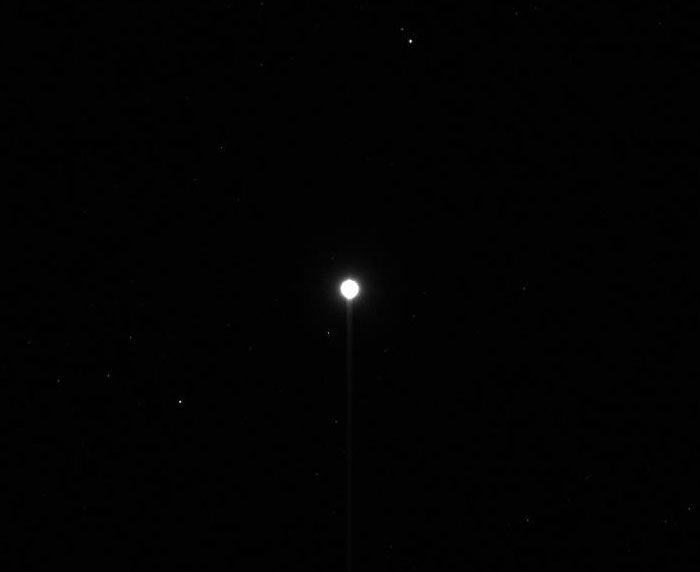
The image from Dawn's framing cameras was taken on May 3 when the spacecraft began its approach and was approximately 1.21 million kilometers (752,000 miles) from Vesta. The asteroid appears as a small, bright pearl against a background of stars. Vesta is also known as a protoplanet, because it is a large body that almost formed into a planet.

"After plying the seas of space for more than a billion miles, the Dawn team finally spotted its target," said Carol Raymond, Dawn's deputy principal investigator at NASA's Jet Propulsion Laboratory in Pasadena, Calif. "This first image hints of detailed portraits to come from Dawn's upcoming visit."

Vesta is 530 kilometers (330 miles) in diameter and the second most massive object in the asteroid belt. Ground- and space-based telescopes obtained images of the bright orb for about two centuries, but with little surface detail.

Mission managers expect Vesta's gravity to capture Dawn in orbit on July 16. To enter orbit, Dawn must match the asteroid's path around the sun, which requires very precise knowledge of the body's location and speed. By analyzing where Vesta appears relative to stars in framing camera images, navigators will pin down its location and enable engineers to refine the spacecraft's trajectory.

Dawn will start collecting science data in early August at an altitude of approximately 1,700 miles (2,700 kilometers) above the asteroid's surface. As the spacecraft gets closer, it will snap multi-angle images, allowing scientists to produce topographic maps. Dawn will later orbit at approximately 200 kilometers (120 miles) to perform other measurements and obtain closer shots of parts of the surface. Dawn will remain in orbit around Vesta for one year. After another long cruise phase, Dawn will arrive in 2015 at its second destination, Ceres, an even more massive body in the asteroid belt.

Gathering information about these two icons of the asteroid belt will help scientists unlock the secrets of our solar system's early history. The mission will compare and contrast the two giant bodies shaped by different forces. Dawn's science instruments will measure surface composition, topography and texture. Dawn will also measure the tug of gravity from Vesta and Ceres to learn more about their internal structures. The spacecraft's full odyssey will take it on a 5-billion-kilometer (3-billion-mile) journey, which began with its launch in September 2007.

Dawn's mission to Vesta and Ceres is managed by JPL for NASA's Science Mission Directorate in Washington. Dawn is a project of the directorate's Discovery Program, managed by NASA's Marshall Space Flight Center in Huntsville, Ala.

The University of California in Los Angeles is responsible for overall Dawn mission science. Orbital Sciences Corp. of Dulles, Va., designed and built the spacecraft. The framing cameras were developed and built under the leadership of the Max Planck Institute for Solar System Research in Katlenburg-Lindau in Germany, with significant contributions by the German Aerospace Center (DLR) Institute of Planetary Research in Berlin and in coordination with the Institute of Computer and Communication Network Engineering in Braunschweig. The framing camera project is funded by NASA, the Max Planck Society and DLR.

Source: Jet Propulsion Laboratory

****

An image of asteroid Vesta taken by the Dawn spacecraft, on May 3, 2011.
NASA / JPL - Caltech / UCLA / MPS / DLR / IDA

Saturday, May 07, 2011


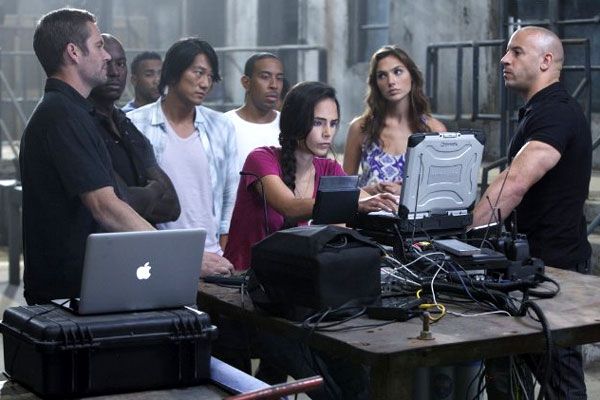
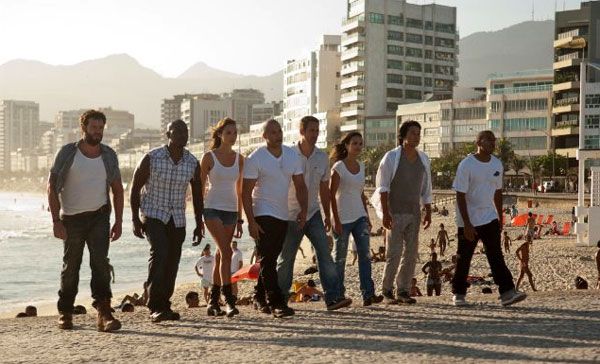
FAST FIVE... I saw the Justin Lin-directed action flick last Sunday, and compared to the previous Fast and the Furious films I saw (the first one in 2001, and Fast and Furious in 2009), this one was awesome! Of course, my opinion may be tainted by the fact the movie has a surprising 78% Fresh rating on RottenTomatoes.com, but Fast Five truly had a lot of cool action sequences in it. From the opening rescue scene of Vin Diesel (which was a continuation of the final scene in Fast and Furious), to Paul Walker and Jordana Brewser trying to steal cars from a moving train in Brazil, to the ridiculous but entertaining climax where Paul Walker and Vin Diesel evade scores of police cars while literally towing a giant money vault along the streets of Rio de Janeiro, Fast Five definitely delivered as one of the first blockbuster films of the 2011 summer movie season. Dwayne "The Rock" Johnson was a bad-ass as DSS (Diplomatic Security Service) agent Hobbs...and if you stayed to watch the end credits, you’ll know that he (as well as Eva Mendes) will have a considerable role in the next Fast and the Furious flick. I wouldn’t have said this two weeks earlier, but I’ll totally watch Fast and the Furious 6 whenever it comes out.


FYI, what makes watching Fast Five last Sunday especially noteworthy is the fact I just arrived home from the theater when I found out that Osama bin Laden was eliminated (one of my brothers told me as I was walking into the garage since I usually park my car out on the street). Other people ask "Where were you on 9/11?" (I was at home... I didn’t have college classes that day)... This is what I was doing on the evening the world’s most wanted terrorist was taken out by U.S. Navy SEALs. Carry on.