Showing posts with label Lightsail. Show all posts

Thursday, November 17, 2022

A Groundbreaking, Crowdfunded Solar Sail Has Reached the End of Its Life in Space...

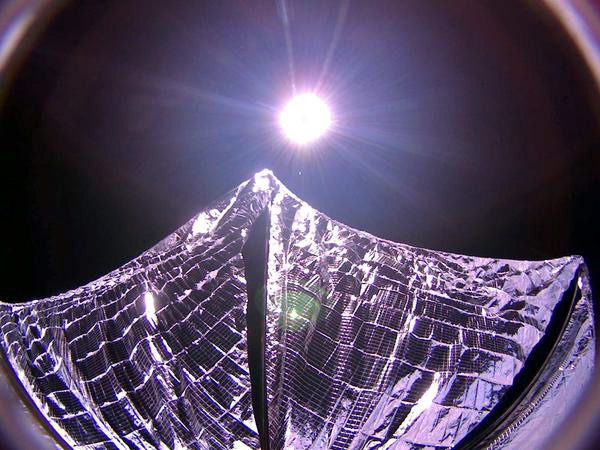
The very last photo taken by LightSail 2 last month, on October 24...before its mission ended on November 17, 2022.
The Planetary Society

The Planetary Society’s LightSail 2 Mission Reenters Atmosphere, Completes Mission (Press Release)

Pasadena, CA — LightSail 2, The Planetary Society’s crowdfunded, solar sailing spacecraft, has reentered Earth’s atmosphere, successfully completing its mission to demonstrate flight by light for small spacecraft. Orbital predictions showed that LightSail 2 reentered sometime on November 17.

The reentry completes a mission of nearly three-and-a-half years, during which LightSail 2 showed that it could change its orbit using the gentle push of sunlight, a technique known as solar sailing. LightSail 2 demonstrated that small spacecraft can carry, deploy and utilize relatively large solar sails for propulsion.

“LightSail 2 is gone after more than three glorious years in the sky, blazing a trail of lift with light, and proving that we could defy gravity by tacking a sail in space,” said Bill Nye, CEO of The Planetary Society. “The mission was funded by tens of thousands of Planetary Society members, who want to advance space technology.”

LightSail 2 hitched a ride to space in June 2019 aboard a SpaceX Falcon Heavy rocket. It began operations at an altitude of about 720 kilometers (450 miles), where Earth’s atmosphere is still thick enough to create drag and slow down a spacecraft. For reference, the International Space Station orbits at an altitude of roughly 400 kilometers (250 miles).

As atmospheric drag slowly pulled LightSail 2 back towards Earth, the spacecraft successfully used solar sailing to lower its decay rate and on occasion overcome drag completely. After 18,000 orbits and 8 million kilometers (5 million miles) traveled, drag finally won out, bringing the mission to a close.

“During its extended mission LightSail 2 continued to teach us more about solar sailing and achieved its most effective solar sailing, but that was followed by an increase in atmospheric drag in part from increasing solar activity,” said Bruce Betts, LightSail program manager and chief scientist for The Planetary Society. “The spacecraft is gone, but data analyses and sharing of results will continue.”

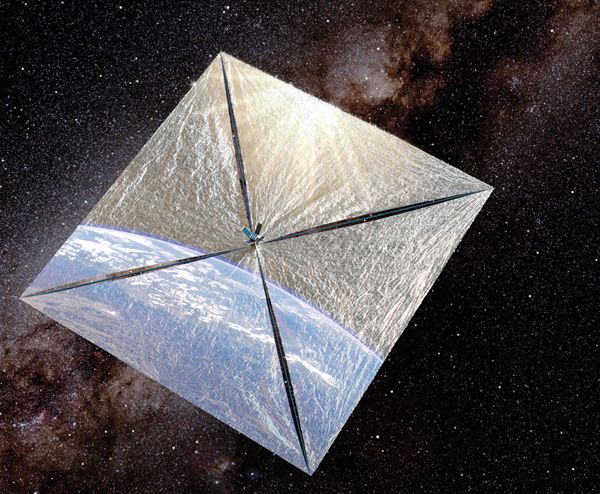
LightSail 2 launched as a shoebox-sized spacecraft with its sails tucked together like origami. Using four tape measure-like booms, the spacecraft unfurled a four-section Mylar sail with an area of 32 square meters (244 square feet) — about the size of a boxing ring.

Light has no mass, but it has momentum that can be transferred to a reflective solar sail. The resulting push is small but continuous, allowing a spacecraft like LightSail 2 to change its orbit.

The LightSail mission team will continue to analyze data collected during the mission, publishing peer-reviewed journal articles, making conference presentations and conducting public outreach. Images from the mission can be viewed online.

Results will continue to be shared with other upcoming solar sail missions such as NEA Scout and ACS3. In a fitting bookend to the LightSail 2 mission, NEA Scout launched on November 16 aboard NASA’s Artemis I mission to the Moon. The Planetary Society shares data with the NEA Scout team through a Space Act Agreement.

NEA Scout will use an 86-square-meter (926 square-feet) solar sail to leave lunar orbit and perform a slow flyby of asteroid 2020 GE, which measures just 18 meters (60 feet) across. The images NEA Scout captures will be the first up-close pictures of such a small world.

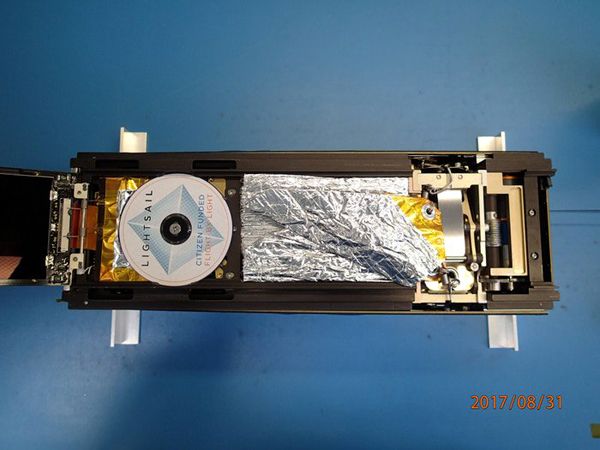
LightSail 2 was an entirely crowdfunded mission that aimed to help democratize space exploration. More than 50,000 Planetary Society members, Kickstarter backers, private citizens, foundations and corporate partners funded the mission. A miniature DVD attached to the spacecraft contained selfies from space fans and the names of Planetary Society members and supporters.

The Smithsonian Institution displayed two models of LightSail 2 in 2021 and 2022. The mission was named one of TIME’s 100 Best Inventions of 2019 and won a Popular Science Best of What’s New award for 2019.

The LightSail program’s roots date back to the mid-1970s, when Planetary Society co-founder Louis Friedman developed a NASA concept for a solar sail that would have visited Halley’s Comet. Society co-founder Carl Sagan showed off a model of the spacecraft on The Tonight Show with Johnny Carson.

While LightSail 2 operations have come to an end, the mission will live on as a new era of solar sailing begins.

“We have braved the harbor of Earth and found that a small craft can sail and steer,” said Betts. “Best wishes to those who sail similar craft into the vast ocean of space – we look forward to an exciting future of exploration, proud that we have played a role. Sail on!”

Source: The Planetary Society

****

An image of a mini-DVD bearing the names of around 23,300 Kickstarter backers (including me) that was attached to the LightSail 2 spacecraft for its mission.
The Planetary Society
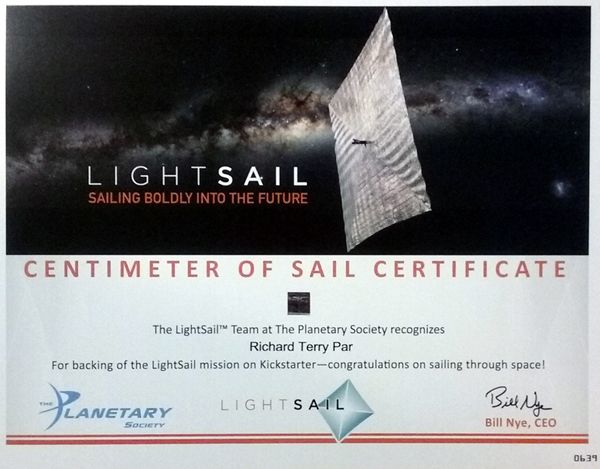
My certificate for the LightSail 2 mission.

Wednesday, July 31, 2019

LightSail 2's Mission Has Achieved Its Main Objective!

An image that was taken of LightSail 2's solar sail during its successful deployment process on July 23, 2019.
The Planetary Society
LightSail 2 Spacecraft Successfully Demonstrates Flight by Light (Press Release)

Pasadena, CA — Years of computer simulations. Countless ground tests. They've all led up to now. The Planetary Society's crowdfunded LightSail 2 spacecraft is successfully raising its orbit solely on the power of sunlight.

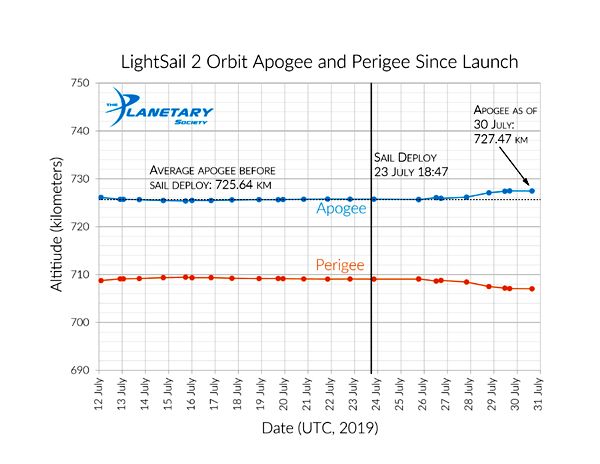
Since unfurling the spacecraft's silver solar sail last week, mission managers have been optimizing the way the spacecraft orients itself during solar sailing. After a few tweaks, LightSail 2 began raising its orbit around the Earth. In the past 4 days, the spacecraft has raised its orbital high point, or apogee, by about 2 kilometers. The perigee, or low point of its orbit, has dropped by a similar amount, which is consistent with pre-flight expectations for the effects of atmospheric drag on the spacecraft. The mission team has confirmed the apogee increase can only be attributed to solar sailing, meaning LightSail 2 has successfully completed its primary goal of demonstrating flight by light for CubeSats.

"We're thrilled to announce mission success for LightSail 2," said LightSail program manager and Planetary Society chief scientist Bruce Betts. "Our criteria was to demonstrate controlled solar sailing in a CubeSat by changing the spacecraft’s orbit using only the light pressure of the Sun, something that’s never been done before. I'm enormously proud of this team. It's been a long road and we did it."

The milestone makes LightSail 2 the first spacecraft to use solar sailing for propulsion in Earth orbit, the first small spacecraft to demonstrate solar sailing, and just the second-ever solar sail spacecraft to successfully fly, following Japan's IKAROS, which launched in 2010. LightSail 2 is also the first crowdfunded spacecraft to successfully demonstrate a new form of propulsion.

"For The Planetary Society, this moment has been decades in the making," said Planetary Society CEO Bill Nye. "Carl Sagan talked about solar sailing when I was in his class in 1977. But the idea goes back at least to 1607, when Johannes Kepler noticed that comet tails must be created by energy from the Sun. The LightSail 2 mission is a game-changer for spaceflight and advancing space exploration."

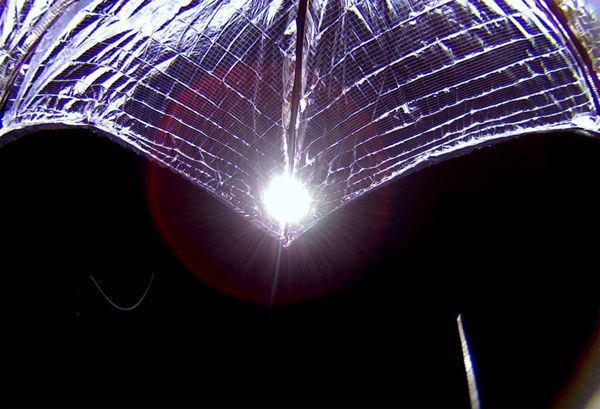
On Monday, LightSail 2 sent home a new full-resolution image captured by its camera during solar sail deployment. The perspective is opposite to last week’s full-resolution image and shows the sail more fully deployed. LightSail 2's aluminized Mylar sail shines against the blackness of space, with the Sun peeking through near a sail boom.

The mission team will continue raising LightSail 2's orbit for roughly a month, until the perigee decreases to the point where atmospheric drag overcomes the thrust from solar sailing. During the orbit-raising period, the team will continue optimizing the performance of the solar sail.

"We've been working since sail deployment to refine the way the spacecraft tracks the Sun," said LightSail 2 project manager Dave Spencer. "The team has done a great job getting us to the point where we can declare mission success. Moving ahead, we're going to continue working to tune the sail control performance and see how much we can raise apogee over time."

One such refinement involves LightSail 2's single momentum wheel, which rotates the spacecraft broadside and then edge-on to the Sun each orbit to turn the thrust from solar sailing on and off. Momentum wheels can “saturate,” hitting predefined speed limits, after which they are no longer effective at rotating the spacecraft. Most spacecraft use chemical thrusters to desaturate momentum wheels; LightSail 2 relies on electromagnetic torque rods, which orient the spacecraft by pushing against Earth's magnetic field.

LightSail 2’s momentum wheel currently reaches its saturation limit a couple of times per day, and desaturating the wheel temporarily takes the spacecraft out of its proper orientation for solar sailing. The mission team already applied a software update that increased the time between saturation events, and is also working to automate the desaturation process. Both refinements should result in improved solar sailing performance.

After LightSail 2's month-long orbit raising phase, the spacecraft will begin to deorbit, eventually reentering the atmosphere in roughly a year. The aluminized Mylar sail, about the size of a boxing ring, may currently be visible for some observers at dusk and dawn. The Planetary Society's mission control dashboard shows upcoming passes based on user location, and includes a link to a page that highlights passes when the sail is more likely to be visible.

Roughly 50,000 Planetary Society members and private citizens from more than 100 countries, as well as foundations and corporate partners, donated to the LightSail 2 mission, which cost $7 million from 2009 through March 2019.

"LightSail 2 proves the power of public support," said Planetary Society COO Jennifer Vaughn. "This moment could mark a paradigm shift that opens up space exploration to more players. It amazes me that 50,000 people came together to fly a solar sail. Imagine if that number became 500,000 or 5 million. It’s a thrilling concept."

The Planetary Society shares LightSail program data with other organizations so that solar sail technology can be applied to future space exploration missions. The Society presented initial LightSail 2 results this week at the 5th International Symposium on Solar Sailing in Aachen, Germany. Results are also being shared with NASA's NEA Scout mission, which is launching a solar sail-powered CubeSat to visit a near-Earth asteroid as early as next year.
LightSail 2 is one of several Planetary Society science and technology projects that aim to advance space science and exploration. Earlier this month, NASA chose PlanetVac, a Society-funded technology built by Honeybee Robotics that simplifies the process of collecting samples from other worlds, to fly to the Moon as part of the agency's Commercial Lunar Payload Services (CLPS) program.

The LightSail program began in 2009 under the direction of Planetary Society co-founder Louis Friedman, following the launch of Cosmos 1, the world's first solar sail that did not reach orbit. Friedman and Society co-founders Carl Sagan and Bruce Murray championed the idea of solar sailing more than 4 decades ago with a proposed solar sail mission to Halley's Comet.

Source: The Planetary Society
****

A chart showing the change in orbital altitude for LightSail 2 after it successfully deployed its solar sail on July 23, 2019.
The Planetary Society
Wednesday, July 24, 2019

LightSail 2 Has Spread Its Wings in Orbit!

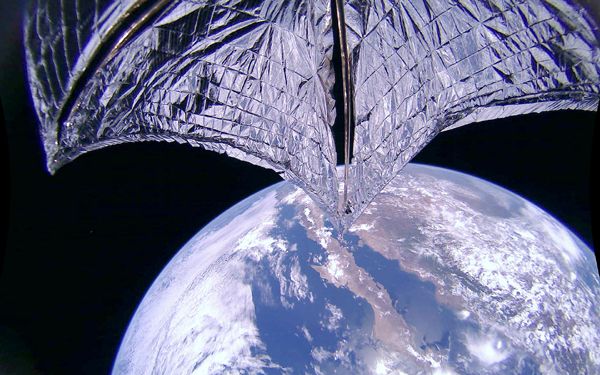
An image that was taken of LightSail 2's solar sail after it was successfully deployed on July 23, 2019.
The Planetary Society
LightSail 2 Successfully Deploys Solar Sail (Press Release)

The Planetary Society’s LightSail 2 spacecraft has successfully deployed the large, aluminized Mylar sail it will use to raise its orbit solely with sunlight.

Flight controllers at Cal Poly San Luis Obispo in California commanded the spacecraft to deploy its solar sails yesterday at about 11:47 PDT (18:47 UTC). Images captured during the deployment sequence and downloaded today show the 32-square-meter sail, which is about the size of a boxing ring, deploying as the spacecraft flew south of the continental United States.

Sail deployment marks a major milestone for the LightSail 2 mission, which aims to demonstrate solar sailing as a viable method of propulsion for CubeSats—small, standardized satellites that have lowered the cost of space exploration.

“Yesterday, we successfully set sail on beams of sunlight,” said Bill Nye, CEO of The Planetary Society. “Thanks to our team and our tens of thousands of supporters around the world, the dream started by The Planetary Society’s founders more than 4 decades ago has taken flight.”

Bruce Betts, Planetary Society chief scientist and LightSail program manager, added, “We’re ecstatic! The mission team has worked for years to get to this moment when we can start solar sailing.”
Following the start of sail deployment on 23 July, telemetry from LightSail 2 showed the spacecraft’s small motor was rotating properly, extending four, 4-meter cobalt-alloy booms from their central spindle. The booms unwind like carpenter’s tape measures and are attached to 4 triangular sail sections that together form the square solar sail.

Though the motor activity itself was a good indicator of success, confirmation that the sails deployed successfully was only possible via imagery from LightSail 2’s dual cameras. The cameras have 185-degree fields of view, and together can image the entire sail from the main LightSail bus, which is about the size of a loaf of bread.

“The successful deployment of the solar sail and the onset of sail control completes our critical post-launch phase,” said LightSail 2 project manager David Spencer. “Now we are prepared for the solar sail's mission, to track how the orbit changes and evaluate solar sailing performance.”

The deployment milestone comes 4 weeks after LightSail 2 launched from Kennedy Space Center, Florida aboard a SpaceX Falcon Heavy rocket, and 3 weeks after the Georgia Tech student-built Prox-1 spacecraft deployed LightSail 2 into orbit. The mission team spent a week checking out the spacecraft’s systems before rescheduling sail deployment to allow extra time for testing and tuning the attitude control system.

Preliminary data shows LightSail 2 is already turning its solar sail broadside to the Sun once per orbit, giving the spacecraft a gentle push no stronger than the weight of a paperclip. Solar photons have no mass, but they have momentum, and as they reflect off the solar sail, some of that momentum is transferred and creates thrust. While this thrust is slight, it is continuous and over time will raise LightSail 2’s orbit.

The orbit-raising portion of the mission will last about 1 month. LightSail 2 does not have the capability to circularize its orbit—as one side of the spacecraft’s orbit raises due to solar sailing, the other side will dip lower into Earth’s atmosphere, until atmospheric drag overcomes the slight force from solar sailing. LightSail 2 is expected to reenter the atmosphere in roughly 1 year.

Source: The Planetary Society

****

A mini-DVD bearing the names of over 23,300 Kickstarter backers (including me) is visible on the LightSail 2 spacecraft...near the left side of this image.
The Planetary Society
My certificate for supporting the LightSail 2 mission through Kickstarter.

Tuesday, June 25, 2019

LightSail 2 Finally Reaches for the Cosmos...

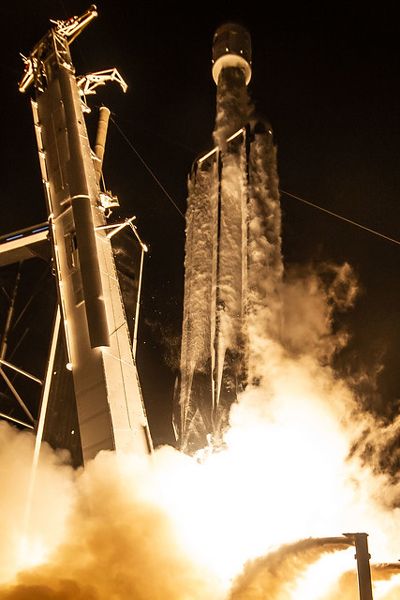
Carrying 24 satellites (including The Planetary Society's LightSail 2 spacecraft) as part of the U.S. Air Force's STP-2 mission, SpaceX's Falcon Heavy rocket lifts off from Launch Complex 39A at NASA's Kennedy Space Center in Florida...on June 25, 2019 (Eastern Time).
SpaceX

The Planetary Society Celebrates Launch of LightSail 2 (Press Release)

Bill Nye, CEO: "We are democratizing space."

Cape Canaveral, FL (June 25, 2019) LightSail 2 is officially in space! The Planetary Society's solar sail CubeSat lifted off from Kennedy Space Center, Florida on 25 June at 02:30 EDT (06:30 UTC). The late-night launch came courtesy of SpaceX's triple-booster Falcon Heavy rocket, which was carrying 24 spacecraft for the U.S. Air Force's STP-2 mission.

Launch was originally scheduled to occur at 23:30 EDT on 24 June (03:30 UTC on 25 June). SpaceX delayed the liftoff time by 3 hours to complete additional ground system checkouts.

During its ride to orbit, LightSail 2 was tucked safely inside its Prox-1 carrier spacecraft. The Falcon Heavy upper stage's payload stack released Prox-1 about an hour and 20 minutes after liftoff, at an altitude of roughly 720 kilometers. Prox-1 will house LightSail 2 for 1 week, allowing time for other vehicles released into the same orbit to drift apart so each can be identified individually. LightSail 2 deployment is set for 2 July.

"After that spectacular nighttime launch, the flight team is ready to operate the LightSail 2 spacecraft," said LightSail 2 project manager David Spencer. "We will be listening for the radio signal in a week, following the release of LightSail 2 from Prox-1."

Bruce Betts, Planetary Society chief scientist and LightSail 2 program manager, added, "After years of hard work we are ecstatic with the launch and looking forward to doing some solar sailing."

In a video message to Planetary Society members, CEO Bill Nye, said, "The SpaceX Falcon Heavy took our spacecraft up and on orbit, thanks to you. Thank you all so much. We are advancing space science and exploration. We are democratizing space. We are innovating."
About 500 Planetary Society members and supporters were on hand at the Kennedy Space Center Apollo-Saturn V Center to watch their crowdfunded spacecraft take flight. Sound from the Falcon Heavy's 27 engines rumbled through the viewing area, as the rocket blazed high into the sky before starting its arc out over the Atlantic Ocean. Both of the rocket's side boosters flew back to Cape Canaveral for upright landings, creating sonic booms that delighted the raucous crowd.

SpaceX's live feed from mission control in Hawthorne, California followed the rocket's center booster as it attempted to land on the drone ship Of Course I Still Love You. The booster’s exhaust plume briefly appeared on camera before apparently crashing into the ocean. The landing was not a requirement for mission success.

Meanwhile, the upper stage blasted on to its first stop, an orbit roughly 865 by 300 kilometers above Earth. There, it deployed several CubeSats and a small satellite before lighting its engine again and flying to a circular orbit of about 720 kilometers. Prox-1 was the first spacecraft off the rocket there.

LightSail 2 team members will soon converge at Cal Poly San Luis Obispo in California, where the spacecraft’s mission control is located. Once LightSail 2 is released from Prox-1 on 2 July, the team will spend several days checking out the CubeSat’s systems before commanding its dual-sided solar panels to deploy. Following that, the spacecraft's solar sails will be deployed, roughly 2 weeks in total from launch day.

Source: The Planetary Society
****

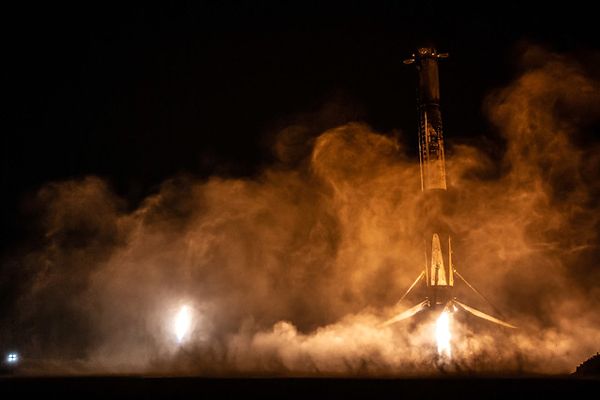
The Falcon Heavy rocket's two side boosters are about to touch down on their respective landing zones at Cape Canaveral, Florida...on June 25, 2019 (Eastern Time).
SpaceX

A mini-DVD bearing the names of over 23,300 Kickstarter backers (including me) is visible on the LightSail 2 spacecraft...near the left side of this image.
The Planetary Society

My certificate for supporting the LightSail 2 mission through Kickstarter.

Friday, April 12, 2019

Falcon Heavy Launches on Its Second Flight...Paving the Way for LightSail 2!

A long-exposure shot of SpaceX's Falcon Heavy rocket lifting off from Launch Complex (LC)-39A at NASA's Kennedy Space Center in Florida...on April 11, 2019.
SpaceX

Yesterday evening [at 6:35 PM, EDT (3:35 PM, PDT)], SpaceX's Falcon Heavy rocket successfully launched on its second flight from NASA's Kennedy Space Center in Florida...flawlessly placing the Arabsat 6A spacecraft in a supersynchronous transfer orbit [with an apogee of nearly 56,000 miles (90,000 kilometers) and a perigee of 200 miles (300 kilometers)] above the Earth. To add to Thursday's triumphant mission for SpaceX, the three Falcon 9 boosters that comprised Falcon Heavy managed to land safely—with the two side boosters touching down on a pair of landing sites at Cape Canaveral Air Force Station, and the core booster successfully reaching the SpaceX drone ship Of Course I Still Love You stationed 615 miles (990 kilometers) off the coast of Florida. The core booster for the first Falcon Heavy mission fell short of this achievement last year.

SpaceX's Falcon Heavy rocket lifts off from LC-39A at NASA's Kennedy Space Center in Florida...on April 11, 2019.
SpaceX

With flight #2 for Falcon Heavy now in the books, SpaceX can begin preparing for the more ambitious third flight of the powerful launch vehicle. Known as Space Test Program 2 (or STP-2), Falcon Heavy's next mission is dedicated to the U.S. Air Force and will involve placing 25 different satellites in three different orbits. Among those satellites is a student-built spacecraft known as Prox-1—which itself will be the carrier for LightSail 2, a privately-funded solar sail built by The Planetary Society...a nonprofit space advocacy group based in Pasadena, California.

The side boosters of SpaceX's Falcon Heavy rocket are about to touch down on a pair of landing sites at Cape Canaveral Air Force Station in Florida...on April 11, 2019.
SpaceX

The first LightSail, which was launched in 2015, was a major success...having lifted off in May of that year and deploying its solar sail less than a month later. There were issues (such as communication glitches and computer resets) with this solar sail that will hopefully be rectified on LightSail 2. If all goes as planned, LightSail 2 will successfully deploy from Prox-1 about 447 miles (720 kilometers) above the Earth, smoothly unfurl its sails, and begin demonstrating maneuvering capabilities propelled by sunlight that will pave the way for bigger solar sails that will venture deeper into outer space (like Japan's IKAROS spacecraft that flew past Venus in late 2010).

The core booster of SpaceX's Falcon Heavy rocket sits quietly on the deck of the drone ship 'Of Course I Still Love You' 615 miles (990 kilometers) off the coast of Florida...on April 11, 2019.
SpaceX

The Falcon Heavy carrying LightSail 2 is tentatively scheduled for launch next month (on May 31)—but that will obviously change as LightSail 2 itself is still in storage at Cal Poly San Luis Obispo in California. When Falcon Heavy does fly again, it will be another triumphant moment for SpaceX's giant reusable rocket...and a significant moment for spacecraft that may someday pave the way for vehicles (both manned and unmanned) to travel to interstellar space within a short amount of time! Happy Friday.

An artist's concept of The Planetary Society's LightSail 2 spacecraft sailing through outer space.
The Planetary Society
Tuesday, June 09, 2015

LightSail Finally Spreads Its Wings!

An image that was taken of the LightSail spacecraft's solar sail one day after it was successfully deployed...on June 7, 2015.
The Planetary Society
Bill Nye & Planetary Society Celebrate LightSail™ Test Mission Landmark (Press Release - June 7)
Data indicate citizen-funded spacecraft deploys solar sail, milestone for test path toward 2016 mission

Pasadena, CA (June 7, 2015) -- After 19 days on orbit, data indicate that The Planetary Society’s LightSail™ spacecraft deployed its Mylar® solar sail in space. More information will be downloaded, analyzed and publicized in days to come, including possible images. A post-deployment press conference will occur following an initial data analysis period. Today’s deployment marked a milestone for the mission to test LightSail’s critical functions in low-Earth orbit, a precursor to a second mission set for 2016. Bill Nye (The Science Guy®), CEO at The Planetary Society, celebrated the landmark and stated:

“We couldn’t get signals to and from our LightSail on the first orbital pass, so we tried again on our next orbit— and it worked! We’ve learned a lot about perseverance on this test mission. Although it’s in inertial space, LightSail has had me on a rollercoaster. I want to thank the engineering team; they’ve done fantastic work. I especially want to thank our supporters and members, who made this success possible. We are advancing space science and exploration. This mission is part of our mission.”

The Planetary Society's solar sailing involvement was started by Society co-founder Louis Friedman more than a decade ago. The spacecraft was designed by Stellar Exploration, Inc., in San Luis Obispo, Calif. LightSail's lead contractor for integration and testing is Pasadena, Calif.-based Ecliptic Enterprises Corporation, a space avionics and sensor systems firm best known for its popular RocketCam™ family of video systems used on rockets and spacecraft. The spacecraft has ground stations at California Polytechnic State University San Luis Obispo and Georgia Tech. The LightSail project is managed by Doug Stetson, founder and principal partner of the Space Science and Exploration Consulting Group. Boreal Space and Half-Band Technologies are contractors to Ecliptic.
Celebrating 35 years, The Planetary Society has inspired millions of people to explore other worlds and seek other life. With the mission to empower the world's citizens to advance space science and exploration, its international membership makes the non-governmental Planetary Society the largest space interest group in the world. Carl Sagan, Bruce Murray and Louis Friedman founded the Planetary Society in 1980. Bill Nye, a longtime member of the Planetary Society's Board, serves as CEO.


Source: The Planetary Society

****

Wednesday, May 20, 2015

LightSail Lifts Off! (And So Did The X-37B...)

An artist's concept of The Planetary Society's LightSail spacecraft orbiting the Earth.
The Planetary Society

Bill Nye & Planetary Society Celebrate LightSail™ Spacecraft Test Launch (Press Release)

Citizen-funded solar sail CubeSat in orbit, awaits sail deployment stage

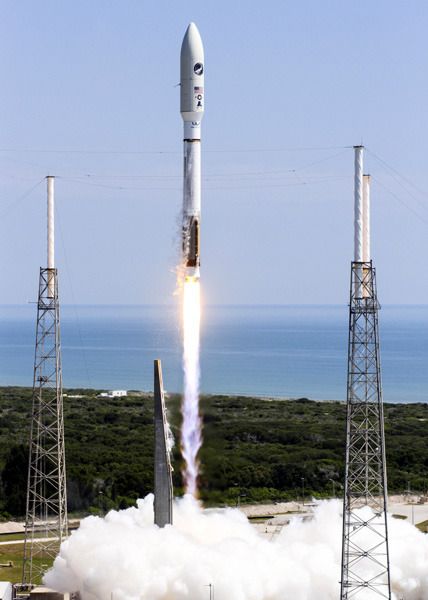
Cape Canaveral, FL (May 20, 2015) The Planetary Society’s citizen-funded LightSail™ spacecraft has launched into orbit aboard a United Launch Alliance (ULA) Atlas V rocket from Cape Canaveral Air Force Station. The spacecraft is part of a secondary payload dubbed ULTRASat aboard the U.S. Air Force mission AFSPC-5. The mission will test LightSail’s critical functions in low-Earth orbit, a precursor to a second mission set for 2016.

Bill Nye (The Science Guy®), CEO at The Planetary Society, witnessed the launch on site among Planetary Society staff and members. Nye stated:

“Today is an extraordinary day for The Planetary Society, our members, and space enthusiasts around the world: LightSail successfully launched into orbit. Our co-founders dreamt of this day. We've been working to get a solar sail into space since I joined The Planetary Society Board in 1997.

“While we celebrate this step, LightSail’s biggest tests are still ahead. Over the next days, we will be monitoring our CubeSat as we prepare for the big show: the day LightSail deploys its super shiny Mylar sails for flight on sunlight. Stay tuned; the best is about to happen.

“As we await that stage, we just get more excited. After all, we've been working on this for 39 years. LightSail would not be possible without our members, fans and citizens worldwide. We are all in this together. Let's see if we can give space exploration a strong nudge and change the world a little bit.”

Solar sailing works by using sunlight for propulsion. When solar photons strike LightSail's reflective Mylar® sails, their momentum is transferred to the spacecraft, gradually accelerating it through space. While the push from photons is miniscule, it is continuous and unlimited. Solar sails can eventually reach greater speeds than those obtained from chemical rockets.

LightSail is packaged into a small spacecraft called a CubeSat. CubeSats have made low-cost space missions a reality for universities and research groups. However, providing propulsion for these tiny satellites has been a challenge. LightSail will demonstrate the viability of solar sailing for CubeSats. During the May 2015 LightSail test launch, the LightSail team will address any technical issues and apply takeaways to the 2016 mission.

The 2015 test flight will not carry the spacecraft high enough to escape Earth's atmospheric drag, and will thus not demonstrate controlled solar sailing. Once in orbit, the spacecraft will go through a checkout and testing period of about four weeks before deploying its solar sails. After the sails unfurl, LightSail will study the behavior of the sails for a few days before it is pulled back into Earth’s atmosphere. Key images and data on the spacecraft's performance will be sent to ground stations at Cal Poly San Luis Obispo and Georgia Tech.

The spacecraft was designed by Stellar Exploration, Inc., in San Luis Obispo, Calif. LightSail's lead contractor for integration and testing is Pasadena, Calif.-based Ecliptic Enterprises Corporation, a space avionics and sensor systems firm best known for its popular RocketCam™ family of video systems used on rockets and spacecraft. The LightSail project is managed by Doug Stetson, founder and principal partner of the Space Science and Exploration Consulting Group.

The Planetary Society’s second LightSail spacecraft is scheduled to fly in 2016. This mission will build on the results of the test flight to conduct a full demonstration of solar sailing in Earth orbit. LightSail will be packaged inside a spacecraft called Prox-1 built by students at Georgia Tech. The spacecraft duo will be launched aboard a SpaceX Falcon Heavy rocket to an orbit of about 720 kilometers (450 miles).

Citizens around the world can be part of the 2016 LightSail mission. The “Selfies to Space” feature invites people to submit photographs for inclusion aboard the spacecraft at planetary.org/selfie.

Dr. Neil deGrasse Tyson, a member of The Planetary Society board of directors, joined Nye to launch a LightSail Kickstarter campiagn (planetary.org/kickstarter) in a video announcement, which led to immediate worldwide response. Funded entirely by private citizens, LightSail is the yield of collective support.

The Planetary Society's solar sailing involvement was started by Society co-founder Louis Friedman more than a decade ago. Co-founder Carl Sagan championed solar sailing on a famous 1976 episode of The Tonight Show with Johnny Carson. For complete coverage of the LightSail test flight, as well as the second LightSail mission scheduled for 2016, visit sail.planetary.org.

Source: The Planetary Society

****

An Atlas V rocket carrying the U.S. Air Force's X-37B Orbital Test Vehicle and The Planetary Society's LightSail spacecraft lifts  off from Cape Canaveral Air Force Station in Florida...on May 20, 2015.
United Launch Alliance

Monday, March 09, 2015

Moving Closer to Launch: LightSail Is Now at Cape Canaveral!

An artist's concept of The Planetary Society's LightSail spacecraft orbiting the Earth.
The Planetary Society

New Details Released for Citizen-Funded LightSail Spacecraft Launch (Press Release)

LightSail Arrives in Florida for May 6 Test Flight

Pasadena, CA (March 9, 2015) The Planetary Society’s privately funded LightSail spacecraft has arrived in Cape Canaveral, Fla., where it will be integrated with an Atlas V rocket scheduled to launch no earlier than May 6. The spacecraft is part of a secondary payload dubbed ULTRASat, which will fly aboard the U.S. Air Force mission AFSPC-5.

Bill Nye (The Science Guy), CEO at The Planetary Society, issued the following statement:

Our LightSail cubesat passed every one of its tests and has been loaded into its launcher mechanism. I’m naturally happy and excited, but I admit, a bit nervous. We've been working to get a solar sail into space since I joined The Planetary Society Board in 1997. It’s quite a milestone. Deep breath, no turning back now, this baby's on its own now. Here we go...

For complete coverage of the LightSail test flight, as well as the second LightSail mission scheduled for 2016, visit sail.planetary.org.

Source: The Planetary Society

Monday, January 26, 2015

LightSail Is Ready to Fly!

An artist's concept of The Planetary Society's LightSail spacecraft orbiting the Earth.
The Planetary Society

Planetary Society Announces Test Flight for Privately Funded LightSail Spacecraft (Press Release)

CEO Bill Nye, Neil deGrasse Tyson, partners invite public to follow May 2015 mission

Pasadena, CA (January 26, 2015) – The Planetary Society today announced the first of its LightSail spacecraft will embark on a May 2015 test flight. Funded entirely by private citizens, the solar sail satellite will hitch a ride to space aboard an Atlas V rocket from Cape Canaveral Air Force Station in Florida. The mission will test LightSail’s critical functions, a precursor to a second mission slated for 2016. That second flight will mark the first controlled, Earth-orbit solar sail flight and ride along with the first operational launch of SpaceX's Falcon Heavy rocket.

“There's an old saying in aerospace, 'One test is worth a thousand expert opinions.’ After six years of development, we're ready at last to see how LightSail flies," said Bill Nye (The Science Guy), CEO at The Planetary Society.

"LightSail is technically wonderful, but it's also wonderfully romantic. We'll sail on sunbeams,” added Nye. “But wait, there’s more: this unique, remarkable spacecraft is funded entirely by private citizens, people who think spaceflight is cool."

Solar sailing works by using sunlight for propulsion. When solar photons strike LightSail's reflective Mylar® sails, their momentum is transferred to the spacecraft, gradually accelerating it through space. While the push from photons is miniscule, it is continuous and unlimited. Solar sails can eventually reach greater speeds than those obtained from chemical rockets. LightSail consists of four identical triangular sails attached to four 4-meter booms, resulting in a square solar sail when fully deployed.

The 2015 test flight will not carry the spacecraft high enough to escape Earth's atmospheric drag, and will thus not demonstrate controlled solar sailing. Once in orbit, the spacecraft will go through a checkout and testing period of about four weeks before deploying its solar sails. After the sails unfurl, LightSail will test its attitude control system and study the behavior of the sails for a few days before it is pulled back into the planet's atmosphere. Key images and data on the spacecraft's performance will be sent to ground stations at Cal Poly San Luis Obispo and Georgia Tech.

Dr. Neil deGrasse Tyson, Hayden Planetarium director and Planetary Society board of directors member, added, “With the expected launch of LightSail -- a craft propelled among the stars on the pressure of light itself -- the expanse of space becomes a literal analogue to the open seas. If space is tomorrow's ocean, then Earth’s surface is its shoreline.”

LightSail is packaged into a small spacecraft called a CubeSat. CubeSats have made low-cost space missions a reality for universities and research groups. However, providing propulsion for these tiny satellites has been a major challenge. LightSail will demonstrate the viability of solar sailing for CubeSats. The spacecraft was designed by Stellar Exploration, Inc., in San Luis Obispo, Calif. LightSail's lead contractor for integration and testing is Pasadena, Calif.-based Ecliptic Enterprises Corporation, a space avionics and sensor systems firm best known for its popular RocketCam™ family of video systems used on rockets and spacecraft.

“Starting with a clever ‘3U’ CubeSat design from Stellar Exploration, a small team at Ecliptic was tasked a year ago with completing the final integration and testing of this first LightSail spacecraft,” said Rex Ridenoure, CEO of Ecliptic. “We experienced several design, hardware, software and testing issues along the way, but thanks to excellent technical support from Stellar Exploration, Boreal Space, Half Band Technologies, Cal Poly, Georgia Tech and others, we surmounted them all and succeeded in securing approval to launch.”

The Planetary Society’s second LightSail spacecraft is scheduled to fly in 2016. This mission will build on the results of the test flight to conduct a full demonstration of solar sailing in Earth orbit. LightSail will be packaged inside a spacecraft called Prox-1 built by students at Georgia Tech. The spacecraft duo will be launched aboard a SpaceX Falcon Heavy rocket to an orbit of about 720 kilometers (450 miles).

The Planetary Society's solar sailing involvement was started by Society co-founder Louis Friedman more than a decade ago. The LightSail project is managed by Doug Stetson, founder and principal partner of the Space Science and Exploration Consulting Group.

“LightSail is truly ‘the people’s satellite.’ Thanks to our members, the dream of citizen supported solar sailing will become a reality; the vision goes back to our founders, Lou Friedman, Bruce Murray, and Carl Sagan. We encourage space fans worldwide to join us on LightSail’s journey. Together we can change the world.” Nye concluded.

Source: The Planetary Society

****

Thursday, September 25, 2014

LightSail Spreads Its Wings (on the Ground)!

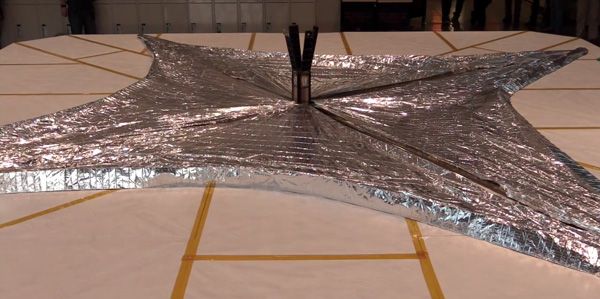
A screenshot showing the LightSail-A spacecraft deploying its solar sails during a day-in-the-life test held at Cal Poly San Luis Obispo...on September 23, 2014.
The Planetary Society

Here's a cool video showing The Planetary Society's LightSail spacecraft deploying its sails during a day-in-the-life test held at Cal Poly San Luis Obispo on Tuesday. This marked a huge milestone for the privately-funded project...with the test pretty much going smoothly, and thus paving the way for a possible flight to space for LightSail-A aboard an Atlas V launch vehicle next year. The Society ultimately plans to send LightSail-B (a.k.a. LightSail-1) on an official flight 450 miles above the Earth in April of 2016. This demonstration would set sail (pun intended) aboard SpaceX's new Falcon Heavy rocket. Can't wait!

Wednesday, July 09, 2014

GO LIGHTSAIL! Aiming For Launch In 2016 (And Possibly 2015 As Well)...

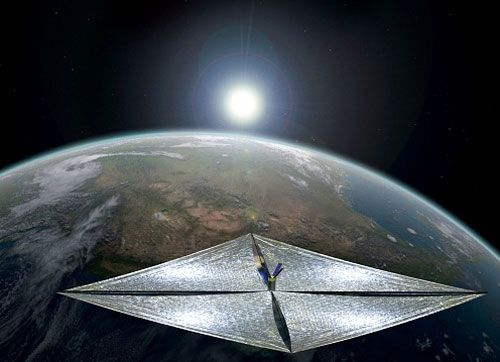
An artist's concept of The Planetary Society's LightSail spacecraft orbiting the Earth.
The Planetary Society

The Planetary Society just announced tonight that it is aiming to launch a privately-funded solar sailing spacecraft into Earth orbit in early 2016. Known as Lightsail-1, this craft would hitch a ride aboard SpaceX's Falcon Heavy rocket (which will make its maiden flight sometime next year) in April of 2016 and soar up to 450 miles above the Earth before deploying its Mylar-constructed solar sail. If successful, Lightsail would become the third craft [or fourth...depending on when NASA's Sunjammer takes flight (possibly by the end of this year)] to deploy an ultra-thin membrane out in deep space—behind Japan's IKAROS interplanetary probe and NASA's NanoSail-D (both launched in 2010).

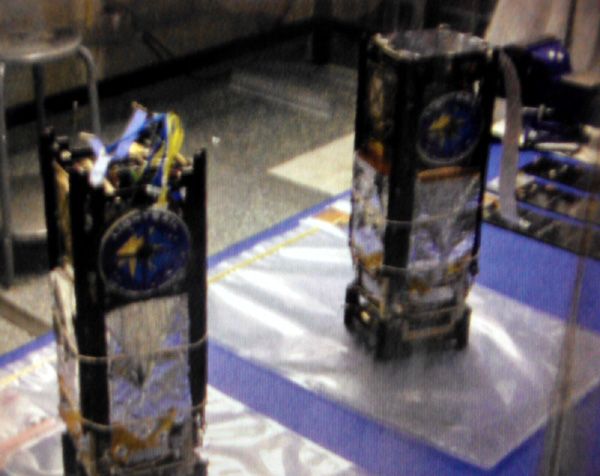
Waiting for launch vehicles and launch dates to be chosen, the twin Lightsail spacecraft are secured inside a cleanroom in early 2012.
The Planetary Society

The Lightsail launching in 2016 is actually known as Lightsail-B; The Planetary Society will possibly try to launch a test version, known as Lightsail-A, into low-Earth orbit aboard an Atlas V rocket in early 2015. Unlike Lightsail-B, however, Version A will only be used to test sail deployment, the craft's telecommunication system and take images. Lightsail-B will be the one to utilize its membrane to push off against sunlight as a means of propelling itself through deep space. If this mission is successful, Lightsail will definitely join IKAROS and company in paving the way for a new era of efficient propulsion through the cosmos. Godspeed!

Friday, November 11, 2011

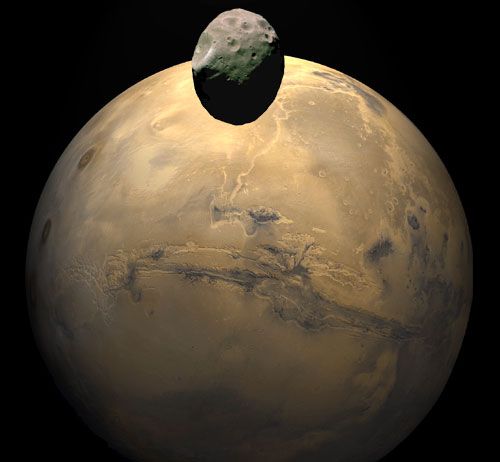
Mars and Phobos.
NASA / JPL / Malin Space Sciences System / RichTPar

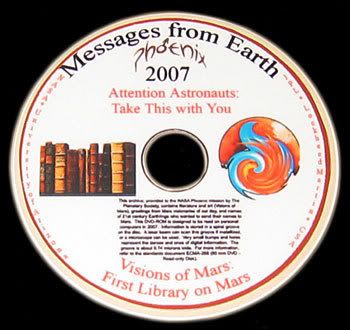
FOBOS-GRUNT... That’s the name of the latest robotic Mars mission by Russia to be on the verge of ending in failure. What I find mind-boggling is the fact The Planetary Society—a well-known non-profit space advocacy group based in Pasadena, California—would continue to rely on Russia to send its many exciting projects towards space throughout the years, only to fail after launch during the process. The first disappointment came in 1996, when the Mars ’96 spacecraft, carrying The Planetary Society’s first Vision of Mars CD-ROM, ended up at the bottom of the Pacific Ocean after the Proton rocket carrying the probe suffered a mechanical problem after liftoff. [Another Vision of Mars DVD (shown below) has since found its way onto the surface of Mars...courtesy of NASA’s now-defunct but very-successful Phoenix lander.] The second disappointment came in 2005, when a Volna rocket—carrying the Society’s Cosmos 1 solar sail—malfunctioned after launch, preventing Cosmos 1 from reaching its intended orbit. And now stranded in low-Earth orbit (LEO) with Fobos-Grunt is the Society’s Phobos LIFE (Living Interplanetary Flight Experiment) project...which consists of a canister (a.k.a. 'biomodule') that contains millions of microorganisms that were intended to test the "Transpermia Hypothesis": Which theorizes that microbes could survive trips between planets onboard rocks blasted into deep space by impacts. A Shuttle LIFE canister, which is similar to the one placed on Fobos-Grunt, successfully flew into LEO onboard the orbiter Endeavour during flight STS-134 last May.

A flight spare for the Phoenix DVD.
The Planetary Society

The Planetary Society has another project coming up...the Lightsail-1 solar sail that is currently scheduled to fly into space no earlier than mid-2012. No launch vehicle has yet been selected to send Lightsail-1 into Earth orbit. Not to sound like an arrogant Yankee space geek or something, but I really do hope the Society considers American rockets and American rockets only (and maybe a Japanese H-IIA vehicle) when it comes to choosing a means of transport once Lightsail-1 is ready to soar into the sky. Of course, since Lightsail-1 will be a secondary payload, it’s up to the organization that is responsible for the primary payload to decide which rocket will be used for the mission. But I’ll take a Delta II, an Atlas V or a Falcon 9 vehicle (a Delta IV rocket, currently the largest in the U.S. expendable launch vehicle inventory, might be bit of an overkill) over a converted Russian submarine-launched ballistic missile (which is what Cosmos 1 flew on) any day. Though I hope the Society doesn’t consider a Taurus XL rocket when/if that one becomes operational again. I’m still peeved over the Glory spacecraft’s launch failure last March.

An artist's concept of the LIGHTSAIL-1 spacecraft in Earth orbit.
The Planetary Society

Saturday, January 01, 2011

Optimus Prime returns in this July's TRANSFORMERS: DARK OF THE MOON.

HAPPY NEW YEAR, EVERYONE!!! Personally speaking, 2011 looks to be waaay more action-packed and exciting than last year...at least in terms of movies and space exploration. I’m looking forward to the releases of Transformers: Dark of the Moon and Battle: Los Angeles, while filming for Christopher Nolan’s final flick in the Batman franchise, The Dark Knight Rises is scheduled to start by this May. With regards to space exploration, NASA’s Curiosity Mars Rover is scheduled for launch to the Red Planet this November, the Juno spacecraft is set to launch towards Jupiter this August, the twin GRAIL spacecraft are set to launch to the Moon this September, The Planetary Society’s Lightsail-1 spacecraft should fly by the end of this spring, the Glory spacecraft is set to launch on its long-awaited Earth science mission next month, the space shuttle fleet will finally retire by April (if the STS-135 mission that is scheduled for June doesn’t end up receiving funding by Congress), the Dawn spacecraft will arrive at its first destination—asteroid Vesta—this July, the MESSENGER spacecraft will enter orbit around Mercury in March, SpaceX will finally be sending its Dragon cargo ship to the International Space Station and Virgin Galactic’s SpaceShipTwo might be ferrying paying passengers on suborbital flights as early as the end of this year.

An art concept of the LIGHTSAIL-1 spacecraft in Earth orbit.

On a more personal level, I should be able to pay off my credit card debt and close the account by this Spring...assuming my tax refund this year is as high as I hope it to be. Um, should I have divulged this information to y'all? Oh well.


Logo for the 2011 BCS National Championship Game in Glendale, Arizona.

January 2011
-Partial solar eclipse over much of the Eastern Hemisphere (Jan 4)
-BCS National Championship Game in Glendale, Arizona: Auburn vs. Oregon (Jan 10)
-The Green Hornet (Jan 14)
-68th Annual Golden Globe Awards (Jan 16)
-Season 10 premiere of American Idol (Jan 19)
-Launch of Japan’s second H-2 Transfer Vehicle to the International Space Station (Jan 20)

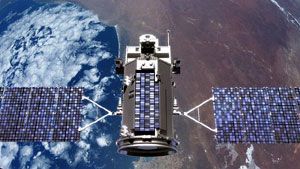
An art concept of NASA's GLORY spacecraft in Earth orbit.

February 2011
-Mission STS-133... Space shuttle Discovery (Feb 3)
-Super Bowl XLV in Texas (Feb 6)
-53rd Annual Grammy Awards (Feb 13)
-Launch of Europe’s second Automated Transfer Vehicle, Johannes Kepler, to the International Space Station (Feb 15)
-53rd annual Daytona 500 in Florida (Feb 20)
-2011 NBA All-Star Game in Los Angeles, California (Feb 20)
-Launch of NASA’s Glory spacecraft into Earth orbit (Feb 23)
-83rd Academy Awards (Feb 27)

Michelle Rodriguez in BATTLE: LOS ANGELES.

March 2011
-Apollo 18 (Mar 4)
-Rango (Mar 4)
-Battle: Los Angeles (Mar 11)
-2011 NCAA March Madness basketball tournament begins with Opening Round Game (Mar 15)
-NASA’s Messenger spacecraft enters orbit around Mercury (Mar 18)
-NASA’s Pluto-bound New Horizons spacecraft crosses Uranus’ orbit (Mar 18)
-Conclusion of the March Madness tournament prior to the 2011 Final Four games in Texas (Mar 27)

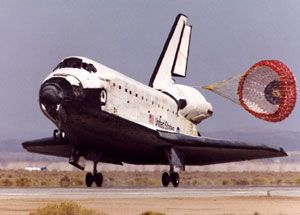
A space shuttle lands at Edwards Air Force Base in California.

April 2011
-Mission STS-134... Space shuttle Endeavour (Apr 1)
-2011 NCAA Final Four basketball tournament in Houston, Texas (Apr 2)
-NCAA Final Four Championship Game in Houston, Texas (Apr 4)
-Scream 4 (Apr 15)
-Fast Five (Apr 29)
-NFL Draft (TBA)

Johnny Depp and Penélope Cruz in PIRATES OF THE CARIBBEAN: ON STRANGER TIDES.

May 2011
-Thor (May 6)
-Pirates of the Caribbean: On Stranger Tides (May 20)
-Start of the 2011 French Open tennis tournament (May 22)
-The Hangover 2 (May 26)
-95th Indianapolis 500 at the Indianapolis Motor Speedway (May 29)

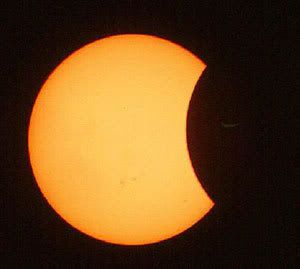
A partial solar eclipse.

June 2011
-Partial solar eclipse in the Arctic (Jun 1)
-X-Men: First Class (Jun 3)
-Conclusion of the 2011 French Open (Jun 5)
-Super 8 (Jun 10)
-Total lunar eclipse; viewable in Africa, India and Middle East (Jun 15)
-Cars 2 (Jun 24)
-Mission STS-135... Space shuttle Atlantis (Jun 28 - Tentative)

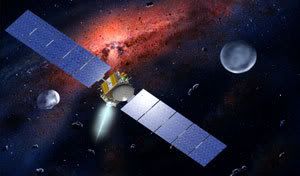
An artist's rendition depicting NASA's DAWN spacecraft in the Asteroid Belt.

July 2011
-Transformers: Dark of the Moon (Jul 1)
-Partial solar eclipse off the coast of Antarctica (Jul 1)
-Start of the 2011 Tour de France (Jul 2)
-International Olympic Committee announces host city for 2018 Winter Olympics (Jul 6)
-NASA’s Dawn spacecraft enters orbit around asteroid Vesta (TBA)
-The planet Neptune completes its first full orbit since being discovered in 1846 (Jul 10)
-2011 Major League Baseball All-Star Game in Phoenix, Arizona (Jul 12)
-Harry Potter and the Deathly Hallows: Part II (Jul 15)
-Captain America: The First Avenger (Jul 22)
-Conclusion of the Tour de France (Jul 24)
-Cowboys and Aliens (Jul 29)

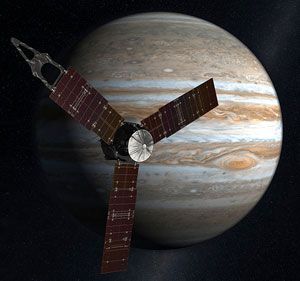
An art concept of NASA's JUNO spacecraft approaching Jupiter.

August 2011
-The Smurfs (Aug 3)
-Launch of NASA’s Juno spacecraft to Jupiter (Aug 5)
-Start of the XXVI World Youth Day in Madrid, Spain (Aug 15)
-Conclusion of World Youth Day (Aug 21)
-Start of the 2011 World Rowing Championships in Slovenia (Aug 28)
-Analog TV stations in Canada required to complete transition to digital (Aug 31)

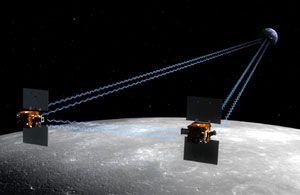
An art concept of NASA's twin GRAIL spacecraft orbiting the Moon.

September 2011
-Conclusion of the 2011 World Rowing Championships in Slovenia (Sep 4)
-Launch of NASA’s twin GRAIL spacecraft to the Moon (Sep 8)
-Start of the 2011 Rugby World Cup in New Zealand (Sep 9)

A screenshot from the movie REAL STEEL.

October 2011
-Real Steel (Oct 7)
-First flight of SpaceX’s Dragon ship to the International Space Station (Oct 8)
-Paranormal Activity 3 (Oct 21)
-Conclusion of the Rugby World Cup in New Zealand (Oct 23)

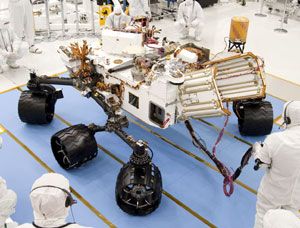
Engineers work on the CURIOSITY Mars Rover at NASA's Jet Propulsion Laboratory in Pasadena, California.

November 2011
-The Twilight Saga: Breaking Dawn (Nov 18)
-Launch of NASA’s Curiosity rover to Mars (Nov 25)
-Partial solar eclipse in Antarctica (Nov 25)

A U.S. soldier in Iraq.

December 2011
-The Ides of March (TBA)
-SpaceX’s Dragon ship launches cargo to the International Space Station (Dec 7)
-Total lunar eclipse; visible in Asia, Australia and Alaska (Dec 10)
-Orbital Sciences’ Cygnus freighter launches to the International Space Station (Dec 14)
-Mission: Impossible – Ghost Protocol (Dec 16)
-A Very Harold & Kumar Christmas (Dec 23)
-Launch of Russia’s Nauka Multipurpose Laboratory Module to the International Space Station (TBA)
-All United States troops are scheduled to leave Iraq (Dec 31)