Showing posts with label Cassini. Show all posts

Thursday, May 14, 2026

The Latest Update on the Future of Deep Space Exploration...

An artist's concept of L3Harris' Next-Generation Radioisotope Thermoelectric Generator.
L3Harris Technologies, Inc.

Getting into the Space Nuclear Power Game with Next-generation Technology (News Release)

Finalized design of Next Gen RTG clears path for deep space missions to outer Solar System.

L3Harris Technologies has finalized the design of a next-generation nuclear-based power source for future NASA deep space missions, marking a crucial advancement in spacecraft power technology.

The Next-Generation Radioisotope Thermoelectric Generator (Next Gen RTG) cleared its critical design review (CDR) on April 2, 2026, paving the way for a new era of outer Solar System exploration.

“Passing the CDR is an important milestone because it validates that our design meets all the technical requirements and can be manufactured,” said Bill Sack, General Manager, RocketWorks and Power Systems at L3Harris. “It also demonstrates we've successfully re-established this critical capability after years of limited production.”

Flight units could power NASA deep space probes starting in the early 2030s, including a proposed Uranus orbiter that would use two Next Gen RTGs for power and for keeping its temperature-sensitive components warm enough to operate in the frigid environment of the outer Solar System. This dual-purpose capability makes RTGs indispensable for such missions.

What is the Next Gen RTG?

RTGs convert heat from the radioactive decay of plutonium-238 into electricity. Necessary for probes that are too far from the Sun to rely on solar power, they have been in use for 60 years. Early versions continue to supply power to NASA’s twin Voyager probes, which were launched in 1977 and are now traveling in interstellar space.

The Next Gen RTG is an evolution of the general-purpose heat source RTGs that supplied power to NASA’s Cassini Saturn orbiter and, more recently, the New Horizons probe, which carried out a Pluto flyby in 2015 and is now exploring the frozen wonders of the Kuiper Belt. Unlike the L3Harris-built Multi-Mission RTGs currently powering NASA's Curiosity and Perseverance Mars rovers, the Next Gen RTGs are optimized for spacecraft operating in the vacuum of space rather than on the surface of a planet.

This distinction is critical for future missions. The vacuum-optimized design allows for more efficient heat rejection and power generation in the deep space environment where missions like the Uranus orbiter will operate. As a result, the Next Gen RTG offers a higher power output at approximately the same weight as the Multi-Mission RTG. With the capability to generate about 250 watts of power at the beginning of its life, each Next Gen RTG will provide reliable, long-duration power for spacecraft exploring the outer reaches of our Solar System.

“The Next Gen RTG represents a significant leap forward in efficiency," added Sack. "We're delivering more power in the same mass envelope, which is critical when every kilogram matters for deep space missions."

Why the Next Gen RTG Matters

The availability of Next Gen RTGs opens the door to a range of ambitious missions that have been on NASA's wish list. Beyond the Uranus orbiter, these power systems could enable:

- Extended missions to Neptune and its moon, Triton
- Kuiper Belt Object explorers that can go beyond the range of the New Horizons spacecraft
- Long-duration missions to the outer planets' moons
- Interstellar precursor missions that push even farther than Voyager 1 and Voyager 2

Restarting Production

The U.S. Department of Energy’s Idaho National Laboratory tapped L3Harris in 2021 to re-establish the key technologies from the heritage system and update the design in response to growing interest in new deep space missions. The contract is expected to end in 2027 with a production readiness review to verify that the next-generation system can be built using the materials and components that have been re-established.

“We are proving we can do it again," said Leo Gard, Space Propulsion & Power Systems Program Manager at L3Harris. “While we didn't build the original generators, we've successfully reconstructed incomplete documentation and identified modern equivalents for obsolete components through creative problem-solving."

A Collaborative Effort

As prime contractor on the Next Gen RTG program, L3Harris is responsible for the main structure and overall system integration. Teledyne Energy Systems Inc. of Hunt Valley, Maryland, makes the thermoelectric couples that convert heat to electricity, while BAE Systems Space and Mission Systems in Boulder, Colorado, is responsible for insulation.

Source: L3Harris Technologies, Inc.

****

A computer-generated illustration I created of the once-proposed Trident flyby mission to Neptune's moon Triton.
L.M. Prockter et al. LPI / JPL / SwRI / Richard T. Par
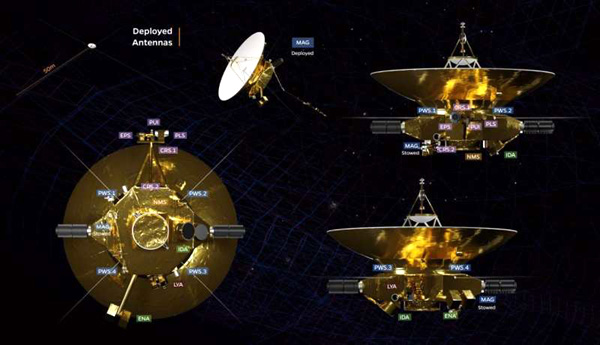
An infographic showing the various science instruments that would fly on a proposed Interstellar Probe spacecraft.
Johns Hopkins University Applied Physics Laboratory

Friday, May 23, 2025

A Spotlight on America's Next Saturn-bound Robotic Explorer...

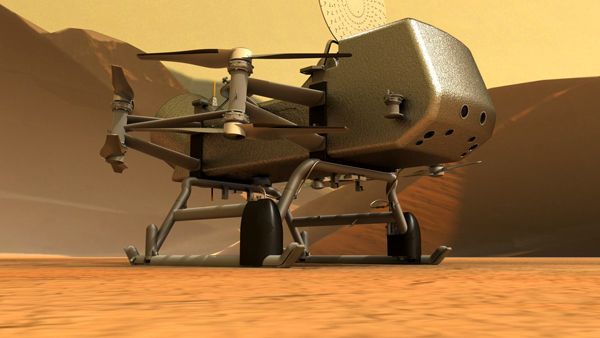
An artist's concept of NASA's Dragonfly rotorcraft on the surface of Saturn's moon Titan.
NASA / Johns Hopkins APL / Steve Gribben

NASA’s Dragonfly Mission Sets Sights on Titan’s Mysteries (News Release - May 22)

When it descends through the thick golden haze on Saturn’s moon Titan, NASA’s Dragonfly rotorcraft will find eerily familiar terrain. Dunes wrap around Titan’s equator. Clouds drift across its skies.

Rain drizzles. Rivers flow, forming canyons, lakes and seas.

But not everything is as familiar as it seems. At -292° Fahrenheit, the dune sands aren’t silicate grains but organic material. The rivers, lakes and seas hold liquid methane and ethane, not water. Titan is a frigid world laden with organic molecules.

Yet Dragonfly, a car-sized rotorcraft set to launch no earlier than 2028, will explore this frigid world to potentially answer one of science’s biggest questions: How did life begin?

Seeking answers about life in a place where it likely can’t survive seems odd. But that’s precisely the point.

“Dragonfly isn’t a mission to detect life — it’s a mission to investigate the chemistry that came before biology here on Earth,” said Zibi Turtle, principal investigator for Dragonfly and a planetary scientist at the Johns Hopkins Applied Physics Laboratory in Laurel, Maryland. “On Titan, we can explore the chemical processes that may have led to life on Earth without life complicating the picture.”

On Earth, life has reshaped nearly everything, burying its chemical forebears beneath eons of evolution. Even today’s microbes rely on a slew of reactions to keep squirming.

“You need to have gone from simple to complex chemistry before jumping to biology, but we don’t know all the steps,” Turtle said. “Titan allows us to uncover some of them.”

Titan is an untouched chemical laboratory where all of the ingredients for known life — organics, liquid water and an energy source — have interacted in the past. What Dragonfly uncovers will illuminate a past since erased on Earth and refine our understanding of habitability and whether the chemistry that sparked life here is a universal rule — or a wondrous cosmic fluke.

Before NASA’s Cassini-Huygens mission, researchers didn't know just how rich Titan is in organic molecules. The mission’s data, combined with laboratory experiments, revealed a molecular smorgasbord — ethane, propane, acetylene, acetone, vinyl cyanide, benzene, cyanogen and more.

These molecules fall to the surface, forming thick deposits on Titan’s ice bedrock. Scientists believe life-related chemistry could start there — if given some liquid water, such as from an asteroid impact.

Enter Selk crater, a 50-mile-wide impact site. It’s a key Dragonfly destination, not only because it’s covered in organics, but because it may have had liquid water for an extended period of time.

The impact that formed Selk melted the icy bedrock, creating a temporary pool that could have remained liquid for hundreds to thousands of years under an insulating ice layer, like winter ponds on Earth. If a natural antifreeze like ammonia were mixed in, the pool could have remained unfrozen even longer, blending water with organics and the impactor’s silicon, phosphorus, sulfur and iron to form a primordial soup.

“It’s essentially a long-running chemical experiment,” said Sarah Hörst, an atmospheric chemist at Johns Hopkins University and co-investigator on Dragonfly’s science team. “That’s why Titan is exciting. It’s a natural version of our origin-of-life experiments — except it’s been running much longer and on a planetary scale.”

For decades, scientists have simulated Earth’s early conditions, mixing water with simple organics to create a “prebiotic soup” and jumpstarting reactions with an electrical shock. The problem is time. Most tests last weeks, maybe months or years.

The melt pools at Selk crater, however, possibly lasted tens of thousands of years. Still shorter than the hundreds of millions of years that it took life to emerge on Earth, but potentially enough time for critical chemistry to occur.

“We don’t know if Earth life took so long because conditions had to stabilize or because the chemistry itself needed time,” Hörst said. “But models show that if you toss Titan’s organics into water, tens of thousands of years is plenty of time for chemistry to happen.”

Dragonfly will test that theory. Landing near Selk, it will fly from site to site, analyzing the surface chemistry to investigate the frozen remains of what could have been prebiotic chemistry in action.

Morgan Cable, a research scientist at NASA’s Jet Propulsion Laboratory in Southern California and co-investigator on Dragonfly, is particularly excited about the Dragonfly Mass Spectrometer (DraMS) instrument. Developed by NASA’s Goddard Space Flight Center in Greenbelt, Maryland, with a key subsystem provided by the CNES (Centre National d'Etudes Spatiales), DraMS will search for indicators of complex chemistry.

“We’re not looking for exact molecules, but patterns that suggest complexity,” Cable said. On Earth, for example, amino acids — fundamental to proteins — appear in specific patterns. A world without life would mainly manufacture the simplest amino acids and form fewer complex ones.

Generally, Titan isn’t regarded as habitable; it’s too cold for the chemistry of life as we know it to occur, and there’s is no liquid water on the surface, where the organics and likely energy sources exist.

Still, scientists have assumed that if a place has life’s ingredients and enough time, complex chemistry — and eventually life — should emerge. If Titan proves otherwise, it may mean that we’ve misunderstood something about life’s start and it may be rarer than we thought.

“We won’t know how easy or difficult it is for these chemical steps to occur if we don’t go, so we need to go and look,” Cable said. “That’s the fun thing about going to a world like Titan. We’re like detectives with our magnifying glasses, looking at everything and wondering what this is.”

Dragonfly is being designed and built under the direction of the Johns Hopkins Applied Physics Laboratory (APL), which manages the mission for NASA. The team includes key partners at NASA’s Goddard Space Flight Center and NASA’s Jet Propulsion Laboratory. Dragonfly is managed by NASA’s Marshall Space Flight Center in Huntsville, Alabama, for the agency’s Science Mission Directorate at NASA Headquarters in Washington.

Source: NASA.Gov

****

An infrared image of Titan with Selk crater--Dragonfly's key destination--highlighted in this photo.
NASA / JPL - Caltech / University of Nantes / University of Arizona

Saturday, May 17, 2025

Hubble's Successor Makes New Observations of Dragonfly's Future Target at Saturn...

Images of Titan taken by NASA's James Webb Space Telescope and the Keck II telescope atop Mauna Kea in Hawaii...showing cloud convection within the atmosphere of Saturn's largest moon.
NASA, ESA, CSA, STScI and W.M. Keck Observatories

Webb’s Titan Forecast: Partly Cloudy With Occasional Methane Showers (News Release - May 14)

Saturn’s moon Titan is an intriguing world cloaked in a yellowish, smoggy haze. Similar to Earth, the atmosphere is mostly nitrogen and has weather, including clouds and rain. Unlike Earth, whose weather is driven by evaporating and condensing water, frigid Titan has a methane cycle.

NASA’s James Webb Space Telescope, supplemented with images from the Keck II telescope, has for the first time found evidence of cloud convection in Titan’s northern hemisphere, over a region of lakes and seas. Webb has also detected a key carbon-containing molecule that gives insight into the chemical processes in Titan’s complex atmosphere.

Titan’s Weather

On Titan, methane plays a similar role to water on Earth when it comes to weather. It evaporates from the surface and rises into the atmosphere, where it condenses to form methane clouds. Occasionally it falls as a chilly, oily rain onto a solid surface where water ice is hard as rocks.

“Titan is the only other place in our Solar System that has weather like Earth, in the sense that it has clouds and rain fall onto a surface,” explained lead author Conor Nixon of NASA’s Goddard Space Flight Center in Greenbelt, Maryland.

The team observed Titan in November 2022 and July 2023 using both Webb and one of the twin ground-based W.M. Keck Observatories telescopes. Those observations not only showed clouds in the mid-and-high northern latitudes on Titan – the hemisphere where it is currently summer – but also showed those clouds apparently rising to higher altitudes over time. While previous studies have observed cloud convection at southern latitudes, this is the first time that evidence for such convection has been seen in the north.

This observation is significant because most of Titan’s lakes and seas are located in its northern hemisphere and evaporation from lakes is a major potential methane source. Their total area is similar to that of the Great Lakes in North America.

On Earth the lowest layer of the atmosphere, or troposphere, extends up to an altitude of about 7 miles (12 kilometers). However, on Titan, whose lower gravity allows the atmospheric layers to expand, the troposphere extends up to about 27 miles (45 kilometers). Webb and Keck used different infrared filters to probe to different depths in Titan’s atmosphere, allowing astronomers to estimate the altitudes of the clouds.

The science team observed clouds that appeared to move to higher altitudes over a period of days, although they were not able to directly see any precipitation occurring.

Titan’s Chemistry

Titan is an object of high astrobiological interest due to its complex organic (carbon-containing) chemistry. Organic molecules form the basis of all life on Earth, and studying them on a world like Titan may help scientists understand the processes that led to the origin of life on Earth.

The basic ingredient that drives much of Titan’s chemistry is methane, or CH4. Methane in Titan’s atmosphere gets split apart by sunlight or energetic electrons from Saturn’s magnetosphere, and then recombines with other molecules to make substances like ethane (C2H6) along with more complex carbon-bearing molecules.

Webb’s data provided a key missing piece for our understanding of the chemical processes: a definitive detection of the methyl radical CH3. This molecule (called “radical” because it has a “free” electron that is not in a chemical bond) forms when methane is broken apart. Detecting this substance means that scientists can see chemistry in action on Titan for the first time, rather than just the starting ingredients and the end products.

“For the first time we can see the chemical cake while it’s rising in the oven, instead of just the starting ingredients of flour and sugar, and then the final, iced cake,” said co-author Stefanie Milam of the Goddard Space Flight Center.

The Future of Titan’s Atmosphere

This hydrocarbon chemistry has long-term implications for the future of Titan. When methane is broken apart in the upper atmosphere, some of it recombines to make other molecules that eventually end up on Titan’s surface in one chemical form or another, while some hydrogen escapes from the atmosphere. As a result, methane will be depleted over time, unless there is some source to replenish it.

A similar process occurred on Mars, where water molecules were broken up and the resulting hydrogen lost to space. The result was the dry, desert planet that we see today.

“On Titan, methane is a consumable. It’s possible that it is being constantly resupplied and fizzing out of the crust and interior over billions of years. If not, eventually it will all be gone and Titan will become a mostly airless world of dust and dunes,” said Nixon.

Complementing the Dragonfly Mission

More of Titan’s mysteries will be probed by NASA’s Dragonfly mission, a robotic rotorcraft scheduled to land on Saturn’s moon in 2034. Making multiple flights, Dragonfly will explore a variety of locations. Its in-depth investigations will complement Webb’s global perspective.

“By combining all of these resources, including Webb, NASA’s Hubble Space Telescope, and ground-based observatories, we maintain continuity between the former Cassini/Huygens mission to Saturn and the upcoming Dragonfly mission,” added Heidi Hammel, vice president of the Association of Universities for Research in Astronomy and a Webb Interdisciplinary Scientist.

This data was taken as part of Hammel’s Guaranteed Time Observations program to study the Solar System. The results were published in the journal Nature Astronomy.

The James Webb Space Telescope is the world’s premier space science observatory. Webb is solving mysteries in our Solar System, looking beyond to distant worlds around other stars, and probing the mysterious structures and origins of our Universe and our place in it. Webb is an international program led by NASA with its partners, ESA (European Space Agency) and CSA (Canadian Space Agency).

Source: NASA.Gov

****

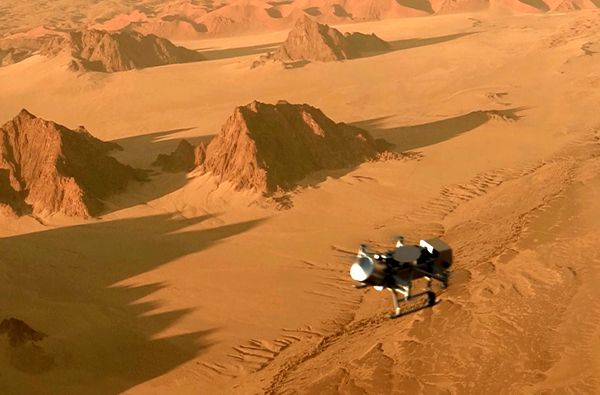
An artist's concept of NASA's Dragonfly rotorcraft about to touch down on the surface of Saturn's moon Titan.
NASA / Johns Hopkins APL / Steve Gribben

Thursday, December 05, 2024

Interstellar Probe: The Dream Is Lost (Again)...

An artist's concept of the proposed Interstellar Probe.

Earlier today, the National Academies of Sciences, Engineering and Medicine (NASEM) released the long-awaited Solar and Space Physics Decadal Survey...a report that recommended to NASA what type of heliophysics-centric mission the agency should undertake over the next 10 years.

The decadal survey proposed that NASA conduct two flagship-class missions: Links, a satellite constellation that consisted of over two dozen spacecraft flying in different orbits to study Earth's magnetosphere, and the Solar Polar Orbiter—a mission that would see a robotic probe orbiting the Sun's polar regions to observe them from above.

What the decadal survey didn't recommend was an ambitious mission that I've been enthusiastically posting about since early 2021: the Interstellar Probe (IP).

Just like what happened when the Trident Neptune-Triton flyby mission was rejected by NASA in early 2021 in favor of two Venus-bound spacecraft, I'm absolutely disappointed that the Interstellar Probe will not see the light of day. At least within the next decade or so, and in the type of mission profile that the Johns Hopkins University Applied Physics Laboratory—who NASA paid $4 million to study the feasibility of this project and would've built the IP spacecraft itself—proposed in its Mission Concept Report three years ago.

If you've been reading this Blog since at least September of 2005 (stop smirking), you'll know just how eager I am to see NASA develop another Pioneer/Voyager/New Horizons-type mission that will fly to the outer Solar System and beyond. Obviously, I was very excited to see what kind of scientific discoveries IP would make during a 15-year journey to interstellar space (on a mission that was designed to last up to 50 years), but it was the dream of putting my name on the spacecraft in a potential public outreach campaign (like what was done with New Horizons back in 2005—when over 430,000 people submitted their names online to be flown on a compact disc aboard the Pluto-bound explorer) that enthralled me about this endeavor.

I got to send a message via radio signal to the exoplanet Gliese 581d courtesy of the Hello From Earth campaign in 2009, but to have my name on an actual spacecraft and not in an energy wave traveling through the Milky Way galaxy some day was obviously a more wondrous scenario.

What makes me especially annoyed about this new decadal survey is that the Solar Polar Orbiter is basically a rehash of the NASA and European Space Agency's Ulysses mission which launched in 1990 and studied the Sun till 2008. Unlike Ulysses, however, the Solar Polar Orbiter would be equipped with cameras to photograph the northern and southern regions of our host star.

Big whoop. What's that compared to potentially capturing an image of our entire Solar System from beyond the heliosphere courtesy of the Interstellar Probe?

Seeing as how NASEM wanted NASA to focus on the near-Earth space environment and how solar activity affected it, it's clearly obvious that the decadal survey was influenced by this year's geomagnetic storms that caused auroras to be visible around much of the globe. This is similar to how the 2020 discovery of phosphine in Venus' atmosphere ultimately caused Trident to be rejected in favor of the VERITAS and DAVINCI missions...which NASA doesn't even care to launch to the Evening Star till sometime next decade.

(Trident would've lifted off for Neptune either next year or 2026 had NASA approved it as its next Discovery-class mission.)

Well... It's clearly obvious that the Universe doesn't really want me to put my moniker on a New Horizons-type spacecraft anytime soon. I guess I'll just have to stick with submitting my name to fly on missions within our Solar System instead.

But one thing is certain: I can have a virtual presence on over a hundred spacecraft venturing to destinations as close as Venus (courtesy of Akatsuki) and worlds as distant as Saturn (through Cassini) in our Solar System, and these missions will never make up for me missing out on New Horizons...or having the dream opportunity that is the Interstellar Probe taken from me and everyone else who are enamored by the idea of having their name attached to a manmade object drifting through the cosmos.

Happy Thursday.

An infographic showing the various science instruments that would've flown on the proposed Interstellar Probe spacecraft.
Johns Hopkins University Applied Physics Laboratory

A video screenshot showing the Interstellar Probe departing from the Sun's heliosphere.
Johns Hopkins University Applied Physics Laboratory


Sunday, June 30, 2024

On This Day in 2004: Cassini Arrives at Saturn...

A mosaic of Saturn that is comprised of images taken by NASA's Cassini spacecraft...on October 10, 2013.
NASA / JPL - Caltech / Space Science Institute / G. Ugarkovic

20 years ago today, it was at 9:12 PM, Pacific Daylight Time, that NASA's Cassini spacecraft entered orbit around the planet Saturn...after a 2.1 billion-mile (3.4 billion-kilometer) journey than began on October 15, 1997.

This was actually a significant event for me on a personal level, as not only was my name on a DVD (which carried a total of 616,420 signatures from people around the world) attached to the side of Cassini, but it also showed that my passion for space exploration didn't wane since I first got excited about NASA missions back in 1989—courtesy of Magellan's launch to Venus and Voyager 2's flyby of Neptune that year.

I was at a hamburger joint hanging out with teammates from my yearbook class (I was a high school senior) the day Cassini and the European Space Agency-built Huygens Titan probe launched aboard a Titan IVB-Centaur rocket from Florida's Cape Canaveral Air Station back in 1997.

I was at home on this day in 2004...watching a live webcast of Cassini's Saturn Orbit Insertion maneuver, courtesy of NASA's Jet Propulsion Laboratory near Pasadena, California. I had just graduated from my college, Long Beach State, over a month earlier!

Back when I first heard about Cassini in 1992 (I was in 6th grade at the time), I didn't think that I could sustain my passion for space travel till 1997, let alone 2004—what with me being preoccupied with life in high school and afterwards. I'm glad that I was wrong!

Friday, June 30, 2023

Hubble's Successor Captures a Glimpse of the Second Largest World in Our Solar System...

An image of Saturn and three of its moons (Dione, Enceladus and Tethys) as seen by NASA's James Webb Space Telescope...on June 25, 2023.
NASA, ESA, CSA, STScI, M. Tiscareno (SETI Institute), M. Hedman (University of Idaho), M. El Moutamid (Cornell University), M. Showalter (SETI Institute), L. Fletcher (University of Leicester), H. Hammel (AURA); image processing by J. DePasquale (STScI)

Saturn’s Rings Shine in Webb’s Observations of Ringed Planet (News Release)

Editor’s Note: This post highlights data from Webb science in progress, which has not yet been through the peer-review process.

On June 25, 2023, NASA’s James Webb Space Telescope turned to famed ringed world Saturn for its first near-infrared observations of the planet. The initial imagery from Webb’s NIRCam (Near-Infrared Camera) is already fascinating researchers.

Saturn itself appears extremely dark at this infrared wavelength observed by the telescope, as methane gas absorbs almost all of the sunlight falling on the atmosphere. However, the icy rings stay relatively bright, leading to the unusual appearance of Saturn in the Webb image.

This image was taken as part of Webb Guaranteed Time Observation program 1247. The program included several very deep exposures of Saturn, which were designed to test the telescope’s capacity to detect faint moons around the planet and its bright rings.

Any newly-discovered moons could help scientists put together a more complete picture of the current system of Saturn, as well as its past.

This new image of Saturn clearly shows details within the planet’s ring system, along with several of the planet’s moons – Dione, Enceladus and Tethys. Additional deeper exposures (not shown here) will allow the team to probe some of the planet’s fainter rings, not visible in this image, including the thin G ring and the diffuse E ring.

Saturn’s rings are made up of an array of rocky and icy fragments – the particles range in size from smaller than a grain of sand to a few as large as mountains on Earth. Researchers recently used Webb to explore Enceladus, and found a large plume jetting from the southern pole of the moon that contains both particles and plentiful amounts of water vapor – this plume feeds Saturn’s E ring.

Saturn’s atmosphere also shows surprising and unexpected detail. Although the Cassini spacecraft observed the atmosphere at greater clarity, this is the first time that the planet’s atmosphere has been seen with this clarity at this particular wavelength (3.23 microns), which is unique to Webb.

The large, dark, diffuse structures in the northern hemisphere do not follow the planet’s lines of latitude, so this image is lacking the familiar striped appearance that is typically seen from Saturn’s deeper atmospheric layers. The patchiness is reminiscent of large-scale planetary waves in the stratospheric aerosols high above the main clouds, potentially similar to those seen in early Webb NIRCam observations of Jupiter.

When comparing the northern and southern poles of the planet in this image, the differences in appearance are typical with known seasonal changes on Saturn. For example, Saturn is currently experiencing northern summertime, with the southern hemisphere emerging from the darkness at the end of a winter.

However, the northern pole is particularly dark, perhaps due to an unknown seasonal process affecting polar aerosols in particular. A tiny hint of brightening towards the edge of Saturn’s disk might be due to high-altitude methane fluorescence (the process of emitting light after absorbing light), emission from the trihydrogen ion (H3+) in the ionosphere, or both; spectroscopy from Webb could help confirm this.

Missions like NASA’s Pioneer 11, Voyagers 1 and 2, the Cassini spacecraft and the Hubble Space Telescope have tracked Saturn’s atmosphere and rings for many decades. These observations from Webb are just a hint at what this observatory will add to Saturn’s story in the coming years as the science team delves deep into the data to prepare peer-reviewed results.

Source: NASA.Gov

****

An annotated image of Saturn and three of its moons (Dione, Enceladus and Tethys) as seen by NASA's James Webb Space Telescope...on June 25, 2023.
NASA, ESA, CSA, STScI, M. Tiscareno (SETI Institute), M. Hedman (University of Idaho), M. El Moutamid (Cornell University), M. Showalter (SETI Institute), L. Fletcher (University of Leicester), H. Hammel (AURA); image processing by J. DePasquale (STScI)

Thursday, June 15, 2023

Another Bombshell Discovery Has Been Made About Saturn's Most Enigmatic Moon...

An image of Saturn's moon Enceladus that was taken by NASA's Cassini spacecraft on July 14, 2005.
NASA / JPL / Space Science Institute

NASA Cassini Data Reveals Building Block for Life in Enceladus’ Ocean (News Release - June 14)

Phosphorus, a key chemical element for many biological processes, has been found in icy grains emitted by the small moon and is likely abundant in its subsurface ocean.

Using data collected by NASA’s Cassini mission, an international team of scientists has discovered phosphorus – an essential chemical element for life – locked inside salt-rich ice grains ejected into space from Enceladus.

The small moon is known to possess a subsurface ocean, and water from that ocean erupts through cracks in Enceladus’ icy crust as geysers at its south pole, creating a plume. The plume then feeds Saturn’s E ring (a faint ring outside of the brighter main rings) with icy particles.

During its mission at the gas giant from 2004 to 2017, Cassini flew through the plume and E ring numerous times. Scientists found that Enceladus’ ice grains contain a rich array of minerals and organic compounds – including the ingredients for amino acids – associated with life as we know it.

Phosphorus, the least abundant of the essential elements necessary for biological processes, hadn’t been detected until now. The element is a building block for DNA, which forms chromosomes and carries genetic information, and is present in the bones of mammals, cell membranes and ocean-dwelling plankton.

Phosphorus is also a fundamental part of energy-carrying molecules present in all life on Earth. Life wouldn’t be possible without it.

“We previously found that Enceladus’ ocean is rich in a variety of organic compounds,” said Frank Postberg, a planetary scientist at Freie Universität Berlin, Germany, who led the new study, published on Wednesday, June 14, in the journal Nature. “But now, this new result reveals the clear chemical signature of substantial amounts of phosphorus salts inside icy particles ejected into space by the small moon’s plume. It’s the first time this essential element has been discovered in an ocean beyond Earth.”

Previous analysis of Enceladus’ ice grains revealed concentrations of sodium, potassium, chlorine and carbonate-containing compounds, and computer modeling suggested the subsurface ocean is of moderate alkalinity – all factors that favor habitable conditions.

Enceladus and Beyond

For this latest study, the authors accessed the data through NASA’s Planetary Data System, a long-term archive of digital data products returned from the agency’s planetary missions. The archive is actively managed by planetary scientists to help ensure its usefulness and usability by the worldwide planetary science community.

The authors focused on data collected by Cassini’s Cosmic Dust Analyzer instrument when it sampled icy particles from Enceladus in Saturn’s E ring. Many more ice particles were analyzed when Cassini flew through the E ring than when it went through just the plume, so the scientists were able to examine a much larger number of compositional signals there.

By doing this, they discovered high concentrations of sodium phosphates – molecules of chemically-bound sodium, oxygen, hydrogen and phosphorus – inside some of those grains.

Co-authors in Europe and Japan then carried out laboratory experiments to show that Enceladus’ ocean has phosphorus, bound inside different water-soluble forms of phosphate, in concentrations of at least 100 times that of our planet’s oceans. Further geochemical modeling by the team demonstrated that an abundance of phosphate may also be possible in other icy ocean worlds in the outer solar system, particularly those that formed from primordial ice containing carbon dioxide, and where liquid water has easy access to rocks.

“High phosphate concentrations are a result of interactions between carbonate-rich liquid water and rocky minerals on Enceladus’ ocean floor and may also occur on a number of other ocean worlds,” said co-investigator Christopher Glein, a planetary scientist and geochemist at Southwest Research Institute in San Antonio, Texas. “This key ingredient could be abundant enough to potentially support life in Enceladus’ ocean; this is a stunning discovery for astrobiology.”

Although the science team is excited that Enceladus has the building blocks for life, Glein stressed that life has not been found on the moon – or anywhere else in the solar system beyond Earth: “Having the ingredients is necessary, but they may not be sufficient for an extraterrestrial environment to host life. Whether life could have originated in Enceladus’ ocean remains an open question.”

Cassini’s mission came to an end in 2017, with the spacecraft burning up in Saturn’s atmosphere, but the trove of data it collected will continue to be a rich resource for decades to come. When it was launched, Cassini’s mission was to explore Saturn, its rings and moons.

The flagship mission’s array of instruments ended up making discoveries that continue to impact far more than planetary science.

“This latest discovery of phosphorus in Enceladus’ subsurface ocean has set the stage for what the habitability potential might be for the other icy ocean worlds throughout the solar system,” said Linda Spilker, Cassini’s project scientist at NASA’s Jet Propulsion Laboratory in Southern California, who was not involved in the study. “Now that we know so many of the ingredients for life are out there, the question becomes: Is there life beyond Earth, perhaps in our own solar system? I feel that Cassini’s enduring legacy will inspire future missions that might, eventually, answer that very question.”

Source: Jet Propulsion Laboratory

****

A 2006 image, taken by NASA's Cassini spacecraft, of tiny Enceladus flying through Saturn's E ring...which is being fed by icy particles from Enceladus' water plumes.
NASA / JPL / Space Science Institute

Tuesday, May 30, 2023

Hubble's Successor Captures Saturn's Most Enigmatic Moon Spewing Water Over 6,000 Miles Into Space...

NASA's James Webb Space Telescope captured an image of a 6,000-mile-long water plume spewing from Saturn's moon Enceladus...which the Cassini spacecraft discovered to contain a subsurface ocean in early 2006.
NASA, ESA, CSA, STScI, and G. Villanueva (NASA’s Goddard Space Flight Center). Image Processing: A. Pagan (STScI)

Webb Maps Surprisingly Large Plume Jetting From Saturn’s Moon Enceladus (News Release)

A water vapor plume from Saturn’s moon Enceladus spanning more than 6,000 miles – nearly the distance from Los Angeles, California to Buenos Aires, Argentina – has been detected by researchers using NASA’s James Webb Space Telescope. Not only is this the first time such a water emission has been seen over such an expansive distance, but Webb is also giving scientists a direct look, for the first time, at how this emission feeds the water supply for the entire system of Saturn and its rings.

Enceladus, an ocean world about four percent the size of Earth, just 313 miles across, is one of the most exciting scientific targets in our solar system in the search for life beyond Earth. Sandwiched between the moon’s icy outer crust and its rocky core is a global reservoir of salty water.

Geyser-like volcanoes spew jets of ice particles, water vapor and organic chemicals out of crevices in the moon’s surface informally called ‘tiger stripes.’

Previously, observatories have mapped jets hundreds of miles from the moon’s surface, but Webb’s exquisite sensitivity reveals a new story.

“When I was looking at the data, at first, I was thinking I had to be wrong. It was just so shocking to detect a water plume more than 20 times the size of the moon,” said lead author Geronimo Villanueva of NASA’s Goddard Space Flight Center in Greenbelt, Maryland. “The water plume extends far beyond its release region at the southern pole.”

The length of the plume was not the only characteristic that intrigued researchers. The rate at which the water vapor is gushing out, about 79 gallons per second, is also particularly impressive.

At this rate, you could fill an Olympic-sized swimming pool in just a couple of hours. In comparison, doing so with a garden hose on Earth would take more than 2 weeks.

The Cassini orbiter spent over a decade exploring the Saturnian system, and not only imaged the plumes of Enceladus for the first time but flew directly through them and sampled what they were made of. While Cassini’s position within the Saturnian system provided invaluable insights into this distant moon, Webb’s unique view from the Sun-Earth Lagrange Point 2 one million miles from Earth, along with the remarkable sensitivity of its Integral Field Unit aboard the NIRSpec (Near-Infrared Spectrograph) Instrument, is offering new context.

“The orbit of Enceladus around Saturn is relatively quick, just 33 hours. As it whips around Saturn, the moon and its jets are basically spitting off water, leaving a halo, almost like a donut, in its wake,” said Villanueva. “In the Webb observations, not only was the plume huge, but there was just water absolutely everywhere.”

This fuzzy donut of water that appeared ‘everywhere,’ described as a torus, is co-located with Saturn’s outermost and widest ring – the dense “E-ring.

” The Webb observations directly demonstrate how the moon’s water vapor plumes feed the torus. By analyzing the Webb data, astronomers have determined roughly 30 percent of the water stays within this torus, and the other 70 percent escapes to supply the rest of the Saturnian system with water.

In the coming years, Webb will serve as the primary observation tool for the ocean moon Enceladus, and discoveries from Webb will help inform future solar system satellite missions that will look to explore the subsurface ocean’s depth, how thick the ice crust is, and more.

“Right now, Webb provides a unique way to directly measure how water evolves and changes over time across Enceladus' immense plume, and as we see here, we will even make new discoveries and learn more about the composition of the underlying ocean,” added co-author Stefanie Milam at NASA Goddard. “Because of Webb’s wavelength coverage and sensitivity, and what we’ve learned from previous missions, we have an entire new window of opportunity in front of us.”

Webb’s observations of Enceladus were completed under Guaranteed Time Observation (GTO) program 1250. The initial goal of this program is to demonstrate the capabilities of Webb in a particular area of science and set the stage for future studies.

“This program was essentially a proof of concept after many years of developing the observatory, and it’s just thrilling that all this science has already come out of quite a short amount of observation time,” said Heidi Hammel of the Association of Universities for Research in Astronomy, Webb interdisciplinary scientist and leader of the GTO program.

The team’s results were recently accepted for publication in Nature Astronomy on May 17, and a pre-print is available here.

Source: NASA.Gov

Thursday, September 01, 2022

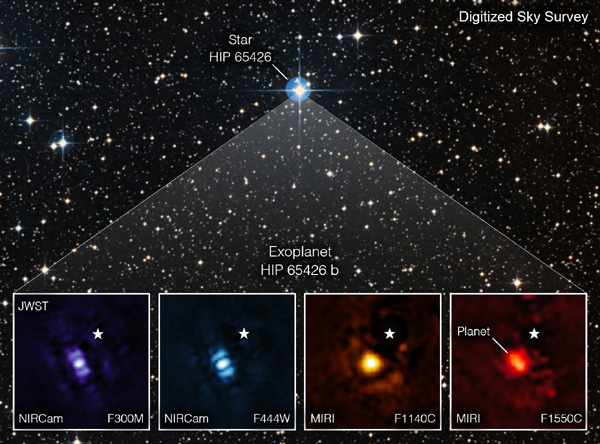
Hubble's Successor Captures a Photo of An Exoplanet Located 356 Light-Years Away...

An annotated image of the star HIP 65426 and its planet HIP 65426 b...as seen by the James Webb Space Telescope.
NASA / ESA / CSA, A Carter (UCSC), the ERS 1386 team, and A. Pagan (STScI)

NASA’s Webb Takes Its First-Ever Direct Image of Distant World (News Release)

For the first time, astronomers have used NASA’s James Webb Space Telescope to take a direct image of a planet outside our solar system. The exoplanet is a gas giant, meaning it has no rocky surface and could not be habitable.

The image, as seen through four different light filters, shows how Webb’s powerful infrared gaze can easily capture worlds beyond our solar system, pointing the way to future observations that will reveal more information than ever before about exoplanets.

“This is a transformative moment, not only for Webb but also for astronomy generally,” said Sasha Hinkley, associate professor of physics and astronomy at the University of Exeter in the United Kingdom, who led these observations with a large international collaboration. Webb is an international mission led by NASA in collaboration with its partners, ESA (European Space Agency) and CSA (Canadian Space Agency).

The exoplanet in Webb’s image, called HIP 65426 b, is about six to 12 times the mass of Jupiter, and these observations could help narrow that down even further. It is young as planets go — about 15 to 20 million years old, compared to our 4.5-billion-year-old Earth.

Astronomers discovered the planet in 2017 using the SPHERE instrument on the European Southern Observatory’s Very Large Telescope in Chile and took images of it using short infrared wavelengths of light. Webb’s view, at longer infrared wavelengths, reveals new details that ground-based telescopes would not be able to detect because of the intrinsic infrared glow of Earth’s atmosphere.

Researchers have been analyzing the data from these observations and are preparing a paper they will submit to journals for peer review. But Webb’s first capture of an exoplanet already hints at future possibilities for studying distant worlds.

Since HIP 65426 b is about 100 times farther from its host star than Earth is from the Sun, it is sufficiently distant from the star that Webb can easily separate the planet from the star in the image.

Webb’s Near-Infrared Camera (NIRCam) and Mid-Infrared Instrument (MIRI) are both equipped with coronagraphs, which are sets of tiny masks that block out starlight, enabling Webb to take direct images of certain exoplanets like this one. NASA’s Nancy Grace Roman Space Telescope, slated to launch later this decade, will demonstrate an even more advanced coronagraph.

“It was really impressive how well the Webb coronagraphs worked to suppress the light of the host star,” Hinkley said.

Taking direct images of exoplanets is challenging because stars are so much brighter than planets. The HIP 65426 b planet is more than 10,000 times fainter than its host star in the near-infrared, and a few thousand times fainter in the mid-infrared.

In each filter image, the planet appears as a slightly differently shaped blob of light. That is because of the particulars of Webb’s optical system and how it translates light through the different optics.

“Obtaining this image felt like digging for space treasure,” said Aarynn Carter, a postdoctoral researcher at the University of California, Santa Cruz, who led the analysis of the images. “At first all I could see was light from the star, but with careful image processing I was able to remove that light and uncover the planet.”

While this is not the first direct image of an exoplanet taken from space – the Hubble Space Telescope has captured direct exoplanet images previously – HIP 65426 b points the way forward for Webb’s exoplanet exploration.

“I think what’s most exciting is that we’ve only just begun,” Carter said. “There are many more images of exoplanets to come that will shape our overall understanding of their physics, chemistry, and formation. We may even discover previously unknown planets, too.”

– Elizabeth Landau, NASA Headquarters

Source: NASA.Gov

****

Sunday, August 21, 2022

Photos of the Day: My Latest Snapshots at the California Science Center Near DTLA...

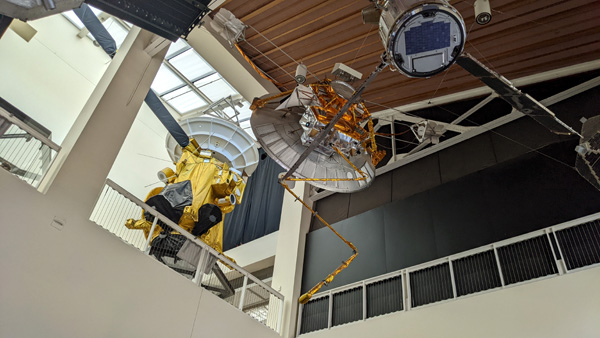
A full-scale Pioneer spacecraft replica and a Cassini model (which is on loan from NASA's Jet Propulsion Laboratory) on display at the California Science Center in Los Angeles...on August 9, 2022.

Almost two weeks ago, on August 9, I drove to the California Science Center near downtown Los Angeles to pay this great museum another visit! The last time I was here was back in July of 2019—to celebrate the 50th anniversary of the Apollo 11 mission to the Moon.

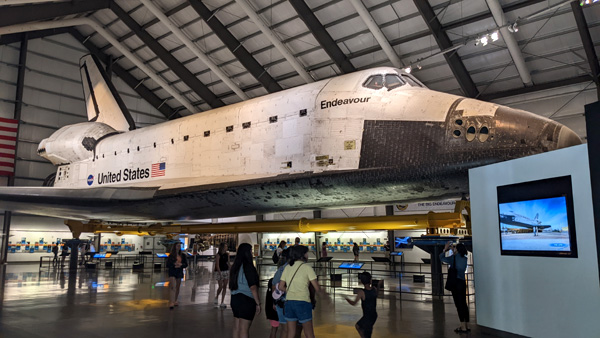
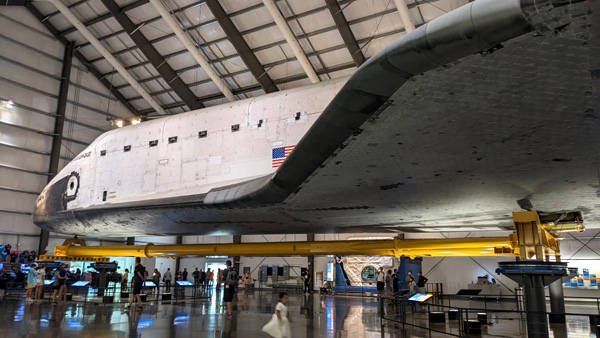
My main reason for this month's visit was to check out the construction progress on the Samuel Oschin Air and Space Center...space shuttle Endeavour's permanent home once it opens in 2025. You can check out images that I took of the construction site here.

I shot photos of other cool attractions at the Science Center...such as the replica of Cassini (which is on loan from NASA's Jet Propulsion Laboratory around 20 miles away) and a full-scale model of the Pioneer spacecraft above, the retired F/A-18 Hornet below, and my latest pictures of Endeavour, her external fuel tank ET-94 and a Space Shuttle Main Engine at the Samuel Oschin Pavilion.

The Pavilion will permanently close in late 2023 to prepare Endeavour and ET-94 for their move to the construction site of the Samuel Oschin Air and Space Center. They will be placed in their vertical launch configuration (along with the twin solid rocket boosters that are currently in storage at California's Mojave Air and Space Port) before assembly resumes on the Air and Space Center, and the new building permanently enshrouds the shuttle stack!

I plan on going back to the California Science Center sometime next year to capture more photos of the Air and Space Center's construction progress. Carry on!

A retired F/A-18 Hornet on display at the California Science Center in Los Angeles...on August 9, 2022.

Another snapshot of the full-scale Pioneer spacecraft replica and Cassini model at the California Science Center in Los Angeles...on August 9, 2022.

The retired space shuttle orbiter Endeavour on display inside the California Science Center's Samuel Oschin Pavilion in Los Angeles...on August 9, 2022.

The retired space shuttle orbiter Endeavour on display inside the California Science Center's Samuel Oschin Pavilion in Los Angeles...on August 9, 2022.

A Space Shuttle Main Engine on display inside the California Science Center's Samuel Oschin Pavilion in Los Angeles...on August 9, 2022.

Space shuttle external fuel tank ET-94 on display outside the California Science Center's Samuel Oschin Pavilion in Los Angeles...on August 9, 2022.

Space shuttle external fuel tank ET-94 as seen from inside the California Science Center's main building in Los Angeles...on August 9, 2022.

Monday, August 15, 2022

I Hope JPL's Open House Will Return ASAP So That I Can See the Europa Clipper in Person at the Spacecraft Assembly Facility!

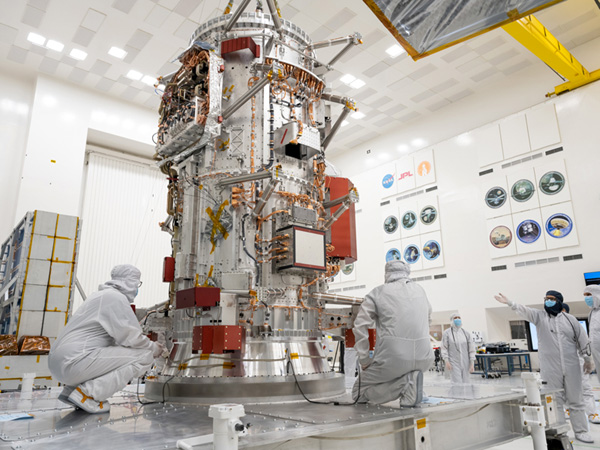
The Europa Clipper is ready to resume construction after being relocated to the Spacecraft Assembly Facility's High Bay 1 at NASA's Jet Propulsion Laboratory near Pasadena, California...as of August 15, 2022.
NASA / JPL - Caltech

NASA's Europa Clipper Spacecraft Kicks Assembly Into High Gear (News Release)

The spacecraft will occupy the main production facility of NASA’s Jet Propulsion Laboratory as it prepares for its 2024 launch to Jupiter’s moon Europa.

The core of NASA’s Europa Clipper spacecraft has taken center stage in the Spacecraft Assembly Facility at the agency’s Jet Propulsion Laboratory in Southern California. Standing 10 feet (3 meters) high and 5 feet (1.5 meters) wide, the craft’s main body will for the next two years be the focus of attention in the facility’s ultra-hygienic High Bay 1 as engineers and technicians assemble the spacecraft for its launch to Jupiter’s moon Europa in October 2024.

Scientists believe the ice-enveloped moon harbors a vast internal ocean that may have conditions suitable for supporting life. During nearly 50 flybys of Europa, the spacecraft’s suite of science instruments will gather data on the moon’s atmosphere, surface, and interior – information that scientists will use to gauge the depth and salinity of the ocean, the thickness of the ice crust, and potential plumes that may be venting subsurface water into space.

Several of Europa Clipper’s science instruments already have been completed and will be installed on the spacecraft at JPL. Most recently, the plasma-detection instrument, called the Plasma Instrument for Magnetic Sounding, and the Europa Imaging System wide-angle camera arrived from the Johns Hopkins Applied Physics Laboratory (APL), in Laurel, Maryland. The thermal-emission imaging instrument, called E-THEMIS, and the ultraviolet spectrograph, Europa-UVS, have already been installed on the spacecraft’s nadir deck, which will support many of the instrument sensors by stabilizing them to ensure they are oriented correctly.

Fabricated at JPL, this key piece of hardware will soon move into the Spacecraft Assembly Facility’s High Bay 1, the same cleanroom where historic missions such as Galileo, Cassini, and all of NASA’s Mars rovers were built.

Also moving soon to High Bay 1 will be the aluminum electronics vault, which will be bolted to the main body of the spacecraft, protecting the electronics inside from Jupiter’s intense radiation. The electronics enable Europa Clipper’s computer to communicate with the spacecraft’s antennae, science instruments, and the subsystems that will keep them alive.

Bright copper cabling snaking around the orbiter’s aluminum core contains thousands of wires and connectors handcrafted at APL. If placed end to end, the cabling would stretch almost 2,100 feet (640 meters) – enough to wrap around a U.S. football field twice.

Inside the core are Europa Clipper’s two propulsion tanks. The fuel and oxidizer they’ll hold will flow to an array of 24 engines, where they will create a controlled chemical reaction to produce thrust in deep space.

By the end of 2022, most of the flight hardware and the remainder of the science instruments are expected to be complete. Then, the next steps will be a wide variety of tests as the spacecraft moves toward its 2024 launch period. After traveling for nearly six years and over 1.8 billion miles (2.9 billion kilometers), it will achieve orbit around Jupiter in 2030.

Source: NASA.Gov

****

Thursday, August 12, 2021

Dragonfly Update: New Flight Objectives Are Planned for NASA's Titan-bound Quadcopter...

An artist's concept of NASA's Dragonfly rotorcraft on the surface of Saturn's moon Titan.
NASA / Johns Hopkins APL

Dragonfly Mission to Titan Announces Big Science Goals (News Release - August 10)

Among our solar system’s many moons, Saturn’s Titan stands out – it’s the only moon with a substantial atmosphere and liquid on the surface. It even has a weather system like Earth’s, though it rains methane instead of water. Might it also host some kind of life?

NASA’s Dragonfly mission, which will send a rotorcraft relocatable lander to Titan’s surface in the mid-2030s, will be the first mission to explore the surface of Titan, and it has big goals.

On July 19, the Dragonfly science team published “Science Goals and Objectives for the Dragonfly Titan Rotorcraft Relocatable Lander” in The Planetary Science Journal. The paper’s lead author is Jason Barnes, Dragonfly deputy principal investigator and a professor of physics at the University of Idaho.

The goals for Dragonfly include searching for chemical biosignatures; investigating the moon’s active methane cycle; and exploring the prebiotic chemistry currently taking place in Titan’s atmosphere and on its surface.

“Titan represents an explorer’s utopia,” said co-author Alex Hayes, associate professor of astronomy in the College of Arts and Sciences and a Dragonfly co-investigator. “The science questions we have for Titan are very broad because we don’t know much about what is actually going on at the surface yet. For every question we answered during the Cassini mission’s exploration of Titan from Saturn orbit, we gained 10 new ones.”

Though Cassini has been orbiting Saturn for 13 years, the thick methane atmosphere on Titan made it impossible to reliably identify the materials on its surface. While Cassini’s radar enabled scientists to penetrate the atmosphere and identify Earth-like morphologic structures, including dunes, lakes and mountains, the data could not reveal their composition.

“In fact, at the time Cassini was launched we didn’t even know if the surface of Titan was a global liquid ocean of methane and ethane, or a solid surface of water ice and solid organics,” said Hayes, also director of the Cornell Center for Astrophysics and Planetary Science and the Spacecraft Planetary Image Facility in A&S.

The Huygens probe, which landed on Titan in 2005, was designed to either float in a methane/ethane sea or land on a hard surface. Its science experiments were predominantly atmospheric, because they weren’t sure it would survive the landing. Dragonfly will be the first mission to explore the surface of Titan and identify the detailed composition of its organic-rich surface.

“What’s so exciting to me is that we’ve made predictions about what’s going on at the local scale on the surface and how Titan works as a system,” Hayes said, “and Dragonfly’s images and measurements are going to tell us how right or wrong they are.”

Hayes has been working on Titan for almost the entirety of his career. He’s particularly eager to answer some of the questions raised by Cassini in the area of his specialty: planetary surface processes and surface-atmosphere interactions.

“My primary science interests are in understanding Titan as a complex Earth-like world and trying to understand the processes that are driving its evolution,” he said. “That involves everything from the methane cycle’s interactions with the surface and the atmosphere, to the routing of material throughout the surface and potential exchange with the interior.”

Hayes will be contributing significant expertise in another area as well: operational experience from Mars rover missions.

“The Dragonfly mission benefits from and represents the intersection of Cornell’s substantial history with rover operations and Cassini science,” Hayes said. “It brings those two things together by exploring Titan with a relocatable moving craft.”

Cornell astronomers are currently involved in the the Mars Science Laboratory and Mars 2020 missions, and led the Mars Exploration Rovers mission. The lessons learned from these rovers on Mars are being relocated to Titan, Hayes said.

Dragonfly will spend a full Titan day (equivalent to 16 Earth days) in one location conducting science experiments and observations, and then fly to a new location. The science team will need to make decisions about what the spacecraft will do next based on lessons from the previous location – “which is exactly what the Mars rovers have been doing for decades,” Hayes said.

Titan’s low gravity (around one-seventh of Earth’s) and thick atmosphere (four times denser than Earth’s) make it an ideal place for an aerial vehicle. Its relatively quiet atmosphere, with lighter winds than Earth, make it even better. And while the science team doesn’t expect rain during Dragonfly’s flights, Hayes noted that no one really knows the local-scale weather patterns on Titan – yet.

Many of the science questions outlined in the group’s paper address prebiotic chemistry, an area that keenly interests Hayes. Many of the prebiotic chemical compounds that formed on early Earth are also formed in Titan’s atmosphere, and Hayes is eager to see how far down the road of prebiotic chemistry Titan has really gone. Titan’s atmosphere might be a good analogue for what happened on early Earth.

Dragonfly’s search for chemical biosignatures will also be wide-ranging. In addition to examining Titan’s habitability in general, they’ll be investigating potential chemical biosignatures, past or present, from both water-based life to that which might use liquid hydrocarbons as a solvent, such as within its lakes, seas or aquifers.

Source: Cornell University

Tuesday, October 27, 2020

Dragonfly Update: An Amazing New (Organic) Discovery on Titan...

Infrared images of Saturn's moon Titan that were taken by NASA's Cassini spacecraft over a span of 13 years.
NASA / JPL - Caltech / University of Nantes / University of Arizona

NASA Scientists Discover ‘Weird’ Molecule in Titan’s Atmosphere (News Release)

NASA scientists identified a molecule in Titan’s atmosphere that has never been detected in any other atmosphere. In fact, many chemists have probably barely heard of it or know how to pronounce it: cyclopropenylidene, or C3H2. Scientists say that this simple carbon-based molecule may be a precursor to more complex compounds that could form or feed possible life on Titan.

Researchers found C3H2 by using a radio telescope observatory in northern Chile known as the Atacama Large Millimeter/submillimeter Array (ALMA). They noticed C3H2, which is made of carbon and hydrogen, while sifting through a spectrum of unique light signatures collected by the telescope; these revealed the chemical makeup of Titan’s atmosphere by the energy its molecules emitted or absorbed.

“When I realized I was looking at cyclopropenylidene, my first thought was, ‘Well, this is really unexpected,’” said Conor Nixon, a planetary scientist at NASA’s Goddard Space Flight Center in Greenbelt, Maryland, who led the ALMA search. His team’s findings were published on October 15 in the Astronomical Journal.

Though scientists have found C3H2 in pockets throughout the galaxy, finding it in an atmosphere was a surprise. That’s because cyclopropenylidene can react easily with other molecules it comes into contact with and form different species. Astronomers have so far found C3H2 only in clouds of gas and dust that float between star systems — in other words, regions too cold and diffuse to facilitate many chemical reactions.

But dense atmospheres like Titan’s are hives of chemical activity. That’s a major reason scientists are interested in this moon, which is the destination of NASA’s forthcoming Dragonfly mission. Nixon’s team was able to identify small amounts of C3H2 at Titan likely because they were looking in the upper layers of the moon’s atmosphere, where there are fewer other gases for C3H2 to interact with. Scientists don’t yet know why cyclopropenylidene would show up in Titan’s atmosphere but no other atmosphere. “Titan is unique in our solar system,” Nixon said. “It has proved to be a treasure trove of new molecules.”

The largest of Saturn’s 62 moons, Titan is an intriguing world that’s in some ways the most similar one to Earth we have found. Unlike any other moon in the solar system — there are more than 200 — Titan has a thick atmosphere that’s four times denser than Earth’s, plus clouds, rain, lakes and rivers, and even a subsurface ocean of salty water.

Titan’s atmosphere is made mostly of nitrogen, like Earth’s, with a hint of methane. When methane and nitrogen molecules break apart under the glare of the Sun, their component atoms unleash a complex web of organic chemistry that has captivated scientists and thrust this moon to the top of the list of the most important targets in NASA’s search for present or past life in the solar system.

“We’re trying to figure out if Titan is habitable,” said Rosaly Lopes, a senior research scientist and Titan expert at NASA’s Jet Propulsion Laboratory (JPL) near Pasadena, California. “So we want to know what compounds from the atmosphere get to the surface, and then, whether that material can get through the ice crust to the ocean below, because we think the ocean is where the habitable conditions are.”

The types of molecules that might be sitting on Titan’s surface could be the same ones that formed the building blocks of life on Earth. Early in its history, 3.8 to 2.5 billion years ago, when methane filled Earth’s air instead of oxygen, conditions here could have been similar to those on Titan today, scientists suspect.

“We think of Titan as a real-life laboratory where we can see similar chemistry to that of ancient Earth when life was taking hold here,” said Melissa Trainer, a NASA Goddard astrobiologist. Trainer is the Dragonfly mission’s deputy principal investigator and lead of an instrument on the Dragonfly rotorcraft that will analyze the composition of Titan’s surface.

“We’ll be looking for bigger molecules than C3H2,” Trainer said, “but we need to know what’s happening in the atmosphere to understand the chemical reactions that lead complex organic molecules to form and rain down to the surface.

Cyclopropenylidene is the only other “cyclic,” or closed-loop, molecule besides benzene to have been found in Titan’s atmosphere so far. Although C3H2 is not known to be used in modern-day biological reactions, closed-loop molecules like it are important because they form the backbone rings for the nucleobases of DNA, the complex chemical structure that carries the genetic code of life, and RNA, another critical compound for life’s functions. “The cyclic nature of them opens up this extra branch of chemistry that allows you to build these biologically important molecules,” said Alexander Thelen, a Goddard astrobiologist who worked with Nixon to find C3H2.

Scientists like Thelen and Nixon are using large and highly sensitive Earth-based telescopes to look for the simplest life-related carbon molecules they can find in Titan’s atmosphere. Benzene was considered to be the smallest unit of complex, ringed hydrocarbon molecules found in any planetary atmosphere. But now, C3H2, with half the carbon atoms of benzene, appears to have taken its place.

Nixon's team used the ALMA observatory to peer at Titan in 2016. They were surprised to find a strange chemical fingerprint, which Nixon identified as cyclopropenylidene by searching through a database of all known molecular light signatures.

To double check that the researchers were actually seeing this unusual compound, Nixon pored through research papers published from analyses of data from NASA’s Cassini spacecraft, which made 127 close flybys of Titan between 2004 and 2017. He wanted to see if an instrument on the spacecraft that sniffed out the chemical compounds around Saturn and Titan could confirm his new result. (The instrument – called a mass spectrometer – picked up hints of many mysterious molecules at Titan that scientists are still trying to identify.) Indeed, Cassini had spotted evidence for an electrically charged version of the same molecule, C3H3+.

Given that it’s a rare find, scientists are trying to learn more about cyclopropenylidene and how it might interact with gases in Titan’s atmosphere.

“It’s a very weird little molecule, so it’s not going be the kind you learn about in high school chemistry or even undergraduate chemistry,” said Michael Malaska, a JPL planetary scientist who worked in the pharmaceutical industry before falling in love with Titan and switching careers to study it. “Down here on Earth, it’s not going be something you’re going to encounter.”

But, Malaska said, finding molecules like C3H2 is really important in seeing the big picture of Titan: “Every little piece and part you can discover can help you put together the huge puzzle of all the things going on there.”

Source: NASA.Gov

****

An artist's concept of NASA's Dragonfly rotorcraft on the surface of Saturn's moon Titan.
NASA / Johns Hopkins APL

Monday, August 19, 2019

The Europa Clipper Moves One Step Closer to Construction...

An artist's concept of NASA's Europa Clipper spacecraft flying above Jupiter's icy moon Europa.
NASA / JPL - Caltech

Europa Clipper's Mission to Jupiter’s Icy Moon Confirmed (News Release)

An icy ocean world in our solar system that could tell us more about the potential for life on other worlds is coming into focus with confirmation of the Europa Clipper mission’s next phase. The decision allows the mission to progress to completion of final design, followed by the construction and testing of the entire spacecraft and science payload.

“We are all excited about the decision that moves the Europa Clipper mission one key step closer to unlocking the mysteries of this ocean world,” said Thomas Zurbuchen, associate administrator for the Science Mission Directorate at NASA Headquarters in Washington. “We are building upon the scientific insights received from the flagship Galileo and Cassini spacecraft and working to advance our understanding of our cosmic origin, and even life elsewhere.”

The mission will conduct an in-depth exploration of Jupiter's moon, Europa, and investigate whether the icy moon could harbor conditions suitable for life, honing our insights into astrobiology. To develop this mission in the most cost-effective fashion, NASA is targeting to have the Europa Clipper spacecraft complete and ready for launch as early as 2023. The agency baseline commitment, however, supports a launch readiness date by 2025.

NASA's Jet Propulsion Laboratory in Pasadena, California leads the development of the Europa Clipper mission in partnership with the Johns Hopkins University Applied Physics Laboratory for the Science Mission Directorate. Europa Clipper is managed by the Planetary Missions Program Office at NASA’s Marshall Space Flight Center in Huntsville, Alabama.

Source: NASA.Gov

Thursday, June 27, 2019

Dragonfly Is Officially Heading to Titan!

An artist's concept of the Dragonfly rotorcraft on the surface of Saturn's moon Titan.
Johns Hopkins APL

NASA Selects Flying Mission to Study Titan for Origins, Signs of Life (Press Release)

NASA has announced that our next destination in the solar system is the unique, richly organic world Titan. Advancing our search for the building blocks of life, the Dragonfly mission will fly multiple sorties to sample and examine sites around Saturn’s icy moon.

Dragonfly will launch in 2026 and arrive in 2034. The rotorcraft will fly to dozens of promising locations on Titan looking for prebiotic chemical processes common on both Titan and Earth. Dragonfly marks the first time NASA will fly a multi-rotor vehicle for science on another planet; it has eight rotors and flies like a large drone. It will take advantage of Titan’s dense atmosphere – four times denser than Earth’s – to become the first vehicle ever to fly its entire science payload to new places for repeatable and targeted access to surface materials.

Titan is an analog to the very early Earth, and can provide clues to how life may have arisen on our planet. During its 2.7-year baseline mission, Dragonfly will explore diverse environments from organic dunes to the floor of an impact crater where liquid water and complex organic materials key to life once existed together for possibly tens of thousands of years. Its instruments will study how far prebiotic chemistry may have progressed. They also will investigate the moon’s atmospheric and surface properties and its subsurface ocean and liquid reservoirs. Additionally, instruments will search for chemical evidence of past or extant life.

“With the Dragonfly mission, NASA will once again do what no one else can do,” said NASA Administrator Jim Bridenstine. “Visiting this mysterious ocean world could revolutionize what we know about life in the universe. This cutting-edge mission would have been unthinkable even just a few years ago, but we’re now ready for Dragonfly’s amazing flight.”

Dragonfly took advantage of 13 years’ worth of Cassini data to choose a calm weather period to land, along with a safe initial landing site and scientifically interesting targets. It will first land at the equatorial “Shangri-La” dune fields, which are terrestrially similar to the linear dunes in Namibia in southern Africa and offer a diverse sampling location. Dragonfly will explore this region in short flights, building up to a series of longer “leapfrog” flights of up to 5 miles (8 kilometers), stopping along the way to take samples from compelling areas with diverse geography. It will finally reach the Selk impact crater, where there is evidence of past liquid water, organics – the complex molecules that contain carbon, combined with hydrogen, oxygen, and nitrogen – and energy, which together make up the recipe for life. The lander will eventually fly more than 108 miles (175 kilometers) – nearly double the distance traveled to date by all the Mars rovers combined.

“Titan is unlike any other place in the solar system, and Dragonfly is like no other mission,” said Thomas Zurbuchen, NASA’s associate administrator for Science at the agency’s Headquarters in Washington. “It’s remarkable to think of this rotorcraft flying miles and miles across the organic sand dunes of Saturn’s largest moon, exploring the processes that shape this extraordinary environment. Dragonfly will visit a world filled with a wide variety of organic compounds, which are the building blocks of life and could teach us about the origin of life itself.”

Titan has a nitrogen-based atmosphere like Earth. Unlike Earth, Titan has clouds and rain of methane. Other organics are formed in the atmosphere and fall like light snow. The moon’s weather and surface processes have combined complex organics, energy, and water similar to those that may have sparked life on our planet.

Titan is larger than the planet Mercury and is the second largest moon in our solar system. As it orbits Saturn, it is about 886 million miles (1.4 billion kilometers) away from the Sun, about 10 times farther than Earth. Because it is so far from the Sun, its surface temperature is around -290 degrees Fahrenheit (-179 degrees Celsius). Its surface pressure is also 50 percent higher than Earth’s.

Dragonfly was selected as part of the agency’s New Frontiers program, which includes the New Horizons mission to Pluto and the Kuiper Belt, Juno to Jupiter, and OSIRIS-REx to the asteroid Bennu. Dragonfly is led by Principal Investigator Elizabeth Turtle, who is based at Johns Hopkins University’s Applied Physics Laboratory in Laurel, Maryland. New Frontiers supports missions that have been identified as top solar system exploration priorities by the planetary community. The program is managed by the Planetary Missions Program Office at NASA’s Marshall Space Flight Center in Huntsville, Alabama, for the agency’s Planetary Science Division in Washington.

“The New Frontiers program has transformed our understanding of the solar system, uncovering the inner structure and composition of Jupiter’s turbulent atmosphere, discovering the icy secrets of Pluto’s landscape, revealing mysterious objects in the Kuiper belt, and exploring a near-Earth asteroid for the building blocks of life,” said Lori Glaze, director of NASA’s Planetary Science Division. “Now we can add Titan to the list of enigmatic worlds NASA will explore.”

****

An artist's concept of the Dragonfly rotorcraft flying above the surface of Saturn's moon Titan.
Johns Hopkins APL