Showing posts with label Vulcan Centaur. Show all posts

Friday, February 13, 2026

ULA's Newest Launch Vehicle Has Another SRB Anomaly While Completing Its Fourth Flight to Earth Orbit...

United Launch Alliance's fourth Vulcan Centaur rocket lifts off from Cape Canaveral Space Force Station's Space Launch Complex 41 in Florida...on February 12, 2026.
United Launch Alliance

U.S. Space Force’s Space Systems Command and United Launch Alliance Successfully Launch USSF-87 Mission Aboard a Vulcan Rocket (News Release - February 12)

EL SEGUNDO, Calif. – U.S. Space Force’s (USSF) Space Systems Command (SSC) System Delta 80 (SYD 80) and its mission partners successfully completed a National Security Space Launch (NSSL) after a pre-dawn liftoff at 4:22 a.m. EST (1:22 a.m. PST) today aboard a United Launch Alliance (ULA) Vulcan Centaur rocket from Space Launch Complex (SLC)-41 at Cape Canaveral Space Force Station, Florida. This was the second NSSL mission for ULA’s Vulcan rocket.

“We’re proud of everyone and the work they’ve done to make today’s launch a success and increase America’s warfighting capability.” said Mr. Stephen Burke, Vulcan System Program Director.

The Vulcan rocket successfully delivered the mission to the designated orbits despite an observed anomaly early in flight on one of the four solid rocket motors. The USSF SYD 80 team will work closely with ULA per our mission assurance space flightworthiness process before the next Vulcan national security space mission.

The USSF-87 mission included a variety of payloads that will not only advance space technology but also benefit current and future programs of record. The Geosynchronous Space Situational Awareness Program (GSSAP) space system is a capability supporting the U.S. Space Command’s space surveillance operations as a high-performance, dedicated Space Surveillance Network sensor. Built by Northrop-Grumman, it was deployed approximately 6.5 hours after liftoff.

The system was delivered to orbit by ULA’s Vulcan in the “VC4S” configuration, featuring a Centaur V upper stage, four solid rocket motors and a standard payload fairing. It capitalizes on ULA’s industrial base to deliver highly-capable solutions that achieve space dominance for our national security.

In addition to GSSAP, USSF-87 included additional research, development and training systems, which Guardians will use to refine tactics, techniques and procedures for precision on-orbit maneuvers. These systems will also enhance and validate resiliency and protection in geosynchronous orbit.

Systems Delta 80 (SYD 80) -- who directed today’s mission -- executes the U.S. Space Force's core function of Space Access, performing space lift and range control missions in close partnership with the 30th and 45th Space Launch Deltas (SLD 30, SLD 45). Additionally, the Delta develops resilient and ready launch and test infrastructure to expand U.S. economic, technological and scientific leadership. Furthermore, SYD 80 delivers servicing, mobility and logistics capabilities that operate in, from and to the space domain.

Source: Space Systems Command

****


Wednesday, August 13, 2025

ULA's Newest Launch Vehicle Has Successfully Made Its Third Flight to Earth Orbit...

United Launch Alliance's third Vulcan Centaur rocket lifts off from Cape Canaveral Space Force Station's Space Launch Complex 41 in Florida...on August 12, 2025.
United Launch Alliance

Vulcan Rocket Ushers in New Era of National Security Space Launch (Press Release)

First National Security Space Launch aboard Vulcan rocket delivers USSF-106 spacecraft directly to GEO

Cape Canaveral Space Force Station, Fla. – A United Launch Alliance (ULA) Vulcan rocket carrying the USSF-106 mission for the United States Space Force’s Space Systems Command (SSC) lifted off on August 12 at 8:56 p.m. EDT from Space Launch Complex-41 at Cape Canaveral Space Force Station. This mission marks the first National Security Space Launch aboard the next-generation Vulcan rocket.

“National security begins at liftoff,” said Gary Wentz, ULA vice president of Government and Commercial Programs. “Vulcan did exactly what it was built to do: deliver a critical mission with power, precision and confidence. We are proud to play a role in strengthening the nation’s space capabilities.”

Standing at 202 feet tall and weighing 1.74 million pounds, the Vulcan configuration is enabled by the powerful Centaur V upper stage, which has 2.5 times the energy and 450 times the endurance of its predecessors. Centaur V delivered the USSF-106 spacecraft directly to a geosynchronous equatorial orbit (GEO).

“Vulcan is a catalyst to supporting national defense in the strategic warfighting domain of space,” said Tory Bruno, ULA president and CEO. “Vulcan is the world’s most capable, high-energy orbital rocket meeting the demand for expanding space competencies. Vulcan provides flexibility to our nation’s decision makers as we combat our adversaries' attempts to disrupt the U.S. in space operations. This launch begins a new era in national space security.”

ULA has served as the launch backbone for our past national security space missions, having successfully launched nearly all of the 132 critical missions to orbit for the U.S. Space Force and National Reconnaissance Office since the company’s founding in 2006. This legacy, built on Atlas V, Delta II and Delta IV rockets, now continues with Vulcan.

ULA’s next launch is the third Atlas mission for Amazon’s Project Kuiper, Kuiper 3, which will launch from Cape Canaveral Space Force Station, Florida.

Source: United Launch Alliance

****

United Launch Alliance's third Vulcan Centaur rocket lifts off from Cape Canaveral Space Force Station's Space Launch Complex 41 in Florida...on August 12, 2025.
United Launch Alliance

United Launch Alliance's third Vulcan Centaur rocket lifts off from Cape Canaveral Space Force Station's Space Launch Complex 41 in Florida...on August 12, 2025.
United Launch Alliance

United Launch Alliance's third Vulcan Centaur rocket lifts off from Cape Canaveral Space Force Station's Space Launch Complex 41 in Florida...on August 12, 2025.
United Launch Alliance

Thursday, March 27, 2025

ULA's Newest Rocket Is Ready to Launch Classified Satellites for the U.S. Military...

United Launch Alliance's second Vulcan Centaur rocket lifts off from Cape Canaveral Space Force Station's Space Launch Complex-41 in Florida...on October 4, 2024.
United Launch Alliance

U.S. Space Force (USSF) Certifies United Launch Alliance (ULA) Vulcan for National Security Space Launch (NSSL) Missions (Press Release - March 26)

EL SEGUNDO, Calif. – U.S. Space Force’s Space Systems Command’s (SSC) Assured Access to Space organization has announced the certification of United Launch Alliance’s (ULA) Vulcan launch system for National Security Space Launch (NSSL) missions. ULA is now eligible to launch NSSL missions as one of two certified providers.

“Assured access to space is a core function of the Space Force and a critical element of national security,” said Brig. Gen. Panzenhagen, Program Executive Officer for Assured Access to Space. “Vulcan certification adds launch capacity, resiliency and flexibility needed by our nation’s most critical space-based systems.”

NSSL certification is a rigorous process for launch service providers to demonstrate their ability to design, produce and qualify a new launch system that will successfully deliver national security space satellites to orbit.

Vulcan’s certification is the culmination of several years of effort by the Space Force and ULA, which encompassed 52 certification criteria, including more than 180 discrete tasks, 2 certification flight demonstrations, 60 payload interface requirement verifications, 18 subsystem design and test reviews, and 114 hardware and software audits, all to establish the technical baseline from which the Space Force will make future flight worthiness determinations for launch.

“The SSC and ULA teams have worked together extremely closely, and certification of this launch system is a direct result of their focus, dedication and teamwork,” said Panzenhagen.

“We are proud to have launched 100 national security space missions and honored to continue serving the nation with our new Vulcan rocket,” said Tory Bruno, president and CEO of United Launch Alliance. “We thank the Space Force for their collaboration and confidence, and we are honored to support our national security needs for many years to come.”

Assured Access to Space executes the U.S. Space Force’s Core Competency of Space Mobility and Logistics. It secures reliable and responsive launch services to deploy the space-based capabilities needed by our Nation's warfighters, intelligence professionals, decision makers, allies and partners. Additionally, it operates and sustains resilient and ready launch and test infrastructure to project on-orbit warfighting capability through all phases of conflict and to expand US economic, technological and scientific leadership.

Further, Assured Access to Space delivers servicing, mobility and logistics capabilities that operate in, from and to the space domain.

Space Systems Command is the U.S. Space Force’s field command responsible for acquiring and delivering resilient warfighting capabilities to protect our nation’s strategic advantage in, from and to space. SSC manages a $15.6 billion space acquisition budget for the DoD and works in partnership with joint forces, industry, government agencies and academic and allied organizations to accelerate innovation and outpace emerging threats. Our actions today are making the world a better space for tomorrow.

Source: United States Space Force

****

The very first Vulcan Centaur rocket, carrying Astrobotic's Peregrine lunar lander, lifts off from Space Launch Complex-41 at Cape Canaveral Space Force Station in Florida...on January 8, 2024.
United Launch Alliance

Friday, October 04, 2024

Despite an SRB Anomaly, Vulcan Centaur Completes Its Second Mission This Morning (On My Birthday)...

United Launch Alliance's second Vulcan Centaur rocket lifts off from Cape Canaveral Space Force Station's Space Launch Complex 41 in Florida...on October 4, 2024.
United Launch Alliance

United Launch Alliance Successfully Launches Second Vulcan Certification Flight (Press Release)

Cape Canaveral Space Force Station, Fla. – United Launch Alliance (ULA) ushers in a new era of space capabilities with the successful launch of its second certification flight (Cert-2) of the next-generation Vulcan rocket on October 4 at 7:25 a.m. EDT from Space Launch Complex 41 at Cape Canaveral Space Force Station.

“The success of Vulcan’s second certification flight heralds a new age of forward-looking technology committed to meeting the ever-growing requirements of space launch and supporting our nation’s assured access to space. We had an observation on one of our solid rocket boosters (SRB) that we are reviewing, but we are overall pleased with the rocket’s performance and had a bullseye insertion,” said Tory Bruno, ULA’s president and CEO. “Vulcan provides high performance and greater affordability while continuing to deliver our unmatched reliability and orbital precision for all our customers across the national security, civil and commercial markets.”

The Cert-2 mission carried experiments and demonstrations associated with future capabilities of Centaur V, the world’s highest-performing upper stage designed to further deliver on ULA’s unrivaled legacy of reliability and precision. Centaur V provides 2.5 times the energy and 450 times the endurance of its predecessors, enabling the most complex orbital insertions within the most challenging and clandestine orbits.

“Vulcan is built with the strength of a national workforce whose unmatched dedication and innovation has modernized the very best of our industry-leading heritage,” said Mark Peller, vice president of Vulcan Development. “The foundation of Vulcan’s purpose-built design rests on the best of what we’ve learned from more than 130 combined years of launch experience with Atlas and Delta.”

The Cert-2 mission served as the second of two certification flights required for the U.S. Space Force’s certification process and ULA has now completed all requirements for certification. ULA continues to work closely with the U.S. Space Force as they take the next few weeks to review the data and compare it to ULA’s first certification mission to ensure that the vehicle performed as expected and there are no additional items that need review. Once the evaluation is complete to the Space Force's standards, the Vulcan rocket will be certified to launch national security missions.

“The team will continue to modify our infrastructure as we work towards an accelerated launch cadence to meet our customers’ manifest requirements while building off today’s successful launch and developing future Vulcan upgrades, including SMART reuse plans for downrange, non-propulsive recovery of Vulcan engines,” said Bruno.

ULA has sold more than 70 Vulcan launches to date, including 38 missions for Amazon’s Project Kuiper and multiple national security space launch missions as the part of the country’s Phase 2 launch procurement.

All rockets are not created equal. ULA is the nation’s most experienced, reliable and accurate launch service provider delivering unmatched value, a tireless drive to improve, and commitment to the extraordinary. Vulcan’s inaugural launch marked the beginning of a new era of space capabilities and provides higher performance and greater affordability while offering the world’s only high-energy architecture rocket to deliver any payload, at any time, directly to any orbit.

Source: United Launch Alliance

****

United Launch Alliance's second Vulcan Centaur rocket lifts off from Cape Canaveral Space Force Station's Space Launch Complex 41 in Florida...on October 4, 2024.
United Launch Alliance

United Launch Alliance's second Vulcan Centaur rocket lifts off from Cape Canaveral Space Force Station's Space Launch Complex 41 in Florida...on October 4, 2024.
United Launch Alliance

The smoke contrail left behind by United Launch Alliance's second Vulcan Centaur rocket, after it lifted off from Cape Canaveral Space Force Station's Space Launch Complex 41 in Florida...on October 4, 2024.
United Launch Alliance


Tuesday, October 01, 2024

L-Minus 3 Days Before the Vulcan Centaur Rocket Takes Off on Its Second Flight Test into Space...

The second Vulcan Centaur rocket stands tall on the pad at Cape Canaveral Space Force Station's Space Launch Complex 41 in Florida...on September 30, 2024.
United Launch Alliance

Cert-2: Dress Rehearsal of Vulcan Launch Day Planned (News Release)

The United Launch Alliance (ULA) Vulcan rocket rolled out to the Space Launch Complex (SLC) 41 pad at Cape Canaveral Space Force Station on September 30 to undergo an extensive practice countdown ahead of its second Certification (Cert-2) flight test.

Known as a Wet Dress Rehearsal (WDR), ULA is preparing to conduct a full day-of-launch test to ensure that the new rocket, pad systems and launch team are ready for the second Vulcan mission. The WDR exercises the hardware, procedures and the people to reduce the risk of a delay on launch day.

The rehearsal follows the tightly-scripted sequence by rolling the Vulcan from Vertical Integration Facility-G (VIF-G) to SLC-41 and performing the entire countdown operation to fuel the rocket with cryogenic propellant.

The countdown begins before sunrise under the guidance of the ULA launch conductor from the Advanced Spaceflight Operations Center (ASOC), located about four miles (6.4 km) from the pad.

The rocket stages are powered up, avionics tested and final preps to ground systems accomplished. That enables the ULA launch director to give approval for the fueling process.

The launch team configures the Vulcan Centaur for cryogenic loading and approximately one million pounds (454,000 kg) of methane, liquid oxygen and liquid hydrogen flow into the rocket's tanks using the same procedures that will be executed on the actual launch day.

With the rocket filled up, permission will be given to enter terminal count at T-minus 7 minutes. The final phase of the countdown pressurizes the rocket, arms various systems and transitions the vehicle to internal power. The count finishes just prior to ignition time.

The rocket is then safed and cryogenic tanks drained. The thorough data will be performed before moving into the countdown for launch. Liftoff is targeted for no earlier than October 4.

The highly-instrumented rocket will carry a non-deployable inert payload into space, run unique experiments and conduct a series of detailed test objectives to collect performance data while fulfilling ULA’s certification obligations to the nation.

Source: United Launch Alliance

****

Saturday, September 21, 2024

Vulcan Is Ready to Fly Again Months After Sending Astrobotic's Failed Peregrine Moon Lander into Space...

The second Vulcan Centaur rocket is now fully stacked inside Vertical Integration Facility-G near Cape Canaveral Space Force Station's Space Launch Complex 41 in Florida...as of September 21, 2024.
United Launch Alliance

Cert-2: Vulcan Rocket Readied for Second Flight Test (News Release)

The second United Launch Alliance (ULA) Vulcan rocket stands fully assembled for launch no earlier than October 4 to fulfill flight test obligations and complete its certification process with the U.S. Space Force to carry national security payloads starting later this year.

Liftoff will occur from Space Launch Complex (SLC)-41 at Cape Canaveral Space Force Station in Florida during a launch window of 6 to 9 a.m. EDT.

This second Certification (Cert-2) launch will demonstrate Vulcan's high-energy rocket architecture by achieving an Earth-escape trajectory and placing the Centaur V with an inert, non-deployable payload into deep space where it will orbit the Sun for the rest of time. Cert-2 follows Vulcan's successful inaugural launch on January 8, 2024.

The mission will further demonstrate the operational capabilities of Vulcan, perform unique experiments and run complex demonstrations for potential incorporation into future missions.

"After the key objectives necessary for certification are completed, the mission will evaluate additional changes to design of the upper stage and how it is operated over long coast periods to further increase its endurance," said Mark Peller, ULA's senior vice president, Vulcan Development and Advanced Programs.

This Vulcan rocket, designated V-002, was built in ULA's unique rocket factory in Decatur, Alabama, then shipped to the Florida launch site aboard the R/S RocketShip.

The launch campaign at Vertical Integration Facility-G (VIF-G) began on August 10 when the Vulcan booster stage was hoisted aboard the mobile Vulcan Launch Platform (VLP). The stage measures 109 feet (33 meters) in length and 17.7 feet (5.4 meters) in diameter. Made of internal orthogrid aluminum construction to create a structurally-stable stage, it is equipped with two BE-4 main engines, each producing approximately 550,000 pounds (2.45 mega-Newtons) of thrust to lift Vulcan out of the atmosphere on the way to orbit.

A pair of Graphite Epoxy Motor (GEM) 63XL solid rocket boosters (SRBs) were added to the sides of the first stage on August 13 and August 14. Measuring 63 inches (1.6 meters) in diameter and 72 feet (21 meters) in length, each motor is filled with over 100,000 pounds (45,360 kg) of aluminized solid propellant to deliver 463,249 pounds (2.1 mega-Newtons) of thrust at its peak.

Together, the methane-fueled main engines and SRBs will provide the 2 million pounds (8.9 kilo-Newtons) of thrust generated at liftoff to power Vulcan off the launch pad.

The high-performance Centaur V upper stage -- 38.5 feet (11.7 meters) long and 17.7 feet (5.4 meters) in diameter -- was installed atop the rocket on August 17. With its pressure-stabilized stainless-steel tanks, the cryogenic stage features two RL10C-1-1A engines, each producing 23,825 pounds (106 kilo-Newtons) of thrust to shape the mission's final orbital destination.

The Cert-2 payload, already encapsulated in the composite fairing measuring 17.7 feet (5.4 meters) in diameter and 51 feet (15.5 meters) in length, was moved from the off-site preparation facility to VIF-G adjacent to SLC-41 on September 21.

ULA technicians attached the lifting sling to the payload and hoisted it into the VIF for connection to the Centaur V upper stage of the Vulcan rocket, which now stands fully assembled at 202 feet (61.6 meters) tall.

Integrated testing and a complete electrical checkout of the combined rocket and payload will be completed in the coming days while final readiness reviews and closeout activities are performed in preparation for rollout of the rocket on its VLP to SLC-41 for a Wet Dress Rehearsal, followed by the countdown and liftoff.

This is the second of two flight tests required for ULA's certification process with the U.S. Space Force. ULA has worked in close partnership with the Space Force throughout the design, development, testing and production of the next-generation rocket for assured access to space. The Space Force selected Vulcan as the No. 1 offeror and "best value" choice in the Phase 2 National Security Space Launch (NSSL) competition.

Vulcan incorporates the best attributes of the venerable Atlas and Delta heritage rocket families and introduces innovative technologies and streamlined processes, creating one launch solution that meets the demanding requirements for launching critical national security missions to the full spectrum of orbits.

Source: United Launch Alliance

Tuesday, June 18, 2024

Another Spectacular SoCal Light Show by SpaceX...

Falcon 9's twin payload fairings and first stage booster are visible falling away from the second stage engine in this Google Pixel 4A photo of SpaceX's Starlink launch from Vandenberg Space Force Base in California...on June 18, 2024.
Richard T. Par

A few hours ago, SpaceX launched another Falcon 9 rocket carrying 20 new Starlink satellites from Vandenberg Space Force Base in Santa Barbara County, California. This is the first time since early April, and fifth time overall since 2018, that I watched a Falcon 9 launch dazzle the evening sky from here in Los Angeles County!

Liftoff occurred at 8:40 PM, PDT...which was the ideal time for SpaceX to conduct a launch since the sky was dark enough for the Falcon 9's contrail to glow brilliantly above the landscape. Not only did the contrail shine above Southern California, but so did the Falcon 9's twin payload fairings and first stage booster (shown above) as they were absolutely visible during their return to Earth to be recovered by SpaceX vessels (including the drone ship, Of Course I Still Love You, in the case of the first stage booster) waiting off the SoCal coastline in the Pacific Ocean.

I'll never get tired of seeing these spectacular light shows put on by SpaceX! I've read online that United Launch Alliance will launch its brand-new Vulcan Centaur rocket from Vandenberg sometime next year... What are the chances that Vulcan lifts off at dusk and follows the same flight trajectory as Falcon 9 so that rocket geeks like me can photograph it (using my Google Pixel 4A phone and Nikon D3300 DSLR camera, like I did tonight) in all its liquid methane and liquid oxygen-fueled glory?

We'll see!

As seen with my Nikon D3300 DSLR camera from Pomona, CA, the SpaceX Falcon 9 rocket carrying 20 new Starlink satellites heads toward low-Earth orbit from Vandenberg Space Force Base over 200 miles away...on June 18, 2024.
Richard T. Par

As seen with my Nikon D3300 DSLR camera from Pomona, CA, the SpaceX Falcon 9 rocket carrying 20 new Starlink satellites heads toward low-Earth orbit from Vandenberg Space Force Base over 200 miles away...on June 18, 2024.
Richard T. Par

As seen with my Nikon D3300 DSLR camera from Pomona, CA, the SpaceX Falcon 9 rocket carrying 20 new Starlink satellites heads toward low-Earth orbit from Vandenberg Space Force Base over 200 miles away...on June 18, 2024.
Richard T. Par

The contrail created by the SpaceX Falcon 9 rocket that carried 20 new Starlink satellites to low-Earth orbit...as seen with my Google Pixel 4A smartphone from Pomona, CA, on June 18, 2024.
Richard T. Par

The contrail created by the SpaceX Falcon 9 rocket that carried 20 new Starlink satellites to low-Earth orbit...as seen with my Google Pixel 4A smartphone from Pomona, CA, on June 18, 2024.
Richard T. Par

Falcon 9's twin payload fairings and first stage booster are visible falling away from the second stage engine in this Google Pixel 4A photo of SpaceX's Starlink launch from Vandenberg Space Force Base in California...on June 18, 2024.
Richard T. Par

The Falcon 9 second stage engine, carrying 20 new Starlink satellites, is about to pass underneath the Moon in this Google Pixel 4A photo that was taken in Pomona, CA...on June 18, 2024.
Richard T. Par


Tuesday, April 02, 2024

Photos of the Day: A Falcon 9 Lights Up the SoCal Sky Once More...

The exhaust plume created by SpaceX's Falcon 9 second stage booster is visible above a neighbor's house in Pomona, CA...on April 1, 2024.
Richard T. Par

Two weeks after a previous Falcon 9 rocket launched from Vandenberg Space Force Base in Santa Barbara County, California, another SpaceX booster lifted off from the West Coast launch site as well (at 7:30 PM, PDT)...sending another 22 Starlink satellites to low-Earth orbit.

Unlike the March 18 launch, I knew about yesterday's flight a few days in advance. Last time, I wasn't sure if I was in the mood to get dressed with few minutes to spare and drive somewhere that provided a great view of Falcon 9 shooting up into the Southern California sky.

In terms of last night, on the other hand, I got dressed (after eating dinner around 6:30 PM, PDT) and walked down my street to where the neighborhood mailbox was located. This spot provided an awesome, unimpeded view of the patch of sky that Falcon 9 was gonna fly through as it made its way to space.

Much like what I did two weeks ago, I used my Google Pixel 4A smartphone to take photos of SpaceX's airborne twilight spectacle.

I look forward to the next evening launch of Falcon 9 from Vandenberg...which is almost 200 miles from where I live! But it would be just as cool if another company's rocket—I'm looking at you, United Launch Alliance's (ULA) Vulcan Centaur—graced the SoCal sky at dusk as well.

I'm sure that ULA will make this a reality...eventually. Happy Belated April Fools' Day!

The bright contrail created by SpaceX's Falcon 9 rocket is visible above my neighborhood in Pomona, CA...on April 1, 2024.
Richard T. Par

The bright contrail created by SpaceX's Falcon 9 rocket as it sends 22 new Starlink satellites to low-Earth orbit...on April 1, 2024.
Richard T. Par

The exhaust plume created by SpaceX's Falcon 9 second stage booster is visible above a neighbor's house in Pomona, CA...on April 1, 2024.
Richard T. Par

The exhaust plume created by SpaceX's Falcon 9 second stage booster is visible above my neighborhood in Pomona, CA...on April 1, 2024.
Richard T. Par

The remnants of the bright contrail created by SpaceX's Falcon 9 rocket as it sent 22 new Starlink satellites to low-Earth orbit...on April 1, 2024.
Richard T. Par

The remnants of the bright contrail created by SpaceX's Falcon 9 rocket as it sent 22 new Starlink satellites to low-Earth orbit...on April 1, 2024.
Richard T. Par

The exhaust plume created by SpaceX's Falcon 9 second stage booster is visible from my neighborhood in Pomona, CA...on April 1, 2024.
Richard T. Par

Monday, January 08, 2024

Peregrine Has Successfully Launched But Sadly Won't Land on the Moon...

The very first Vulcan Centaur rocket, carrying Astrobotic's Peregrine lunar lander, lifts off from Space Launch Complex-41 at Cape Canaveral Space Force Station in Florida...on January 8, 2024.
United Launch Alliance

United Launch Alliance Successfully Launches First Next-Generation Vulcan Rocket (Press Release)

The inaugural launch marks the beginning of an exciting new era for ULA

Cape Canaveral Space Force Station, Fla. – United Launch Alliance (ULA) marked the beginning of a new era of space capabilities with the successful launch of its next-generation Vulcan rocket on January 8 at 2:18 a.m. EST from Space Launch Complex-41 at Cape Canaveral Space Force Station. The Vulcan provides industry-leading capabilities to deliver any payload, at any time, to any orbit.

“Vulcan’s inaugural launch ushers in a new, innovative capability to meet the ever-growing requirements of space launch,” said Tory Bruno, ULA’s president and CEO. “Vulcan will provide high performance and affordability while continuing to deliver our superior reliability and orbital precision for all our customers across the national security, civil and commercial markets. Vulcan continues the legacy of Atlas as the world’s only high-energy architecture rocket.”

Vulcan will leverage the world’s highest-performing upper stage to deliver on ULA’s industry-leading legacy of reliability and precision. Centaur V’s matchless flexibility and extreme endurance enables the most complex orbital insertions within the most challenging and clandestine orbits.

“The successful development and flight of this evolutionary rocket is a true testament to the unrivaled dedication and ingenuity of our workforce,” said Mark Peller, vice president of Vulcan Development. “Vulcan’s purpose-built design leverages the best of what we’ve learned from more than 120 combined years of launch experience with Atlas and Delta, ultimately advancing our nation’s space capability and providing unprecedented mission flexibility.”

The first certification flight (Cert-1) mission included two payloads: Astrobotic's first Peregrine lunar lander, Peregrine Mission One (PM1), as part of NASA’s Commercial Lunar Payload Services (CLPS) initiative to deliver science and technology to the lunar surface, and the Celestis Memorial Spaceflights deep space Voyager mission, the Enterprise Flight.

The Cert-1 mission served as the first of two certification flights required for the U.S. Space Force’s certification process. The second certification mission (Cert-2) is planned to launch in the coming months, followed by a summer launch of the first Vulcan mission to support national security space.

“As we build on today’s successful launch, the team will continue to work towards our future bi-weekly launch rate to meet our customers’ manifest requirements, while continuing to develop future Vulcan upgrades including SMART reuse plans for downrange, non-propulsive recovery of Vulcan engines,” said Bruno.

ULA has sold more than 70 Vulcan launches to date, including 38 missions for Amazon’s Project Kuiper and multiple national security space launch missions as part of the country’s Phase 2 launch procurement.

Source: United Launch Alliance

****

The first image that Astrobotic's Peregrine lunar lander took in space...on January 8, 2024.
Astrobotic


Friday, January 05, 2024

Peregrine's Ride to the Moon Is Now at the Launch Pad!

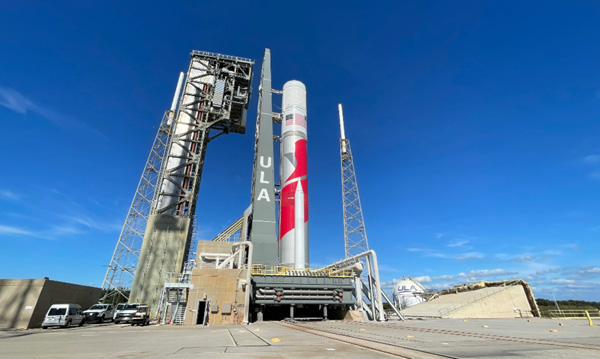
The Vulcan Centaur rocket stands tall on the pad at Cape Canaveral Space Force Station's Space Launch Complex (SLC)-41 in Florida...on January 5, 2024.
United Launch Alliance

Earlier today, United Launch Alliance's Vulcan Centaur rocket exited the Vertical Integration Facility and rolled out to the pad at Cape Canaveral Space Force Station's Space Launch Complex (SLC)-41 in Florida...beginning the final step of sending Astrobotic's Peregrine lander to the Moon over two days from now.

Vulcan Centaur is scheduled to lift off from SLC-41 on January 8 at 2:18 AM, EST (January 7 at 11:18 PM, PST)—beginning Peregrine's long-awaited journey through space that will hopefully conclude with a safe and successful landing near the Moon's Gruithuisen Domes later next month, on February 23.

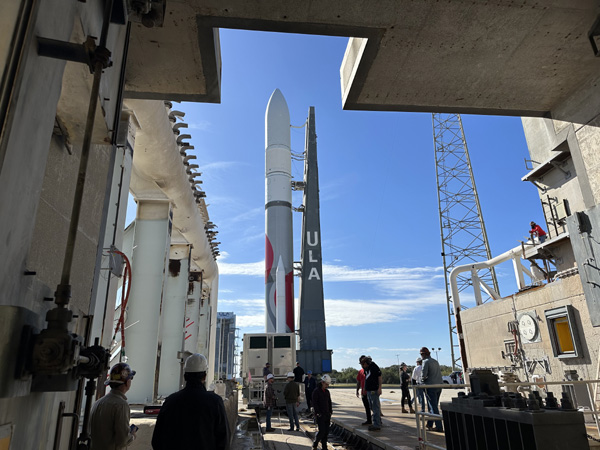
Here are a couple of photos of Vulcan Centaur rolling out to the pad several hours ago. Needless to say, this is one gorgeous-looking rocket!

The Vulcan Centaur rocket is ready to be rolled out of the Vertical Integration Facility and transported to the pad at Cape Canaveral Space Force Station's SLC-41 in Florida...on January 5, 2024.
United Launch Alliance

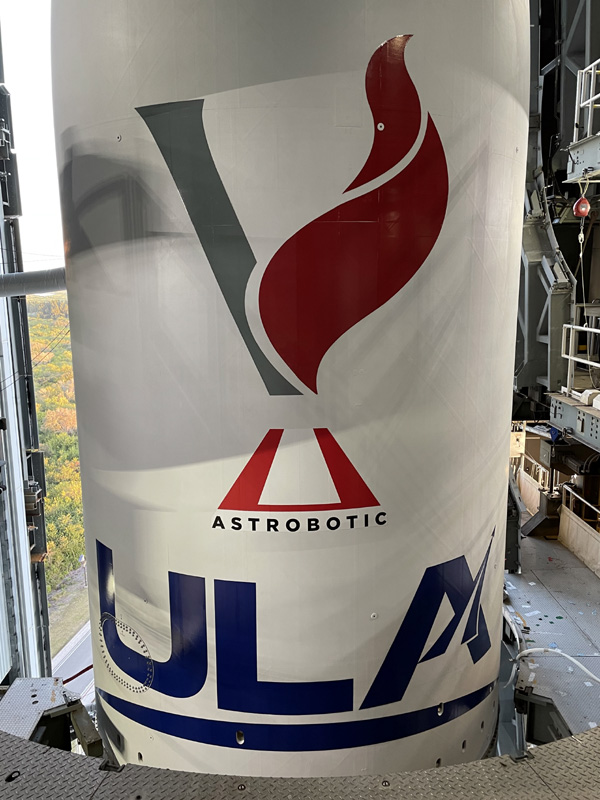
A close-up of Vulcan Centaur's payload fairing before the rocket departs from the Vertical Integration Facility and rolls out to the pad at Cape Canaveral Space Force Station's SLC-41 in Florida...on January 5, 2024.
United Launch Alliance

The Vulcan Centaur rocket departs from the Vertical Integration Facility and rolls out to the pad at Cape Canaveral Space Force Station's SLC-41 in Florida...on January 5, 2024.
United Launch Alliance

The Vulcan Centaur rocket rolls out to the pad at Cape Canaveral Space Force Station's SLC-41 in Florida...on January 5, 2024.
United Launch Alliance

The Vulcan Centaur rocket is about to arrive on the pad at Cape Canaveral Space Force Station's SLC-41 in Florida...on January 5, 2024.
United Launch Alliance

The Vulcan Centaur rocket stands tall on the pad at Cape Canaveral Space Force Station's SLC-41 in Florida...on January 5, 2024.
Tory Bruno

The Vulcan Centaur rocket stands tall on the pad at Cape Canaveral Space Force Station's SLC-41 in Florida...on January 5, 2024.
United Launch Alliance


Wednesday, December 20, 2023

The Peregrine Lander Is Now at the Launch Complex for Its January 8 Flight to the Moon!

The Vulcan Centaur rocket is now fully stacked inside the Vertical Integration Facility (VIF) near Cape Canaveral Space Force Station's Space Launch Complex (SLC)-41 in Florida...on December 20, 2023.
United Launch Alliance

Vulcan Cert-1: Payloads Mounted Atop Rocket for Launch (News Release)

The payload complement for the inaugural United Launch Alliance (ULA) Vulcan rocket is atop the launch vehicle in preparation for liftoff from Cape Canaveral Space Force Station in Florida on January 8 at 2:18 a.m. ET.

The Certification-1 (Cert-1) flight test will launch the first Astrobotic Peregrine commercial lunar lander into a highly-elliptical orbit more than 220,000 miles (360,000 km) above Earth to intercept the Moon and carry a Celestis Memorial Spaceflight Payload into deep space.

Peregrine is slated to be the first private American spacecraft to be launched as part of NASA’s Commercial Lunar Payload Services (CLPS) initiative to deliver science and technology experiments to the lunar surface. The Celestis payload includes cremated remains of the creator and beloved stars of the original Star Trek television series and DNA samples of former U.S. presidents.

The Cert-1 cargo, already encapsulated in the composite payload fairing measuring 17.7 feet (5.4 meters) in diameter and 51 feet (15.5 meters) in length, was moved overnight from the payload processing facility to ULA’s Vertical Integration Facility (VIF) adjacent to Space Launch Complex (SLC)-41.

This morning, ULA technicians attached the lifting sling to the payload and hoisted it into the VIF for connection to the Centaur V upper stage of the Vulcan rocket, which now stands fully assembled at 202 feet (61.6 meters) tall.

Integrated testing and a complete electrical checkout of the combined rocket and payload will be completed in the coming days while final readiness reviews and closeout activities are performed in preparation for rollout of the rocket on its Vulcan Launch Platform (VLP) to SLC-41 for the countdown and liftoff.

For this inaugural flight, the rocket is flying in the Vulcan VC2S variant. The two-stage rocket uses two BE-4 methane-fueled engines on the booster stage, two GEM 63XL solid rocket boosters, dual RL10C-1-1A engines on the Centaur V upper stage and encapsulates the spacecraft in the standard-sized Out-of-Autoclave (OoA) payload fairing.

Peregrine is equipped with a diverse suite of scientific instruments, technologies, mementos and other payloads from seven different countries, dozens of science teams and hundreds of individuals. The lander also carries a shoebox-sized, 2 kg (4.4-pound) rover, called Iris, that was built by Carnegie Mellon students to take geological images.

NASA's payload suite includes a LiDAR (light detection and ranging) sensor to determine the Peregrine spacecraft's exact velocity and position to land, laser retroreflectors for use in determining the lander's precise location, a radiation sensor to collect information about the lunar environment and spectrometers to measure resources at the landing site and the lunar exosphere.

NASA is working with American companies to deliver scientific, exploration and technology payloads to the Moon’s surface and orbit. The science investigations and technology demonstrations delivered to the lunar surface through CLPS are part of the agency’s broader goal of returning humans to the Moon through the Artemis program.

The Peregrine landing site is an ancient, hardened lava flow – outside of the Gruithuisen Domes, a geologic enigma along the highlands boundary on the northeast border of the Ocean of Storms, the largest dark spot on the Moon. The Domes are suspected to have been formed by a sticky magma rich in silica, similar in composition to granite.

On Earth, formations like these need significant water content and plate tectonics to form, but without these key ingredients on the Moon, lunar scientists have been left to wonder how these domes formed and evolved over time.

The spacecraft stands 6.2 feet (1.9 meters) tall and 8.2 feet (2.5 meters) wide. It will operate for approximately 10 days on the surface.

The Celestis mission will launch 265 flight capsules containing cremated remains, DNA samples and messages of greetings from clients worldwide on an endless journey in interplanetary space beyond the Earth-Moon system and orbit the Sun forever. Aboard are the creator of the original Star Trek television series, Gene Roddenberry, his wife Majel Barrett Roddenberry, and cast members Nichelle Nichols, the actress who played Lieutenant Nyota Uhura, and beloved actor, James "Scotty" Doohan who played the chief engineer of the Starship Enterprise.

DNA samples of former U.S. presidents George Washington, John F. Kennedy and Dwight D. Eisenhower will also be part of the Celestis memorial payload, together with people from all walks of life, interests and vocations.

The Celestis payload will remain affixed to the Centaur V, which will be placed in a hyperbolic orbit around the Sun following completion of the Peregrine portion of the launch and subsequent propellant depletion and standard safing activities for an upper stage. It will remain in this orbit for eternity.

This is the first of two flight tests required for ULA's certification process with the U.S. Space Force. ULA has worked in close partnership with the Space Force throughout the design, development, testing and production of the next-generation rocket for assured access to space.

The Space Force selected Vulcan as the No. 1 offeror and "best value" choice in the Phase 2 National Security Space Launch (NSSL) competition.

Source: United Launch Alliance

****

The Vulcan rocket's payload fairing containing Astrobotic's Peregrine lunar lander arrives at the VIF (off-screen) near Cape Canaveral Space Force Station's SLC-41 in Florida...on the morning of December 20, 2023.
United Launch Alliance

The Vulcan rocket's payload fairing containing Astrobotic's Peregrine lunar lander arrives at the VIF near Cape Canaveral Space Force Station's SLC-41 in Florida...on the morning of December 20, 2023.
United Launch Alliance

The payload fairing containing Astrobotic's Peregrine lunar lander is now mated to the rest of the Vulcan Centaur rocket inside the VIF near Cape Canaveral Space Force Station's SLC-41 in Florida...on December 20, 2023.
United Launch Alliance

Tuesday, December 19, 2023

The Vulcan Rocket's Very First Payload Is All Set for Its Launch to the Moon Next Month...

Astrobotic's Peregrine lunar lander is ready to be encapsulated by the twin payload fairings of its Vulcan Centaur rocket...at the Astrotech Space Operations facility in Titusville, Florida.
Astrobotic

Astrobotic Peregrine Fueled & Ready for Lunar Mission (Press Release)

Fueled and integrated with ULA’s Vulcan rocket, Peregrine is targeting launch on January 8, 2024

Pittsburgh, PA – Astrobotic announced today that their Peregrine lunar lander successfully completed all integration milestones and was mated with United Launch Alliance’s Vulcan rocket payload adapter on November 16, 2023. After a 3-week campaign to fuel and complete final checkouts, the Peregrine spacecraft is ready to launch a historic mission to the Moon on January 8, 2024.

“I have high praise for the professionalism, dedication and technical expertise demonstrated by the Astrobotic team throughout the complex multi-year Peregrine development program. Evolving Peregrine from a paper concept to a fully-tested spacecraft ready for launch is a remarkable achievement for a small business,” said Sharad Bhaskaran, Peregrine Mission One Director.

Peregrine is Astrobotic’s first lander mission, and the team plans to become the first commercial company to successfully land a spacecraft on the lunar surface. The lander carries a total of 20 payloads, or cargo, including 5 from NASA’s Commercial Lunar Payload Services initiative.

The payload teams have missions that vary from seeking indications of water-ice near the lunar surface to demonstrating a rover swarm. The lander also has several payloads representing humanity through artwork and historical artifacts.

“If you’ve been following the lunar industry, you understand landing on the Moon’s surface is incredibly difficult. With that said, our team has continuously surpassed expectations and demonstrated incredible ingenuity during flight reviews, spacecraft testing and major hardware integrations,” says John Thornton, Astrobotic CEO. “We are ready for launch, and for landing.”

After launch, Peregrine has a long checklist of milestones to complete on its way to the Moon. The first handful will be executed shortly after launch, when the spacecraft will separate from the rocket, power on, and establish communications with Earth.

At this stage, telemetry flowed through the NASA Deep Space Network system to the Astrobotic Mission Control Center in Pittsburgh will start informing the mission control team of the spacecraft’s position, orientation and general operational health.

About 40 minutes after separation from ULA’s Vulcan rocket, Peregrine’s propulsion system will activate and begin receiving commands from Astrobotic’s Mission Control Center. One of the first commands will initiate thrusters to point Peregrine’s solar panels at the Sun to begin charging its battery.

During cruise, the team will orchestrate trajectory adjustment maneuvers in Earth orbit before lunar orbit insertion.  Peregrine will then dwell in a stable orbit and perform system checkouts before attempting a historic landing on February 23, 2024.

Source: Astrobotic

****

Astrobotic's Peregrine lunar lander is ready to be encapsulated by the twin payload fairings of its Vulcan Centaur rocket...at the Astrotech Space Operations facility in Titusville, Florida.
Astrobotic

Astrobotic's Peregrine lunar lander is ready to be encapsulated by the twin payload fairings of its Vulcan Centaur rocket...at the Astrotech Space Operations facility in Titusville, Florida.
Astrobotic

Astrobotic's Peregrine lunar lander is ready to be encapsulated by the twin payload fairings of its Vulcan Centaur rocket...at the Astrotech Space Operations facility in Titusville, Florida.
Astrobotic

Thursday, December 14, 2023

Peregrine Is Now Set to Launch to the Moon One Week After New Year's Day...

The Vulcan Centaur rocket, minus the payload fairing that will carry Astrobotic's Peregrine lunar lander for launch, stands tall at Cape Canaveral Space Force Station's SLC-41 pad in Florida...prior to Vulcan Centaur's first Wet Dress Rehearsal on December 8, 2023.
United Launch Alliance

After United Launch Alliance (ULA) successfully conducted a second Wet Dress Rehearsal (WDR) two days ago (due to last Friday's fueling test not going the full duration because of ground equipment issues at Space Launch Complex 41 in Cape Canaveral Space Force Station, Florida), the company announced this morning that the Vulcan Centaur rocket will launch Astrobotic's Peregrine lunar lander to the Moon on Monday, January 8!

Space enthusiasts (like me) were hoping that the successful WDR would allow ULA to retain the original December 24 launch date, but ULA CEO Tory Bruno commented (below) that lots of work—such as encapsulating Peregrine inside its Vulcan payload fairing, testing the electrical connections between Peregrine and Vulcan, and installing ordnance (explosive devices that are used to separate the twin solid rocket motors from the Vulcan booster as well as release the payload fairings from around Peregrine once the launch vehicle is out of Earth's atmosphere; among other tasks)—still needs to be done. Getting Vulcan Centaur ready for a launch date that's only 10 days away was pushing it.

It's all good. As long as ULA and Astrobotic continue to do a thorough job in making sure that their respective vehicles are in tip-top shape for a launch that's set for one week after New Year's Day, I'm good.

Vulcan Centaur and Peregrine will fly when they're ready to fly! Happy Thursday.

NASA's meatball logo is visible on Astrobotic's Peregrine lunar lander as the spacecraft is prepped for flight inside the Astrotech Space Operations facility in Titusville, Florida...on November 14, 2023.
NASA / Isaac Watson


Friday, December 08, 2023

Peregrine's Ride to the Moon Is Undergoing a Fueling Test Today...

The Vulcan Centaur rocket, minus the payload fairing that will carry Astrobotic's Peregrine lunar lander for launch, stands tall at Cape Canaveral Space Force Station's SLC-41 pad in Florida...prior to Vulcan Centaur's Wet Dress Rehearsal on December 8, 2023.
United Launch Alliance

Vulcan Cert-1: Dress Rehearsal of Launch Day Planned (News Release)

The inaugural United Launch Alliance (ULA) Vulcan rocket rolled out to the Space Launch Complex (SLC)-41 pad at Cape Canaveral Space Force Station on December 6 to undergo an extensive practice countdown.

Known as a Wet Dress Rehearsal (WDR), ULA is preparing to conduct a full day-of-launch test to ensure that the new rocket, pad systems and launch team are ready for the first Vulcan mission. The WDR exercises the hardware, procedures and the people to reduce the risk of a delay on launch day.

The rehearsal follows the tightly-scripted sequence by rolling the Vulcan from the Vertical Integration Facility (VIF) to SLC-41, performing the entire countdown operation to fuel the rocket with cryogenic propellant and returning the vehicle to the VIF afterwards.

The countdown begins before sunrise under the guidance of the ULA launch conductor from the Advanced Spaceflight Operations Center (ASOC), located about four miles (6.4 km) from the pad. The rocket stages are powered up, avionics tested and final preps to ground systems accomplished.

That enables the ULA launch director to give approval for the fueling process.

The launch team configures the Vulcan Centaur for cryogenic loading and approximately one million pounds (454,000 kg) of methane, liquid oxygen and liquid hydrogen flow into the rocket's tanks using the same procedures that will be executed on the actual launch day.

With the rocket filled up, permission will be given to enter terminal count at T-minus 7 minutes. The final phase of the countdown pressurizes the rocket, arms various systems and transitions the vehicle to internal power.

At T-minus 25 seconds, engineers confirm final readiness by declaring "Go Vulcan," "Go Centaur V," "Go Cert-1." The count finishes just prior to ignition time.

The rocket is then safed and cryogenic tanks drained in preparation to return to the VIF.

Once the WDR operations are satisfactorily accomplished, the encapsulated payload will be delivered to the VIF for hoisting atop the launch vehicle to begin combined preparations for launch.

The Certification-1 test flight will launch Astrobotic’s Peregrine lunar lander on a commercial flight to the Moon and carry the Celestis memorial payload into deep space. Launch is targeted for December 24.

Source: United Launch Alliance

****