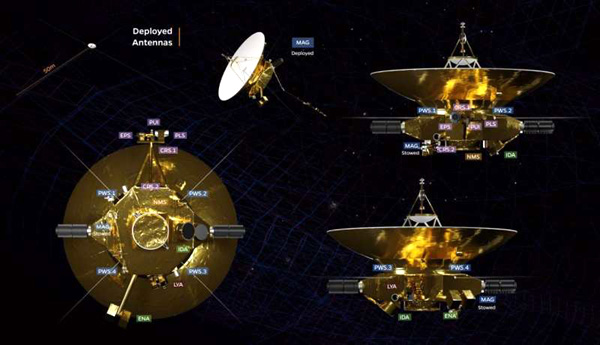
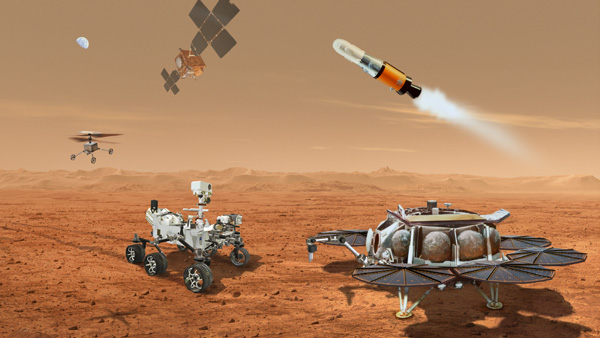
Today marks 50 years since NASA reached the surface of Mars with the safe landing of its Viking 1 lander. Viking 1's sister craft Viking 2 triumphantly set foot on the Red Planet less than three months later...on September 3, 1976.
Over the next five decades, America would send more robotic probes to the Martian surface: Mars Pathfinder and its Sojourner rover in 1997, the Spirit and Opportunity rovers in 2004, the Phoenix Mars lander in 2008, the Curiosity Mars rover in 2012, the InSight Mars lander in 2018, and the Perseverance Mars rover with its Ingenuity Mars helicopter in 2021.
When will the next U.S. Mars landing occur? The Mars Sample Return mission was originally scheduled to launch this year. Alas, that was not meant to be.
Instead, three Mars helicopters dubbed Skyfall will be sent to the Red Planet courtesy of the nuclear-powered Space Reactor-1 Freedom mission in late 2028. Stay tuned!
NASA’s Dragonfly Flight System Faces Heat (News Release)
In preparation for the journey to reach the surface of Saturn’s largest moon, Titan, the heat shield for NASA’s Dragonfly mission completed thermal-structural testing in the New Mexico desert. Dragonfly team members, including those from NASA’s Ames Research Center in California’s Silicon Valley, the Johns Hopkins Applied Physics Laboratory (APL) in Laurel, Maryland, and Lockheed Martin in Littleton, Colorado, collaborated with personnel at Sandia National Laboratories’ National Solar Thermal Test Facility in Albuquerque, New Mexico, to stress-test Dragonfly’s heat shield materials, ensuring that the rotorcraft will be safely delivered through Titan’s dense atmosphere.
Dragonfly’s thermal protection material, made from carbon fiber and a lightweight resin, performed as expected in combined mechanical and thermal testing, even in cases when it was intentionally marred with defects.
Sandia’s Solar Tower test facility houses an array of hundreds of calibrated mirror-like systems to focus energy from the Sun onto a tower holding the test unit. Operators generated temperatures around 4,500° Fahrenheit (nearly 2,500° Celsius) on segments of Dragonfly’s heat shield material. Tests examined tolerance to thermal radiation as well as the rapid change in temperature that researchers expect Dragonfly to experience.
The Sandia test series involved multiple iterations in conditions like those expected during Dragonfly’s entry into Titan’s atmosphere. Additional testing subjected large samples of the heat-shield material to mechanical and thermal stress to simultaneously simulate the pressure of high-speed atmospheric entry and intense thermal conditions. Thermal testing of the heat-shield’s curved shoulder units was also performed.
“We were pleased to see the heat shield material pass these tests, even with the flaws we intentionally included, like those that might naturally occur during fabrication and integration,” said Milad Mahzari, the Dragonfly entry vehicle thermal protection system lead at NASA Ames.
Dragonfly’s heat shield uses a variation of a NASA-invented material called PICA, or Phenolic Impregnated Carbon Ablator. The original PICA material was used to deliver NASA’s Curiosity and Perseverance rovers to Mars. PICA-D, a new variant of PICA, is planned for flight on Dragonfly and was the focus of this test series.
“We tested the heat shield as a complete system, including the primary PICA-D material, gap fillers, and potential manufacturing defects,” Mahzari said, adding that researchers plan to conduct additional analysis of PICA-D before final construction of the heat shield begins.
Dragonfly rotorcraft integration and testing continues at APL, which designed Dragonfly and leads the mission for NASA. Dragonfly is scheduled to launch in 2028 and reach Titan in 2034 to conduct science across multiple locations, sample surface materials to measure their detailed compositions, and observe geology and meteorology on the only moon in the Solar System known to have a substantial atmosphere.
Communications on board
Work continues to test and integrate Dragonfly’s communications system, including the antennas that will link the rotorcraft to operators back on Earth.
The team recently measured the signal patterns coming from Dragonfly’s largest antenna – its high-gain antenna, or HGA – in an APL test chamber that simulates the space environment. The HGA is a 34.4-inch diameter radial line slot antenna, which uses many small slots working together to create a narrow, focused radio beam.
The technology for this antenna was originally developed for NASA’s DART mission and is also flying on NASA’s twin ESCAPADE spacecraft.
“A simple way to picture the antenna is as a large flat showerhead: energy enters near the center and spreads out through the slots in a controlled pattern,” said Matt Bray, Dragonfly lead antenna designer at APL. “This design provides a low-cost, durable and compact approach to high-efficiency communications in extreme space environments and also provides aerodynamic benefits.”
The HGA, Dragonfly’s primary antenna for transmitting science data, will be attached to the top deck of the lander on a gimbal that allows it to track Earth from various locations on Titan’s surface. It will be covered with Kapton, a thermal insulator, for protection from Titan’s weather and crafted to operate in the moon’s frigid environment, where ambient temperatures are 290° below zero Fahrenheit (179° below zero Celsius).
The HGA will be one of three antennas on Dragonfly designed for operations at Titan. The lander will also fly a medium-gain antenna, primarily as a backup to the HGA, and a low-gain antenna, primarily to transmit status tones during flight as well as for emergency communications.
NASA’s Psyche Mission Aces Mars Flyby, Targets Metal-Rich Asteroid (News Release)
NASA’s Psyche spacecraft completed its close approach of Mars on May 15, coming within 2,864 miles (4,609 kilometers) of the planet’s surface. This flyby used a gravity assist from Mars to provide a critical boost in speed and to adjust the spacecraft’s orbital plane without using any onboard propellant, sending it on its way towards the metal-rich asteroid Psyche.
The spacecraft is now headed directly towards the asteroid, located in the main asteroid belt between Mars and Jupiter. After the Mars flyby, the flight team analyzed radio signals between the spacecraft and NASA’s Deep Space Network (DSN), the agency’s global system for communicating with interplanetary spacecraft, to confirm that Psyche was on the correct trajectory.
“Although we were confident in our calculations and flight plan, monitoring the DSN’s Doppler signal in real time during the flyby was still exciting,” said Don Han, Psyche’s navigation lead at NASA’s Jet Propulsion Laboratory in Southern California. “We’ve confirmed that Mars gave the spacecraft a 1,000 mile‑per‑hour boost and shifted its orbital plane by about 1 degree relative to the Sun. We are now on course for arrival at the asteroid Psyche in summer 2029.”
Unique Martian view
In the days running up to and during close approach, all of Psyche’s instruments were powered up for calibration efforts, including its imagers, magnetometers, and gamma-ray and neutron spectrometer. The planetary encounter provided the mission a valuable practice run for when it reaches the asteroid Psyche; as a bonus, it captured Mars images from a rare perspective.
Because Psyche approached Mars from a high phase angle, the planet appeared as a thin crescent in the days running up to the close approach, lit by sunlight reflecting off its surface. In observations from the spacecraft’s multispectral imager, the crescent appeared brighter and extended farther around the planet’s disk than anticipated because of the strong scattering of sunlight through the planet’s dusty atmosphere. As Psyche passed from Mars’ nighttime skies to daytime, it took a rapid series of pictures of the surface around the time of closest approach.
“We’ve captured thousands of images of the approach to Mars and of the planet’s surface and atmosphere at close approach. This dataset provides unique and important opportunities for us to calibrate and characterize the performance of the cameras, as well as test the early versions of our image processing tools being developed for use at the asteroid Psyche,” said Jim Bell, the Psyche imager instrument lead at Arizona State University (ASU) in Tempe. “As the spacecraft continues its journey after the flyby, we’ll continue calibration imaging of Mars for the rest of the month as it recedes into the distance.”
Bell also leads the Mastcam-Z imaging investigation on NASA’s Perseverance Mars rover mission team, which was among several missions that provided complementary surface and atmospheric imaging as well as navigation data during the flyby to help with calibration efforts. Other missions involved include NASA’s Mars Reconnaissance Orbiter, 2001 Mars Odyssey orbiter, and Curiosity rover, along with ESA’s (European Space Agency’s)Mars Express and ExoMars Trace Gas Orbiter.
In addition to the imager, early calibration measurements made by Psyche’s magnetometers may have detected Mars’ bow shock as the spacecraft passed the planet. The gamma-ray and neutron spectrometer team was also quickly gathering data to calibrate the instrument by comparing their measurements with the large pool of existing Mars data.
Onward to asteroid Psyche
With Mars in the rearview mirror, the spacecraft will soon resume using its solar-electric propulsion system to make a beeline to the main asteroid belt. When it arrives in August 2029, it will insert itself into orbit around the asteroid Psyche, which is thought to be the partial core of a planetesimal, a building block of an early planet. Through a series of circular orbits that go lower and then higher in altitude around Psyche, which is about 173 miles (280 kilometers) across at its widest point, the spacecraft will map the asteroid and gather science data.
If the asteroid proves to be the metallic core of an ancient planetesimal, it could offer a one-of-a-kind window into the interior of rocky planets like Earth.
“We’ve been anticipating the Mars flyby for years, but now it’s complete. We can thank the Red Planet for giving our spacecraft a critical gravitational slingshot farther into the Solar System,” said Lindy Elkins-Tanton, principal investigator for Psyche at the University of California, Berkeley. “Onward to the asteroid Psyche!”
Getting into the Space Nuclear Power Game with Next-generation Technology (News Release)
Finalized design of Next Gen RTG clears path for deep space missions to outer Solar System.
L3Harris Technologies has finalized the design of a next-generation nuclear-based power source for future NASA deep space missions, marking a crucial advancement in spacecraft power technology.
The Next-Generation Radioisotope Thermoelectric Generator (Next Gen RTG) cleared its critical design review (CDR) on April 2, 2026, paving the way for a new era of outer Solar System exploration.
“Passing the CDR is an important milestone because it validates that our design meets all the technical requirements and can be manufactured,” said Bill Sack, General Manager, RocketWorks and Power Systems at L3Harris. “It also demonstrates we've successfully re-established this critical capability after years of limited production.”
Flight units could power NASA deep space probes starting in the early 2030s, including a proposed Uranus orbiter that would use two Next Gen RTGs for power and for keeping its temperature-sensitive components warm enough to operate in the frigid environment of the outer Solar System. This dual-purpose capability makes RTGs indispensable for such missions.
What is the Next Gen RTG?
RTGs convert heat from the radioactive decay of plutonium-238 into electricity. Necessary for probes that are too far from the Sun to rely on solar power, they have been in use for 60 years. Early versions continue to supply power to NASA’s twin Voyager probes, which were launched in 1977 and are now traveling in interstellar space.
The Next Gen RTG is an evolution of the general-purpose heat source RTGs that supplied power to NASA’s Cassini Saturn orbiter and, more recently, the New Horizons probe, which carried out a Pluto flyby in 2015 and is now exploring the frozen wonders of the Kuiper Belt. Unlike the L3Harris-built Multi-Mission RTGs currently powering NASA's Curiosity and Perseverance Mars rovers, the Next Gen RTGs are optimized for spacecraft operating in the vacuum of space rather than on the surface of a planet.
This distinction is critical for future missions. The vacuum-optimized design allows for more efficient heat rejection and power generation in the deep space environment where missions like the Uranus orbiter will operate. As a result, the Next Gen RTG offers a higher power output at approximately the same weight as the Multi-Mission RTG. With the capability to generate about 250 watts of power at the beginning of its life, each Next Gen RTG will provide reliable, long-duration power for spacecraft exploring the outer reaches of our Solar System.
“The Next Gen RTG represents a significant leap forward in efficiency," added Sack. "We're delivering more power in the same mass envelope, which is critical when every kilogram matters for deep space missions."
Why the Next Gen RTG Matters
The availability of Next Gen RTGs opens the door to a range of ambitious missions that have been on NASA's wish list. Beyond the Uranus orbiter, these power systems could enable:
- Extended missions to Neptune and its moon, Triton
- Kuiper Belt Object explorers that can go beyond the range of the New Horizons spacecraft
- Long-duration missions to the outer planets' moons
- Interstellar precursor missions that push even farther than Voyager 1 and Voyager 2
Restarting Production
The U.S. Department of Energy’s Idaho National Laboratory tapped L3Harris in 2021 to re-establish the key technologies from the heritage system and update the design in response to growing interest in new deep space missions. The contract is expected to end in 2027 with a production readiness review to verify that the next-generation system can be built using the materials and components that have been re-established.
“We are proving we can do it again," said Leo Gard, Space Propulsion & Power Systems Program Manager at L3Harris. “While we didn't build the original generators, we've successfully reconstructed incomplete documentation and identified modern equivalents for obsolete components through creative problem-solving."
A Collaborative Effort
As prime contractor on the Next Gen RTG program, L3Harris is responsible for the main structure and overall system integration. Teledyne Energy Systems Inc. of Hunt Valley, Maryland, makes the thermoelectric couples that convert heat to electricity, while BAE Systems Space and Mission Systems in Boulder, Colorado, is responsible for insulation.
NASA’s Perseverance Rover Snaps Selfie in Mars’ Western Frontier (News Release)
The agency’s six-wheeled geologist took a self-portrait during its survey of an ancient landscape that may predate the formation of Jezero Crater itself.
NASA’s Perseverance Mars rover recently took a self-portrait against a sweeping backdrop of ancient Martian terrain at a location that the science team calls “Lac de Charmes.” Assembled from 61 individual images, the selfie shows Perseverance training its mast on a rocky outcrop on which it had just made a circular abrasion patch, with the western rim of Jezero Crater stretching into the background. The selfie was captured on March 11, the 1,797th Martian day, or sol, of the mission, during the rover’s deepest push west beyond the crater.
Perseverance is in its fifth science campaign, known as the Northern Rim Campaign, of its mission on the Red Planet. The Lac de Charmes region represents some of the most scientifically-compelling terrain that the rover has visited.
“We took this image when the rover was in the ‘Wild West’ beyond the Jezero Crater rim — the farthest west we have been since we landed at Jezero a little over five years ago,” said Katie Stack Morgan, Perseverance’s project scientist at NASA’s Jet Propulsion Laboratory in Southern California. “We had just abraded and analyzed the ‘Arathusa’ outcrop, and the rover was sitting in a spot that provided a great view of both the Jezero Rim and the local terrain outside of the crater.”
During abrading, the rover grinds down a portion of the rock’s surface, allowing the science team to analyze what’s inside. The technique enabled the team to determine that the Arathusa outcrop is composed of igneous minerals that likely predate the formation of Jezero Crater. Igneous rocks with large mineral crystals form underground as molten rock cools and solidifies.
Perseverance acquired the selfie — its sixth since landing on Mars in 2021 — using the WATSON (Wide Angle Topographic Sensor for Operations and eNgineering) camera mounted at the end of its robotic arm, which made 62 precision movements over approximately one hour to build the composite image (learn more about how selfies are made).
Significant science
Along with the selfie, Perseverance used Mastcam-Z, located on its mast, to capture a mosaic of the “Arbot” area in Lac de Charmes on April 5, or Sol 1882. Made of 46 images, the panorama offers one of the richest geological vistas of the mission, revealing a windswept landscape of diverse rock textures.
The image provides the team a clear road map for investigating the ridgeline and the area’s ancient rock variety, including what appear to be megabreccia — large fragments (some the size of skyscrapers) hurled by a massive meteorite impact that occurred on the plain called Isidis Planitia about 3.9 billion years ago.
“What I see in this image is excellent exposure of likely the oldest rocks we are going to investigate during this mission,” said Ken Farley, Perseverance’s deputy project scientist at Caltech in Pasadena. “There is a sharp ridgeline visible in the mosaic whose jagged, angular texture contrasts starkly with the rounded boulders in the foreground. We also see a feature that may be a volcanic dike, a vertical intrusion of magma that hardened in place and was left standing as the softer surrounding material eroded away over billions of years.”
The rock color in the mosaic offers less information to the science team than the distinctive textures, which help them differentiate the rock types. Unlike Jezero Crater’s river delta, which is composed of sedimentary rock, some rocks here appear to be extrusive igneous rocks (molten rock that reached the surface as lava flows) and impactites (rocks created or modified by a meteorite impact) believed to have formed before the crater about 4 billion years ago, offering a window into the planet’s deep early crust.
New ballgame, near-marathon distance
“The rover’s study of these really ancient rocks is a whole new ballgame,” said Stack Morgan. “These rocks — especially if they’re from deep in the crust — could give us insights applicable to the entire planet, like whether there was a magma ocean on Mars and what initial conditions eventually made it a habitable planet.”
After studying Arathusa, Perseverance drove northwest to the Arbot area, where it has been analyzing other rocky outcrops. When the team is satisfied with the work accomplished there, the rover will drive south to “Gardevarri,” a site with a notably clear exposure of olivine-bearing rocks. Formed in cooling magma, these types of rocks contain information that can help scientists better understand Mars’ volcanic history and provide context for large-scale geological processes.
From Gardevarri, the rover is expected to head southeast towards a region that the team is calling “Singing Canyon” for more insights into the planet’s early crust.
After more than five years of surface operations, Perseverance has abraded 62 rocks, collected 27 rock cores in its sample tubes (25 sealed, 2 unsealed), and traveled almost 26 miles (42 kilometers) — in other words, just shy of a marathon (26.2 miles, or 42.195 kilometers).
“Having the benefit of four previous rover missions, the Perseverance team has always known our mission was a marathon and not a sprint,” said acting Perseverance project manager Steve Lee at JPL. “We’ve almost reached marathon distance. Our selfie may show that the rover is a bit dusty, but its beauty is more than skin deep. Perseverance is in great shape as we continue our explorations and extend into ultramarathon drive distances.”
NASA’s Perseverance Rover Completes First AI-Planned Drive on Mars (News Release - January 30)
The team for the six-wheeled scientist used a vision-capable AI to create a safe route over the Red Planet’s surface without the input of human route planners.
NASA’s Perseverance Mars rover has completed the first drives on another world that were planned by artificial intelligence. Executed on December 8 and 10, and led by the agency’s Jet Propulsion Laboratory in Southern California, the demonstration used generative AI to create waypoints for Perseverance, a complex decision-making task typically performed manually by the mission’s human rover planners.
“This demonstration shows how far our capabilities have advanced and broadens how we will explore other worlds,” said NASA Administrator Jared Isaacman. “Autonomous technologies like this can help missions to operate more efficiently, respond to challenging terrain, and increase science return as distance from Earth grows. It’s a strong example of teams applying new technology carefully and responsibly in real operations.”
During the demonstration, the team leveraged a type of generative AI called vision-language models to analyze existing data from JPL’s surface mission dataset. The AI used the same imagery and data that human planners rely on to generate waypoints — fixed locations where the rover takes up a new set of instructions — so that Perseverance could safely navigate the challenging Martian terrain.
The initiative was led out of JPL’s Rover Operations Center (ROC) in collaboration with Anthropic, using the company’s Claude AI models.
Progress for Mars, beyond
Mars is on average about 140 million miles (225 million kilometers) away from Earth. This vast distance creates a significant communication lag, making real-time remote operation — or “joy-sticking” — of a rover impossible. Instead, for the past 28 years, over several missions, rover routes have been planned and executed by human “drivers,” who analyze the terrain and status data to sketch a route using waypoints, which are usually spaced no more than 330 feet (100 meters) apart to avoid any potential hazards. Then they send the plans via NASA’s Deep Space Network to the rover, which executes them.
But for Perseverance’s drives on the 1,707th and 1,709th Martian days, or sols, of the mission, the team did something different: Generative AI provided the analysis of the high-resolution orbital imagery from the HiRISE (High Resolution Imaging Science Experiment) camera aboard NASA’s Mars Reconnaissance Orbiter and terrain-slope data from digital elevation models. After identifying critical terrain features — bedrock, outcrops, hazardous boulder fields, sand ripples and the like — it generated a continuous path complete with waypoints.
To ensure that the AI’s instructions were fully compatible with the rover’s flight software, the engineering team also processed the drive commands through JPL’s “digital twin” (virtual replica of the rover), verifying over 500,000 telemetry variables before sending commands to Mars.
On December 8, with generative AI waypoints in its memory, Perseverance drove 689 feet (210 meters). Two days later, it drove 807 feet (246 meters).
“The fundamental elements of generative AI are showing a lot of promise in streamlining the pillars of autonomous navigation for off-planet driving: perception (seeing the rocks and ripples), localization (knowing where we are), and planning and control (deciding and executing the safest path),” said Vandi Verma, a space roboticist at JPL and a member of the Perseverance engineering team. “We are moving towards a day where generative AI and other smart tools will help our surface rovers handle kilometer-scale drives while minimizing operator workload, and flag interesting surface features for our science team by scouring huge volumes of rover images.”
“Imagine intelligent systems not only on the ground at Earth, but also in edge applications in our rovers, helicopters, drones and other surface elements trained with the collective wisdom of our NASA engineers, scientists and astronauts,” said Matt Wallace, manager of JPL’s Exploration Systems Office. “That is the game-changing technology we need to establish the infrastructure and systems required for a permanent human presence on the Moon and take the U.S. to Mars and beyond."
NASA’s Perseverance Mars Rover Ready to Roll for Miles in Years Ahead (News Release)
After nearly five years on Mars, NASA’s Perseverance rover has traveled almost 25 miles (40 kilometers), and the mission team has been busy testing the rover’s durability and gathering new science findings on the way to a new region nicknamed “Lac de Charmes,” where it will be searching for rocks to sample in the coming year.
Like its predecessor Curiosity, which has been exploring a different region of Mars since 2012, Perseverance was made for the long haul. NASA’s Jet Propulsion Laboratory in Southern California, which built Perseverance and leads the mission, has continued testing the rover’s parts here on Earth to make sure the six-wheeled scientist will be strong for years to come. This past summer, JPL certified that the rotary actuators that turn the rover’s wheels can perform optimally for at least another 37 miles (60 kilometers); comparable brake testing is underway as well.
Over the past two years, engineers have extensively evaluated nearly all of the vehicle’s subsystems in this way, concluding that they can operate until at least 2031.
“These tests show the rover is in excellent shape,” said Perseverance’s deputy project manager, Steve Lee of JPL, who presented the results on Wednesday at the American Geophysical Union’s annual meeting, the largest gathering of planetary scientists in the United States. “All the systems are fully capable of supporting a very long-term mission to extensively explore this fascinating region of Mars.”
Perseverance has been driving through Mars’ Jezero Crater, the site of an ancient lake and river system, where it has been collecting scientifically compelling rock core samples. In fact, in September, the team announced that a sample from a rock nicknamed “Cheyava Falls” contains a potential fingerprint of past microbial life.
More efficient roving
In addition to a hefty suite of six science instruments, Perseverance packs more autonomous capabilities than past rovers. A paper published recently in IEEE Transactions on Field Robotics highlights an autonomous planning tool called Enhanced Autonomous Navigation, or ENav. The software looks up to 50 feet (15 meters) ahead for potential hazards, then chooses a path without obstacles and tells Perseverance’s wheels how to steer there.
Engineers at JPL meticulously plan each day of the rover’s activities on Mars. But once the rover starts driving, it’s on its own and sometimes has to react to unexpected obstacles in the terrain. Past rovers could do this to some degree, but not if these obstacles were clustered near each other.
Past rovers also couldn’t react as far in advance, resulting in the vehicles driving slower while approaching sand pits, rocks and ledges. In contrast, ENav’s algorithm evaluates each rover wheel independently against the elevation of terrain, trade-offs between different routes, and “keep-in” or “keep-out” areas marked by human operators for the path ahead.
“More than 90% of Perseverance’s journey has relied on autonomous driving, making it possible to quickly collect a diverse range of samples,” said JPL autonomy researcher Hiro Ono, a paper lead author. “As humans go to the Moon and even Mars in the future, long-range autonomous driving will become more critical to exploring these worlds.”
New science
A paper published Wednesday in Science details what Perseverance discovered in the “Margin Unit,” a geologic area at the margin, or inner edge, of Jezero Crater. The rover collected three samples from that region. Scientists think that these samples may be particularly useful for showing how ancient rocks from Mars’ deep interior interacted with water and the atmosphere, helping create conditions supportive for life.
From September 2023 to November 2024, Perseverance ascended 1,312 feet (400 meters) of the Margin Unit, studying rocks along the way — especially those containing the mineral olivine. Scientists use minerals as timekeepers because crystals within them can record details about the precise moment and conditions in which they formed.
Jezero Crater and the surrounding area holds large reserves of olivine, which forms at high temperatures, typically deep within a planet, and offers a snapshot of what was going on in the planet’s interior. Scientists think the Margin Unit’s olivine was made in an intrusion, a process where magma pushes into underground layers and cools into igneous rock. In this case, erosion later exposed that rock to the surface, where it could interact with water from the crater’s ancient lake and carbon dioxide, which was abundant in the planet’s early atmosphere.
Those interactions form new minerals called carbonates, which can preserve signs of past life, along with clues as to how Mars’ atmosphere changed over time.
“This combination of olivine and carbonate was a major factor in the choice to land at Jezero Crater,” said the new paper’s lead author, Perseverance science team member Ken Williford of Blue Marble Space Institute of Science in Seattle. “These minerals are powerful recorders of planetary evolution and the potential for life.”
Together, the olivine and carbonates record the interplay between rock, water and atmosphere inside the crater, including how each changed over time. The Margin Unit’s olivine appeared to have been altered by water at the base of the unit, where it would have been submerged. But the higher Perseverance went, the more the olivine bore textures associated with magma chambers, like crystallization, and fewer signs of water alteration.
As Perseverance leaves the Margin Unit behind for Lac de Charmes, the team will have the chance to collect new olivine-rich samples and compare the differences between the two areas.
NASA JPL Shakes Things Up Testing Future Commercial Lunar Spacecraft (News Release)
As Firefly Aerospace prepares to follow its successful soft landing on the Moon, an engineering model for its next lander is being put through its paces.
The same historic facilities that some 50 years ago prepared NASA’s twin Voyager probes for their ongoing interstellar odyssey are helping to ready a towering commercial spacecraft for a journey to the Moon. Launches involve brutal shaking and astonishingly loud noises, and testing in these facilities mimics those conditions to help ensure that mission hardware can survive the ordeal. The latest spacecraft to get this treatment are Firefly Aerospace’s Blue Ghost Mission 2 vehicles, set to launch to the Moon’s far side next year.
The Environmental Test Laboratory at NASA’s Jet Propulsion Laboratory in Southern California is where dozens of robotic spacecraft have been subjected to powerful jolts, extended rattling, high-decibel blasts of sound, and frigid and scorching temperatures, among other trials. Constructed in the 1960s and modernized over the years, the facilities have prepared every NASA spacecraft built or assembled at JPL for the rigors of space, from the Ranger spacecraft of the dawning Space Age to the Perseverance Mars rover to Europa Clipper, currently en route to the Jupiter system.
That legacy, and the decades of accumulated experience of the Environmental Test Laboratory team at JPL, is also supporting industry efforts to return to the Moon as part of NASA’s CLPS (Commercial Lunar Payload Services) initiative and its Artemis campaign, which will bring astronauts back to the lunar surface.
In recent months, a full-scale model of Firefly’s uncrewed Blue Ghost Mission 2 spacecraft was put through its paces by the experts in the lab’s vibration and acoustic testing facilities. Lessons learned with this model, called a structural qualification unit, will be applied to upcoming testing of the spacecraft that will fly to the Moon as early as 2026 through NASA’s CLPS.
“There’s a lot of knowledge gained over the years, passed from one generation of JPL engineers to another, that we bring to bear to support our own missions as well as commercial efforts,” said Michel William, a JPL engineer in the Environmental Test Laboratory who led the testing. “The little details that go into getting these tests right — nobody teaches you that in school, and it’s such a critical piece of space launch.”
Testing just right
The Environmental Test Laboratory team led environmental testing for Firefly’s Blue Ghost Mission 1 lander in 2024, and seeing the spacecraft achieve a soft Moon landing in March was a point of pride for them. Firefly’s next CLPS delivery debuts a dual-spacecraft configuration and hosts multiple international payloads, with the company’s Elytra Dark orbital vehicle stacked below the Blue Ghost lunar lander. Standing 22 feet (6.9 meters) high, the full structure is more than three times as tall as the Mission 1 lander.
This fall, a structural qualification model of the full stack was clamped to a “shaker table” inside a clean room at JPL and repeatedly rattled in three directions while hundreds of sensors monitored the rapid movement. Then, inside a separate acoustic testing chamber, giant horns blared at it from openings built into the room’s 16-inch-thick (41-centimeter-thick) concrete walls. The horns use compressed nitrogen gas to pummel spacecraft with up to 153 decibels, noise loud enough to cause permanent hearing loss in a human.
Each type of test involves several increasingly intense iterations. Between rounds, JPL’s dynamics environment experts analyze the data to compare what the spacecraft experienced to computer model predictions. Sometimes a discrepancy leads to hardware modifications, sometimes a tweak to the computer model. Engineers and technicians are careful to push the hardware, but not too far.
“You can either under-test or over-test, and both are bad,” William said. “If you over-test, you can break your hardware. If you under-test, it can break on the rocket. It’s a fine line.”
Since the model isn’t itself launching to the Moon, Firefly’s recent Environmental Test Laboratory visit didn’t include several types of trials that are generally completed only for flight hardware. A launch pad-bound spacecraft would undergo electromagnetic testing to ensure that signals from its electronic parts don’t interfere with one another. And, in what is probably the most well-known environmental test, flight-bound hardware is baked or chilled at extreme temperatures in a thermal vacuum chamber from which all of the air is sucked out.
The multiple thermal vacuum chamber facilities at JPL include two large historic “space simulators” built within NASA’s first few years of existence: a chamber that’s 10 feet in diameter and another that’s 25 feet across.
Qualifying for launch
The completion of Environmental Test Laboratory testing on Firefly’s structural qualification model helps prove that the spacecraft will survive its ride out of Earth’s atmosphere aboard a SpaceX Falcon 9 rocket. Firefly’s Blue Ghost Mission 2 team is now turning its focus to completing assembly and testing of the flight hardware for launch.
Once at the Moon, the Blue Ghost lander will touch down on the far side, delivering its payloads to the surface. Those include LuSEE-Night, a radio telescope that is a joint effort by NASA, the U.S. Department of Energy, and University of California, Berkeley’s Space Sciences Laboratory. A payload developed at JPL called User Terminal will test a compact, low-cost S-band radio communications system that could enable future far-side missions to talk to each other and to relay orbiters.
Meantime, Firefly’s Elytra Dark orbital vehicle will have deployed into lunar orbit ESA’s (European Space Agency’s)Lunar Pathfinder communications satellite — a payload on which NASA is collaborating. Both vehicles will remain in orbit and able to relay data from the far-side surface back to Earth.
“Firefly’s Blue Ghost Mission 2 will deliver both NASA and international commercial payloads to further prove out technologies for Artemis and help enable a long-term presence on the Moon,” said Ray Allensworth, Firefly’s spacecraft program director. “The extensive spacecraft environmental testing we did at JPL for Mission 1 was a critical step in Firefly’s test campaign for our historic lunar mission. Now we’re collaborating again to support a successful repeat on the Moon that will unlock even more insights for future robotic and human missions.”
NASA Continues MAVEN Spacecraft Recontact Efforts (News Release)
NASA’s MAVEN(Mars Atmosphere and Volatile EvolutioN) mission team, in partnership with the agency’s Deep Space Network, continues recovery activities after losing contact with the spacecraft on December 6. To date, attempts to reestablish contact with the spacecraft have not been successful.
Although no spacecraft telemetry has been received since December 4, the team recovered a brief fragment of tracking data from December 6 as part of an ongoing radio science campaign. Analysis of that signal suggests that the MAVEN spacecraft was rotating in an unexpected manner when it emerged from behind Mars. Further, the frequency of the tracking signal suggests MAVEN’s orbit trajectory may have changed.
The team continues to analyze tracking data to understand the most likely scenarios leading to the loss of signal. Efforts to reestablish contact with MAVEN also continue.
NASA is also working to mitigate the effect of the MAVEN anomaly on surface operations for NASA’s Perseverance and Curiosity rovers. Four orbiters at Mars, including MAVEN, relay communications to and from the surface to support rover operations. NASA’s Mars Reconnaissance Orbiter, Mars Odyssey and ESA’s (European Space Agency’s)ExoMars Trace Gas Orbiter all remain operational.
For the next two weeks of scheduled surface operations, NASA is arranging additional passes from the remaining orbiters, and the Perseverance and Curiosity teams have adjusted their daily planning activities to continue their science missions.
View Interstellar Comet 3I/ATLAS Through NASA’s Multiple Lenses (News Release)
NASA is in the midst of an unprecedented Solar System-wide observation campaign, turning its spacecraft and space telescopes to follow comet 3I/ATLAS, the third known interstellar object to pass through our Solar System. Twelve NASA assets have captured and processed imagery of the comet since it was first discovered on July 1, and several others will have opportunities to capture more images as the comet continues to pass through our Solar System.
By observing the comet from so many locations, NASA has an opportunity to learn about the ways that 3I/ATLAS differs from our Solar System’s home-grown comets and give scientists a new window into how the compositions of other systems may differ from our own.
Observations from Mars
The closest imagery of the comet was taken by NASA spacecraft at Mars. Earlier this fall, 3I/ATLAS passed by Mars from a distance of 19 million miles, where it was observed by three NASA spacecraft. The Mars Reconnaissance Orbiter(MRO) captured one of the closest images of the comet, while the MAVEN(Mars Atmosphere and Volatile EvolutioN) orbiter obtained ultraviolet images that will help scientists understand the comet’s make-up.
Meanwhile, the Perseverance rover grabbed a faint glimpse from the surface of Mars.
Sun watchers’ view
Some of NASA’s heliophysics missions have the unique ability to observe areas of the sky near the Sun, which allowed them to track comet 3I/ATLAS as it passed behind our Sun as seen from Earth, making observations with ground-based telescopes impossible. NASA’s STEREO(Solar Terrestrial Relations Observatory) captured images from September 11 to October 2, and the ESA (European Space Agency) and NASA mission SOHO(Solar and Heliospheric Observatory) observed the comet from October 15 to 26. Images from NASA’s PUNCH(Polarimeter to Unify the Corona and Heliosphere) mission, which launched earlier this year, reveal the comet’s tail during observations from September 20 to October 3.
Despite previously observing and discovering thousands of comets, this is the first time that NASA’s heliophysics missions have purposefully observed an object originating in another solar system.
Asteroid explorers
NASA’s Psyche and Lucy spacecraft, currently on their respective outbound journeys to study various asteroid targets throughout the Solar System, were able to observe 3I/ATLAS en route. On September 8 and 9, Psyche acquired four observations of the comet over eight hours from a distance of 33 million miles. These images will help scientists refine the comet’s trajectory.
On September 16, Lucy took a series of images from 240 million miles away. Stacking these images together provides detail on the comet’s coma and tail.
The NASA-funded ATLAS (Asteroid Terrestrial-impact Last Alert System) telescope in Chile discovered 3I/ATLAS on July 1. Later that month it was viewed by NASA’s Hubble Space Telescope. In August, both NASA’s James Webb Telescope and SPHEREx(Spectro-Photometer for the History of the Universe, Epoch of Reionization and Ices Explorer) captured imagery.
Comet 3I/ATLAS will fly closest to Earth about Friday, December 19, at 170 million miles, which is almost twice the distance between the Earth and Sun. NASA spacecraft will continue to observe the comet as it makes its journey through the Solar System, passing the orbit of Jupiter in spring 2026.
NASA Says Mars Rover Discovered Potential Biosignature Last Year (News Release)
A sample collected by NASA’s Perseverance Mars rover from an ancient dry riverbed in Jezero Crater could preserve evidence of ancient microbial life. Taken from a rock named “Cheyava Falls” last year, the sample, called “Sapphire Canyon,” contains potential biosignatures, according to a paper published Wednesday in the journal Nature.
A potential biosignature is a substance or structure that might have a biological origin but requires more data or further study before a conclusion can be reached about the absence or presence of life.
Perseverance came upon Cheyava Falls in July 2024 while exploring the “Bright Angel” formation, a set of rocky outcrops on the northern and southern edges of Neretva Vallis, an ancient river valley measuring a quarter-mile (400 meters) wide that was carved by water rushing into Jezero Crater long ago.
“This finding is the direct result of NASA’s effort to strategically plan, develop and execute a mission able to deliver exactly this type of science — the identification of a potential biosignature on Mars,” said Nicky Fox, associate administrator, Science Mission Directorate at NASA Headquarters in Washington. “With the publication of this peer-reviewed result, NASA makes this data available to the wider science community for further study to confirm or refute its biological potential.”
The rover’s science instruments found that the formation’s sedimentary rocks are composed of clay and silt, which, on Earth, are excellent preservers of past microbial life. They are also rich in organic carbon, sulfur, oxidized iron (rust) and phosphorous.
“The combination of chemical compounds we found in the Bright Angel formation could have been a rich source of energy for microbial metabolisms,” said Perseverance scientist Joel Hurowitz of Stony Brook University, New York and lead author of the paper. “But just because we saw all these compelling chemical signatures in the data didn’t mean we had a potential biosignature. We needed to analyze what that data could mean.”
First to collect data on this rock were Perseverance’s PIXL (Planetary Instrument for X-ray Lithochemistry) and SHERLOC (Scanning Habitable Environments with Raman & Luminescence for Organics & Chemicals) instruments. While investigating Cheyava Falls, an arrowhead-shaped rock measuring 3.2 feet by 2 feet (1 meter by 0.6 meters), they found what appeared to be colorful spots. The spots on the rock could have been left behind by microbial life if it had used the raw ingredients, the organic carbon, sulfur and phosphorus, in the rock as an energy source.
In higher-resolution images, the instruments found a distinct pattern of minerals arranged into reaction fronts (points of contact where chemical and physical reactions occur) that the team called leopard spots. The spots carried the signature of two iron-rich minerals: vivianite (hydrated iron phosphate) and greigite (iron sulfide). Vivianite is frequently found on Earth in sediments, peat bogs and around decaying organic matter.
Similarly, certain forms of microbial life on Earth can produce greigite.
The combination of these minerals, which appear to have formed by electron-transfer reactions between the sediment and organic matter, is a potential fingerprint for microbial life, which would use these reactions to produce energy for growth. The minerals can also be generated abiotically, or without the presence of life. Hence, there are ways to produce them without biological reactions, including sustained high temperatures, acidic conditions and binding by organic compounds.
However, the rocks at Bright Angel do not show evidence that they experienced high temperatures or acidic conditions, and it is unknown whether the organic compounds present would’ve been capable of catalyzing the reaction at low temperatures.
The discovery was particularly surprising because it involves some of the youngest sedimentary rocks the mission has investigated. An earlier hypothesis assumed signs of ancient life would be confined to older rock formations. This finding suggests that Mars could have been habitable for a longer period or later in the planet’s history than previously thought, and that older rocks might also hold signs of life that are simply harder to detect.
“Astrobiological claims, particularly those related to the potential discovery of past extraterrestrial life, require extraordinary evidence,” said Katie Stack Morgan, Perseverance’s project scientist at NASA’s Jet Propulsion Laboratory in Southern California. “Getting such a significant finding as a potential biosignature on Mars into a peer-reviewed publication is a crucial step in the scientific process because it ensures the rigor, validity and significance of our results. And while abiotic explanations for what we see at Bright Angel are less likely given the paper’s findings, we cannot rule them out.”
The scientific community uses tools and frameworks like the CoLD scale and Standards of Evidence to assess whether data related to the search for life actually answers the question, "Are we alone?" Such tools help improve understanding of how much confidence to place in data suggesting a possible signal of life found outside our own planet.
Sapphire Canyon is one of 27 rock cores the rover has collected since landing at Jezero Crater in February 2021. Among the suite of science instruments is a weather station that provides environmental information for future human missions, as well as swatches of spacesuit material so that NASA can study how it fares on Mars.
Managed for NASA by Caltech, NASA JPL built and manages operations of the Perseverance rover on behalf of the agency’s Science Mission Directorate as part of NASA’s Mars Exploration Program portfolio.
Just thought I'd end this month by sharing pictures I took during a public tour, held on July 17, at NASA's Jet Propulsion Laboratory (JPL) in La Cañada Flintridge, California.
Unlike previous tours that I attended over the past couple of years, there was no spacecraft like Europa Clipper or the Perseverance Mars rover currently being built inside JPL's historic Spacecraft Assembly Facility. Instead, a science instrument known as ASTHROS(Astrophysics Stratospheric Telescope for High Spectral Resolution Observations at Submillimeter-wavelengths) was being prepped for an upcoming high-altitude balloon mission that will deploy above Antarctica. The balloon that will send ASTHROS 130,000 feet (25 miles) into the stratosphere itself is pretty impressive; when fully-inflated, the helium-filled sphere will reach a diameter of 460 feet, which is about the size of Dodger Stadium here in Los Angeles!
While it's cool to see an airborne science instrument being constructed at JPL, it remains to be seen when the venerable laboratory will get to assemble a spaceborne payload (for a mission like Mars Sample Return) once again. Thanks to the loss of hundreds of laid-off employees and an uncertain NASA budget for next year thanks to Donald Trump, it may be quite a while till JPL gets to construct another robotic explorer that will venture somewhere in our Solar System.
In the meantime, JPL will just have to remain the "Center of the Universe" for current deep space missions that won't be affected by the lousy policies of a convicted felon in the White House. Carry on.
Just thought I'd end March by sharing these images of the Blue Ghost mini-brick model that I bought from Firefly Aerospace earlier this month!
As mentioned in this entry from my Human Spaceflight Blog, I planned on ordering the Blue Ghost model online if the actual lander successfully touched down on the Moon over four weeks ago. And successfully touched down Blue Ghost did!
Unlike my LEGO® Artemis 1 rocket and Perseverance Mars rover, as well as my Atom BrickNew Glenn rocket, Blue Ghost was relatively quick to build—as it 'only' consisted of 196 pieces. Just like my Artemis 1 rocket and the Percy rover, Blue Ghost is now kept dust-free inside an acrylic case that I bought online.
I initially bought a 4.2"x4.2"x4.2" glass case from a local Michaels store...but Blue Ghost barely fits inside this display. So I went to Amazon and purchased a 5"x5"x5" case, and the mini-brick lander fits perfectly in that one! (The 4.2"x4.2"x4.2" case now holds a LEGO Boba Fett figure and Grogu figurine, which you can see in the very last photo of this entry.)
Astrobotic has a mini-brick version of its Griffin lunar lander, which is scheduled to launch no earlier than this December. Just like with Blue Ghost, I intend on waiting to see the outcome of Griffin Mission One before I decide to buy something to commemorate Astrobotic's next Moon flight. Happy Monday!
NASA’s Curiosity Rover Detects Largest Organic Molecules Found on Mars (News Release - March 24)
Researchers analyzing pulverized rock onboard NASA’s Curiosity rover have found the largest organic compounds on the Red Planet to date. The finding, published on Monday in the Proceedings of the National Academy of Sciences, suggests that prebiotic chemistry may have advanced further on Mars than previously observed.
Scientists probed an existing rock sample inside Curiosity’s Sample Analysis at Mars (SAM) mini-lab and found the molecules decane, undecane and dodecane. These compounds, which are made up of 10, 11 and 12 carbons, respectively, are thought to be the fragments of fatty acids that were preserved in the sample. Fatty acids are among the organic molecules that on Earth are chemical building blocks of life.
Living things produce fatty acids to help form cell membranes and perform various other functions. But fatty acids can also be made without life, through chemical reactions triggered by various geological processes, including the interaction of water with minerals in hydrothermal vents.
While there’s no way to confirm the source of the molecules identified, finding them at all is exciting for Curiosity’s science team for a couple of reasons.
Curiosity scientists had previously discovered small, simple organic molecules on Mars, but finding these larger compounds provides the first evidence that organic chemistry advanced toward the kind of complexity required for an origin of life on Mars.
The new study also increases the chances that large organic molecules that can only be made in the presence of life, known as “biosignatures,” could be preserved on Mars, allaying concerns that such compounds get destroyed after tens of millions of years of exposure to intense radiation and oxidation.
This finding bodes well for plans to bring samples from Mars to Earth to analyze them with the most sophisticated instruments available here, the scientists say.
“Our study proves that, even today, by analyzing Mars samples we could detect chemical signatures of past life, if it ever existed on Mars,” said Caroline Freissinet, the lead study author and research scientist at the French National Centre for Scientific Research in the Laboratory for Atmospheres and Space Observations in Guyancourt, France.
In 2015, Freissinet co-led a team that, in a first, conclusively identified Martian organic molecules in the same sample that was used for the current study. Nicknamed “Cumberland,” the sample has been analyzed many times with SAM using different techniques.
Curiosity drilled the Cumberland sample in May 2013 from an area in Mars’ Gale Crater called “Yellowknife Bay.” Scientists were so intrigued by Yellowknife Bay, which looked like an ancient lakebed, that they sent the rover there before heading in the opposite direction to its primary destination of Mount Sharp, which rises from the floor of the crater.
The detour was worth it: Cumberland turns out to be jam-packed with tantalizing chemical clues to Gale Crater’s 3.7-billion-year past. Scientists have previously found the sample to be rich in clay minerals, which form in water. It has abundant sulfur, which can help preserve organic molecules.
Cumberland also has lots of nitrates, which on Earth are essential to the health of plants and animals, and methane made with a type of carbon that on Earth is associated with biological processes. Perhaps most important, scientists determined that Yellowknife Bay was indeed the site of an ancient lake, providing an environment that could concentrate organic molecules and preserve them in fine-grained sedimentary rock called mudstone.
“There is evidence that liquid water existed in Gale Crater for millions of years and probably much longer, which means there was enough time for life-forming chemistry to happen in these crater-lake environments on Mars,” said Daniel Glavin, senior scientist for sample return at NASA’s Goddard Space Flight Center in Greenbelt, Maryland, and a study co-author.
The recent organic compounds discovery was a side effect of an unrelated experiment to probe Cumberland for signs of amino acids, which are the building blocks of proteins. After heating the sample twice in SAM’s oven and then measuring the mass of the molecules released, the team saw no evidence of amino acids. But they noticed that the sample released small amounts of decane, undecane and dodecane.
Because these compounds could have broken off from larger molecules during heating, scientists worked backward to figure out what structures they may have come from. They hypothesized that these molecules were remnants of the fatty acids undecanoic acid, dodecanoic acid and tridecanoic acid, respectively.
The scientists tested their prediction in the lab, mixing undecanoic acid into a Mars-like clay and conducting a SAM-like experiment. After being heated, the undecanoic acid released decane, as predicted. The researchers then referenced experiments already published by other scientists to show that the undecane could have broken off from dodecanoic acid and dodecane from tridecanoic acid.
The authors found an additional intriguing detail in their study related to the number of carbon atoms that make up the presumed fatty acids in the sample. The backbone of each fatty acid is a long, straight chain of 11 to 13 carbons, depending on the molecule. Notably, non-biological processes typically make shorter fatty acids, with less than 12 carbons.
It’s possible that the Cumberland sample has longer-chain fatty acids, the scientists say, but SAM is not optimized to detect longer chains.
Scientists say that, ultimately, there’s a limit to how much they can infer from molecule-hunting instruments that can be sent to Mars. “We are ready to take the next big step and bring Mars samples home to our labs to settle the debate about life on Mars,” said Glavin.
NASA to Explore Two Landing Options for Returning Samples from Mars (News Release - January 7)
To maximize chances of successfully bringing the first Martian rock and sediment samples to Earth for the benefit of humanity, NASA announced on Tuesday a new approach to its Mars Sample Return Program. The agency will simultaneously pursue two landing architectures, or strategic plans, during formulation, encouraging competition and innovation, as well as cost and schedule savings.
NASA plans to later select a single path forward for the program, which aims to better understand the mysteries of the Universe, and to help determine whether the Red Planet had ever hosted life. NASA is expected to confirm the program – and its design – in the second half of 2026.
“Pursuing two potential paths forward will ensure that NASA is able to bring these samples back from Mars with significant cost and schedule saving compared to the previous plan,” said NASA Administrator Bill Nelson. “These samples have the potential to change the way we understand Mars, our Universe, and – ultimately – ourselves. I’d like to thank the team at NASA and the strategic review team, led by Dr. Maria Zuber, for their work.”
In September 2024, the agency accepted 11 studies from the NASA community and industry on how best to return Martian samples to Earth. A Mars Sample Return Strategic Review team was charged with assessing the studies and then recommending a primary architecture for the campaign, including associated cost and schedule estimates.
“NASA’s rovers are enduring Mars’ harsh environment to collect ground-breaking science samples,” said Nicky Fox, who leads NASA’s Science Mission Directorate. “We want to bring those back as quickly as possible to study them in state-of-the-art facilities. Mars Sample Return will allow scientists to understand the planet’s geological history and the evolution of climate on this barren planet where life may have existed in the past and shed light on the early Solar System before life began here on Earth. This will also prepare us to safely send the first human explorers to Mars.”
During formulation, NASA will proceed with exploring and evaluating two distinct means of landing the payload platform on Mars. The first option will leverage previously-flown entry, descent and landing system designs, namely the sky crane method, demonstrated with the Curiosity and Perseverance missions. The second option will capitalize on using new commercial capabilities to deliver the lander payload to the surface of Mars.
For both potential options, the mission’s landed platform will carry a smaller version of the Mars Ascent Vehicle. The platform’s solar panels will be replaced with a radioisotope power system that can provide power and heat through the dust storm season at Mars, allowing for reduced complexity.
The orbiting sample container will hold 30 of the sample tubes containing samples that the Perseverance rover has been collecting from the surface of Mars. A redesign of the sample loading system on the lander, which will place the samples into the orbiting sample container, simplifies the backward planetary protection implementation by eliminating the accumulation of dust on the outside of the sample container.
Both mission options rely on a capture, containment and return system aboard ESA’s (European Space Agency’s)Earth Return Orbiter to capture the orbiting sample container in Mars orbit. ESA is evaluating NASA’s plan.