Showing posts with label Orbital Test Vehicle. Show all posts

Saturday, August 23, 2025

The Orbital Test Vehicle Flies Again...

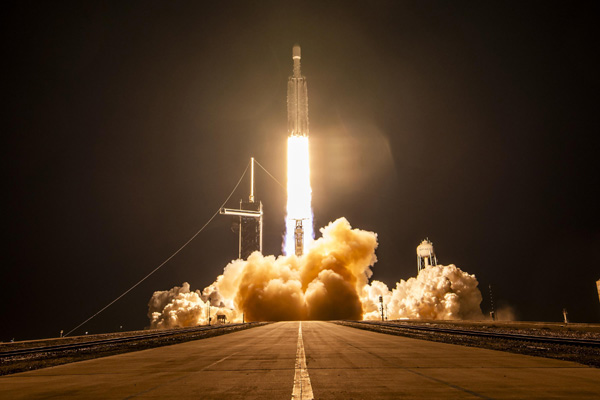
A long-exposure snapshot of a SpaceX Falcon 9 rocket lifting off on the OTV-8 mission from NASA's Kennedy Space Center in Florida...on August 21, 2025.
SpaceX

U.S. Space Force Launches Eighth X-37B Mission (Press Release - August 23)

KENNEDY SPACE CENTER, Fla. (AFNS) -- The U.S. Space Force, in partnership with SpaceX, successfully launched the eighth mission of the X-37B Orbital Test Vehicle (OTV-8) on a Falcon 9 rocket at 11:50 p.m. Eastern Daylight Time on August 21, 2025, from Kennedy Space Center's Launch Complex 39A.

The SpaceX rocket carried the X-37B Orbital Test Vehicle into orbit, marking the eighth space flight for the X-37B program.

"As we continue to set the pace for space, I am incredibly proud of our team's professionalism and persistence supporting this launch,” said Space Launch Delta 45 Commander Col. Brian Chatman. “X-37B continues to prove itself as a premier testing platform aiding in experiments to better understand our future in space. These experiments, X-37B itself, and Space Launch Delta 45's ability to perform fast, flexible launches all play crucial roles in bolstering our resilience and enhancing our ability to swiftly adapt to the challenges in space of today and tomorrow," Chatman added.

The X-37B is a dynamic and responsive spacecraft responsible for conducting a range of tests and experiments that expedite the development of critical next-generation technologies and operational concepts for reusable space capabilities.

Source: United States Space Force

****

SpaceX's Falcon 9 rocket ascends into space on the OTV-8 mission...prior to main engine cutoff on August 21, 2025.
SpaceX

A long-exposure snapshot of the Falcon 9 booster separating from its upper stage and the Orbital Test Vehicle prior to conducting a boostback burn towards Earth's atmosphere...on August 21, 2025.
SpaceX

The X-37B Orbital Test Vehicle launched on its latest mission, OTV-8, from NASA's Kennedy Space Center in Florida...on August 21, 2025.
U.S. Space Force

Monday, July 28, 2025

The Orbital Test Vehicle Is Ready to Fly Again...

The X-37B Orbital Test Vehicle will launch on its next mission, OTV-8, from NASA's Kennedy Space Center in Florida no earlier than August 21, 2025.
U.S. Space Force

U.S. Space Force Scheduled to Launch Eighth X-37B Mission (Press Release)

WASHINGTON (AFNS) -- The U.S. Space Force, in partnership with the Air Force Rapid Capabilities Office, is scheduled to launch the eighth mission of the X-37B Orbital Test Vehicle (OTV-8) on August 21, 2025, from Kennedy Space Center, Florida.

X-37B Mission 8 will launch on a SpaceX Falcon 9 rocket, designated USSF-36, with a wide range of test and experimentation objectives. These operational demonstrations and experiments comprise of next-generation technologies including laser communications and the highest performing quantum inertial sensor ever tested in space. Mission partners include the Air Force Research Lab and the Defense Innovation Unit, respectively.

Mission 8 will contribute to improving the resilience, efficiency and security of U.S. space-based communications architectures by conducting laser communications demonstrations involving proliferated commercial satellite networks in low-Earth orbit. Laser communications are integral to the future of space communications as the shorter wavelength of infrared light increases the amount of data that can be sent with each transmission. Additionally, they are more secure than traditional radio frequency transmissions owing to the more targeted nature of laser beams.

The use of proliferated relay networks enhances the resilience of U.S. space architectures by ensuring that they contain no single point of failure.

These experiments come as part of a broader push across the U.S. Space Force to uphold the safety and security of the space domain by enhancing the resilience and flexibility of U.S. orbital systems. Commenting on the significance of this demonstration, Chief of Space Operations Gen. Chance Saltzman stated, "OTV-8's laser communications demonstration will mark an important step in the U.S. Space Force's ability to leverage proliferated space networks as part of a diversified and redundant space architectures. In so doing, it will strengthen the resilience, reliability, adaptability and data transport speeds of our satellite communications architecture."

Additionally, Mission 8 will demonstrate the world's highest performing quantum inertial sensor ever used in space. This demonstration will inform accurate unaided navigation in space by detecting rotation and acceleration of atoms without reliance on satellite networks like traditional GPS. This technology is useful for navigation in GPS-denied environments and consequently will enhance the navigational resilience of U.S. spacecraft in the face of current and emerging threats.

As quantum inertial sensors would be useful for navigation in cislunar space, they additionally promise to push the technological frontiers of long-distance space travel and exploration.

Speaking on the quantum inertial sensor demonstration, Col. Ramsey Horn, Space Delta 9 commander, asserted, "OTV-8's quantum inertial sensor demonstration is a welcome step forward for operational resilience in space. Whether navigating beyond Earth-based orbits in cislunar space or operating in GPS-denied environments, quantum inertial sensing allows for robust navigation capabilities when GPS navigation is not possible. Ultimately, this technology contributes significantly to our thrust within the Fifth Space Operations Squadron and across the Space Force guaranteeing movement and maneuverability even in GPS-denied environments."

The Fifth Space Operations Squadron, within USSF Delta 9 conducts day-to-day on-orbit operations of the X-37B in partnership with the Air Force Rapid Capabilities Office.

The X-37B is a dynamic and responsive spacecraft responsible for conducting a range of tests and experiments that expedite the development of critical next-generation technologies and operational concepts for reusable space capabilities.

Source: United States Space Force

Saturday, March 08, 2025

America's Premier Military Spaceplane Has Returned to Earth...

The X-37B Orbital Test Vehicle after it touched down at Vandenberg Space Force Base in California...on March 6, 2025 (Pacific Time).
U.S. Space Force

X-37B Orbital Test Vehicle Concludes Seventh Successful Mission (Press Release - March 7)

VANDENBERG SPACE FORCE BASE, Calif. (AFNS) -- The X-37B Orbital Test Vehicle-7 (OTV-7), the U.S. Space Force’s dynamic unmanned spaceplane, successfully deorbited and landed at Vandenberg Space Force Base, California, on March 6, 2025 at 11:22 p.m. PST.

The U.S. Space Force landed the X-37B at Vandenberg Space Force Base, California, to exercise its rapid ability to launch and recover its systems across multiple sites. X-37B’s Mission 7 was the first launch on a SpaceX Falcon Heavy rocket to a highly-elliptical orbit. While on orbit, Mission 7 accomplished a range of test and experimentation objectives intended to demonstrate the X-37B’s robust maneuver capability while helping to characterize the space domain through the testing of space domain awareness technology experiments.

The successful completion of the novel aerobraking maneuver demonstrated the agile and flexible capabilities that the X-37B provides the United States Space Force. Drawing on decades of lessons learned from previous space missions, this technique involves the use of atmospheric drag over the course of multiple passes to change orbits while expending minimal fuel.

“Mission 7 broke new ground by showcasing the X-37B’s ability to flexibly accomplish its test and experimentation objectives across orbital regimes. The successful execution of the aerobraking maneuver underscores the U.S. Space Force’s commitment to pushing the bounds of novel space operations in a safe and responsible manner,” said Chief of Space Operations Gen. Chance Saltzman.

While in orbit, Mission 7 tested space domain awareness technology experiments that aim to improve the United States Space Force’s knowledge of the space environment. These technologies are critical to the U.S. Space Force’s ability to conduct space operations in an increasingly congested and contested environment of space, to the benefit of all users of the domain. After aerobraking to a low-Earth orbit and completing its test and experimentation objectives, Mission 7 successfully performed its deorbit and landing procedures.

Commenting on Mission 7’s achievements, the X-37B Program Director, Lt. Col. Blaine Stewart stated, “Mission 7’s operation in a new orbital regime, its novel aerobraking maneuver, and its testing of space domain awareness experiments have written an exciting new chapter in the X-37B program. Considered together, they mark a significant milestone in the ongoing development of the U.S. Space Force’s dynamic mission capability.”

The seventh mission remained on-orbit for over 434 days.

Source: United States Space Force

****

The X-37B Orbital Test Vehicle after it touched down at Vandenberg Space Force Base in California...on March 6, 2025 (Pacific Time).
U.S. Space Force

Technicians in hazmat suits gather near the X-37B Orbital Test Vehicle after it touched down at Vandenberg Space Force Base in California...on March 6, 2025 (Pacific Time).
U.S. Space Force

Thursday, February 20, 2025

The Latest Update on the Orbital Test Vehicle...

An image of Earth that was taken from aboard the X-37B Orbital Test Vehicle as it flew in a highly-elliptical orbit in 2024.
U.S. Space Force

Novel Space Maneuver Conducted by X-37B (Photo Release)

An X-37B onboard camera, used to ensure the health and safety of the vehicle, captures an image of Earth while conducting experiments in a highly-elliptical orbit in 2024.

As part of the X-37B's seventh mission, the vehicle executed a series of first-of-its-kind maneuvers, called aerobraking, to safely change its orbit using minimal fuel.

Source: Defense Visual Information Distribution Service

****

An artist's concept of the X-37B Orbital Test Vehicle conducting an aerobraking maneuver in Earth's atmosphere.
Boeing

Friday, October 11, 2024

The Latest Update on the Orbital Test Vehicle...

An artist's concept of the X-37B Orbital Test Vehicle conducting an aerobraking maneuver in Earth's atmosphere.
Boeing

Boeing-built X-37B Begins Advanced Space Maneuvering (News Release - October 10)

- 10 months into its 7th mission, the Orbital Test Vehicle (OTV-7) continues to set the pace of technology demonstrations in space.

- Upcoming aerobraking will expand the United States Space Force’s knowledge of maneuvering between orbits with minimal fuel usage.


KENNEDY SPACE CENTER, Fla — The Boeing [NYSE: BA]-built X-37B will soon perform a series of advanced aerobraking maneuvers, taking the dynamic spaceplane from a Highly-Elliptical Orbit (HEO), where it’s been operating since December 2023, and lowering its altitude using minimal fuel.

This will be the first time that Boeing, the United States Space Force (USSF) and the X-37B attempt to accomplish this novel demonstration.

“Space is a vast and unforgiving environment where testing technologies is critical to the success of future endeavors,” said Michelle Parker, vice president of Boeing’s Space Mission Systems. “There is no other space platform as capable, flexible and maneuverable as the X-37B, and its next demonstration will be another proof point that this test vehicle sets the pace of innovation.”

During aerobraking, the X-37B will use the drag of Earth’s atmosphere to slow it down, reducing the vehicle’s energy and changing the orbit while expending minimal fuel. The Service Module disposal will be conducted in accordance with established standards for space debris mitigation, and the X-37B’s orbit change will occur in a safe and responsible manner. Once aerobraking is complete, the X-37B will resume its test and experimentation objectives.

“This first-of-a kind maneuver from the X-37B is an incredibly important milestone for the United States Space Force as we seek to expand our aptitude and ability to perform in this challenging domain,” said Gen. Chance Saltzman, Chief of Space Operations.

The program will leverage six successful missions of safely operating the X-37B around Earth during this next demonstration. Boeing brings decades of lessons learned from operating other spacecraft in a variety of orbits, from the Apollo missions, the Space Shuttle Program, and hundreds of government and commercial satellites.

Source: Boeing

Saturday, December 30, 2023

The Orbital Test Vehicle Takes Flight Once More...

A SpaceX Falcon Heavy rocket carrying the X-37B Orbital Test Vehicle launches from NASA's Kennedy Space Center in Florida...on December 28, 2023.
U.S. Space Force

United States Space Force Launches Seventh X-37B Mission (Press Release - December 29)

KENNEDY SPACE CENTER, Fla. (AFNS) -- The United States Space Force, in partnership with SpaceX, successfully launched USSF-52 on a Falcon Heavy rocket at 8:07 p.m. Eastern Time, December 28, 2023, from Kennedy Space Center's Launch Complex 39A.

The SpaceX rocket carried into orbit an X-37B Orbital Test Vehicle (OTV), marking the seventh space flight for the X-37B program and its first launch on a Falcon Heavy. The X-37B tests include operating in new orbital regimes, experimenting with space domain awareness technologies and investigating radiation effects to NASA materials.

“My memories go back to the Gemini and Mercury programs,” said Secretary of the Air Force Frank Kendall. “This is an incredible event, and I think about the teamwork over all those decades that has led to what has been a revolutionary improvement in space travel capability. We have come so far, and it’s been teamwork by the government; the Air Force and now the Space Force, which didn’t exist until a few years ago; NASA; industry teams; and so many others that all contributed to what we saw tonight.”

The X-37B is a reusable, unmanned spacecraft that strengthens the United States’ future in space by conducting technology experiments that expedite the development of next-generation capabilities.

Source: United States Space Force

****

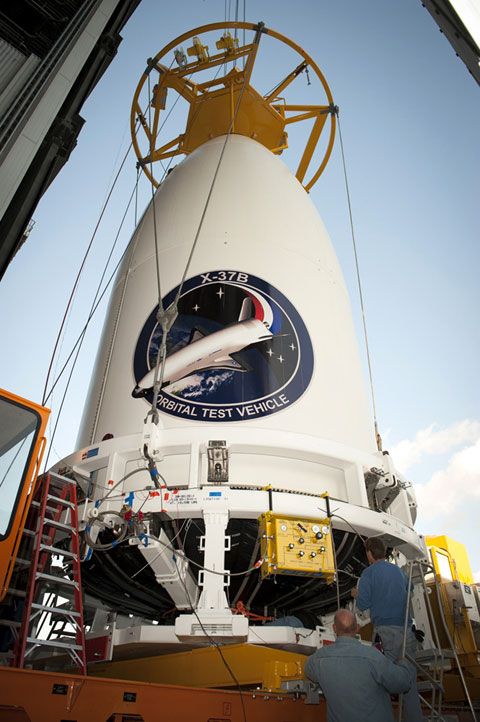
A file photo of the X-37B Orbital Test Vehicle being encapsulated by the payload fairing of an Atlas V rocket that launched it into space on May 16, 2020.
Boeing

Saturday, November 12, 2022

The Orbital Test Vehicle Returns to Earth After Spending Almost 2.5 Years in Space...

The X-37B Orbital Test Vehicle after it touched down at Kennedy Space Center's Launch and Landing Facility in Florida...on November 12, 2022.
Staff Sgt. Adam Shanks

Boeing-Built X-37B Completes Sixth Mission, Sets New Endurance Record (Press Release)

- Autonomous Orbital Test Vehicle spent 908 days on orbit before landing at NASA’s Kennedy Space Center.

- This mission marks the first time the vehicle hosted a service module, which successfully carried experiments for Naval Research Laboratory, U.S. Air Force Academy and other partners.


KENNEDY SPACE CENTER, Fla. — The Boeing [NYSE: BA] built X-37B Orbital Test Vehicle (OTV) set a new endurance record after spending 908 days on orbit before landing at NASA’s Kennedy Space Center in Florida at 5:22 a.m. ET, November 12, 2022. This surpasses its previous record of 780 days on-orbit.

With the successful completion of its sixth mission, the reusable spaceplane has now flown over 1.3 billion miles and spent a total of 3,774 days in space, where it conducts experiments for government and industry partners with the ability to return them to Earth for evaluation.

For the first time, the vehicle carried a service module to augment the number of payloads it can haul. The module separated from the OTV prior to de-orbiting—ensuring a safe and successful landing.

“This mission highlights the Space Force's focus on collaboration in space exploration and expanding low-cost access to space for our partners, within and outside of the Department of the Air Force (DAF),” said Gen. Chance Saltzman, Chief of Space Operations.

The sixth mission was launched atop a United Launch Alliance Atlas V rocket from Cape Canaveral Space Force Station in May 2020. Hosted experiments included a solar energy experiment designed by the Naval Research Lab, as well as a satellite designed and built by cadets at the U.S. Air Force Academy in partnership with the Air Force Research Laboratory. The satellite, dubbed FalconSat-8, was successfully deployed in October 2021 and remains on orbit today.

This mission also hosted multiple NASA experiments including the Materials Exposure and Technology Innovation in Space (METIS-2), which evaluated the effects of space exposure on various materials to validate and improve the precision of space environment models. This was the second flight for this type of experiment. Mission 6 also hosted a NASA experiment to evaluate the effects of long-duration space exposure on seeds. This experiment informs research aimed at future interplanetary missions and the establishment of permanent bases in space.

“Since the X-37B’s first launch in 2010, it has shattered records and provided our nation with an unrivaled capability to rapidly test and integrate new space technologies,” said Jim Chilton, senior vice president, Boeing Space and Launch. “With the service module added, this was the most we’ve ever carried to orbit on the X-37B and we’re proud to have been able to prove out this new and flexible capability for the government and its industry partners.”

The X-37B program is a partnership between the U.S Department of the Air Force Rapid Capabilities Office and the U.S. Space Force. Boeing designed and manufactured the spaceplane and continues to provide program management, engineering, test and mission support from sites in Southern California, Florida and Virginia.

In 2020, the X-37B received the Robert J. Collier Trophy for advancing the performance, efficiency and safety of air and space vehicles.

Source: The Boeing Company

****

With a service module attached to its aft end, the X-37B Orbital Test Vehicle is about to be encapsulated by the payload fairing of the Atlas V rocket that launched it into space on May 17, 2020.
Staff Sgt. Adam Shanks

Sunday, May 17, 2020

The Orbital Test Vehicle Is Back in Space...

An Atlas V rocket carrying the X-37B Orbital Test Vehicle launches from Cape Canaveral Air Force Station in Florida...on May 17, 2020.
Boeing

Boeing-built X-37B Launches in Second Mission for U.S. Space Force (Press Release)

Record-setting autonomous spaceplane begins sixth mission

CAPE CANAVERAL AIR FORCE STATION, Fla. — The Boeing-built X-37B autonomous spaceplane today launched on top of a uniquely configured United Launch Alliance Atlas V rocket.

Boeing is the prime contractor for the X-37B spaceplane and facilitates the integration of all experiments into the vehicle ensuring they receive the correct power, thermal and data services required. Boeing also works to identify future reusable platform experiment opportunities on each mission.

The X-37B’s sixth mission is the first to use a service module with additional payload capability to support a variety of experiments for multiple government partners. The mission will deploy FalconSAT-8, a small satellite developed by the U.S. Air Force Academy and sponsored by the Air Force Research Laboratory, to conduct experiments on orbit. Further, two NASA experiments will study the impact of radiation and other space effects on certain materials and seeds used to grow food. Another experiment by the Naval Research Laboratory will transform solar power into radio frequency microwave energy which could then be transmitted to the ground. In addition, the mission will test reusable space vehicle technologies.

The X-37B first launched in April 2010. Originally designed for missions of 270 days duration, the X-37B has set endurance records during each of its five previous flights. Most recently, X-37B spent 780 days on orbit before returning to Earth in October 2019.

“The X-37B has shifted the paradigm and redefined efficiency in space development, said Jim Chilton, Boeing Space and Launch senior vice president. “The rapid technology advancements enabled by the program will benefit the entire space community and influence the next generation of spacecraft design.”

The X-37B program is a partnership between the Department of the Air Force Rapid Capabilities Office and the United States Space Force. Boeing program management, engineering, test and mission support functions for the Orbital Test Vehicle (OTV) program are conducted at Boeing sites in Southern California and Florida.

Source: The Boeing Company

****

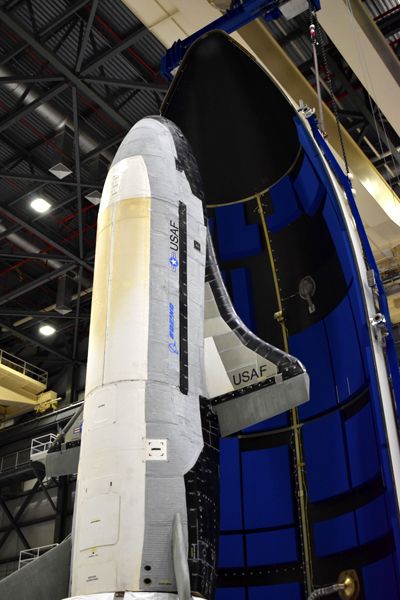
The X-37B Orbital Test Vehicle is about to be encapsulated by the payload fairing of the Atlas V rocket that launched it into space on May 17, 2020.
Boeing

Wednesday, May 06, 2020

The U.S. Space Force's Spaceplane Is Set to Soar Once More...

The X-37B Orbital Test Vehicle is about to be encapsulated by the payload fairing of the Atlas V rocket that will launch it into space on May 16, 2020.
Boeing

Next X-37B Orbital Test Vehicle Scheduled to Launch (Press Release)

WASHINGTON (AFNS) -- The Department of the Air Force Rapid Capabilities Office, in partnership with the U.S. Space Force, is scheduled to launch the sixth mission of the X-37B Orbital Test Vehicle (OTV-6) on May 16 from Cape Canaveral Air Force Station, Florida.

The Department of the Air Force continues to push the flight envelope for the X-37B, and will build upon its growing collaboration with experiment partners with its sixth mission.

“In today’s age of electrons, space systems track storms, locate stranded motorists, timestamp credit card transactions, and monitor treaty compliance,” said Secretary of the Air Force Barbara Barrett. “Demonstrating the department’s innovation, this X-37B mission will host more experiments than any prior missions. This launch also demonstrates the department’s collaboration that pushes the boundaries for reusable space systems.”

The ability to test new systems in space and return them to Earth is unique to the X-37B program and enables the U.S. to more efficiently and effectively develop space capabilities necessary to maintain superiority in the space domain.

"The X-37B team continues to exemplify the kind of lean, agile and forward-leaning technology development we need as a nation in the space domain," said U.S. Space Force Chief of Space Operations, Gen. John "Jay" Raymond. "Each launch represents a significant milestone and advancement in terms of how we build, test, and deploy space capabilities in a rapid and responsive manner."

The X-37B remains a Department of the Air Force asset; however, the U.S. Space Force is responsible for the launch, on-orbit operations, and landing.

"This launch is a prime example of integrated operations between the Air Force, Space Force, and government-industry partnerships," said Air Force Chief of Staff Gen. David Goldfein. "The X-37B continues to break barriers in advancing reusable space vehicle technologies and is a significant investment in advancing future space capabilities."

This will be the first X-37B mission to use a service module to host experiments. The service module is an attachment to the aft of the vehicle that allows additional experimental payload capability to be carried to orbit.

"This sixth mission is a big step for the X-37B program," said Mr. Randy Walden, Director and Program Executive Officer for the Department of the Air Force Rapid Capabilities Office. "This will be the first X-37B mission to use a service module to host experiments. The incorporation of a service module on this mission enables us to continue to expand the capabilities of the spacecraft and host more experiments than any of the previous missions."

The mission will deploy the FalconSat-8, a small satellite developed by the U.S. Air Force Academy and sponsored by the Air Force Research Laboratory to conduct several experiments on orbit. The FalconSat-8 is an educational platform that will carry five experimental payloads for USAFA to operate. In addition, two National Aeronautics and Space Administration experiments will be included to study the results of radiation and other space effects on a materials sample plate and seeds used to grow food. Finally, the U.S. Naval Research Laboratory, will transform solar power into radio frequency microwave energy which could then be transmitted to the ground.

"We are excited to return the X-37B to space and conduct numerous on-orbit experiments for both the Air Force and its mission partners," said Lt. Col. Jonathan Keen, the X-37B program manager.

The X-37B program completed its fifth mission in October 2019, landing after 780 days on orbit, extending the total number of days spent on orbit for the spacecraft to 2,865 - or seven years and 10 months.

Source: United States Space Force

****
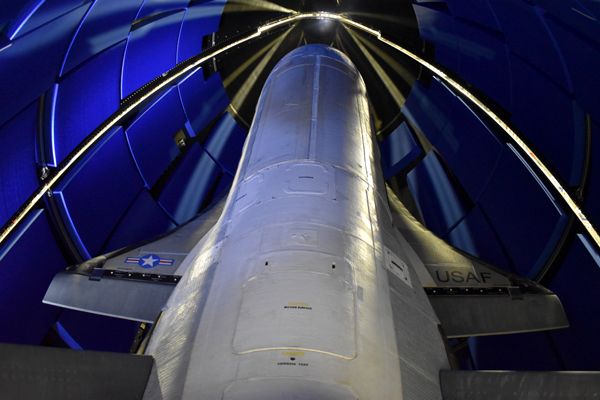
The X-37B Orbital Test Vehicle is about to be encapsulated by the payload fairing of the Atlas V rocket that will launch it into space on May 16, 2020.
Boeing
Sunday, May 07, 2017

Welcome Home, OTV-4!

Technicians inspect the X-37B Orbital Test Vehicle after it landed at NASA's Kennedy Space Center in Florida following a 718-day mission in space...on May 7, 2017.
U.S. Air Force

X-37B Orbital Test Vehicle-4 Lands at Kennedy Space Center (Press Release)

WASHINGTON (AFNS) -- The X-37B Orbital Test Vehicle mission 4 (OTV-4), the Air Force's unmanned, reusable space plane, landed at NASA’s Kennedy Space Center Shuttle Landing Facility May 7, 2017.

“Today marks an incredibly exciting day for the 45th Space Wing as we continue to break barriers,” said Brig. Gen. Wayne Monteith, the 45th SW commander. “Our team has been preparing for this event for several years, and I am extremely proud to see our hard work and dedication culminate in today’s safe and successful landing of the X-37B.”

The OTV-4 conducted on-orbit experiments for 718 days during its mission, extending the total number of days spent on-orbit for the OTV program to 2,085 days.

"The landing of OTV-4 marks another success for the X-37B program and the nation," said Lt. Col. Ron Fehlen, X-37B program manager. "This mission once again set an on-orbit endurance record and marks the vehicle's first landing in the state of Florida. We are incredibly pleased with the performance of the space vehicle and are excited about the data gathered to support the scientific and space communities. We are extremely proud of the dedication and hard work by the entire team."

The X-37B is the newest and most advanced re-entry spacecraft. Managed by the Air Force Rapid Capabilities Office, the X-37B program performs risk reduction, experimentation and concept of operations development for reusable space vehicle technologies.

"The hard work of the X-37B OTV team and the 45th Space Wing successfully demonstrated the flexibility and resolve necessary to continue the nation's advancement in space," said Randy Walden, the director of the Air Force Rapid Capabilities Office. "The ability to land, refurbish, and launch from the same location further enhances the OTV's ability to rapidly integrate and qualify new space technologies."

The Air Force is preparing to launch the fifth X-37B mission from Cape Canaveral Air Force Station, Florida, later in 2017.

Source: PressReleasePoint

****

Technicians inspect the X-37B Orbital Test Vehicle after it landed at NASA's Kennedy Space Center in Florida following a 718-day mission in space...on May 7, 2017.
U.S. Air Force

Wednesday, May 20, 2015

LightSail Lifts Off! (And So Did The X-37B...)

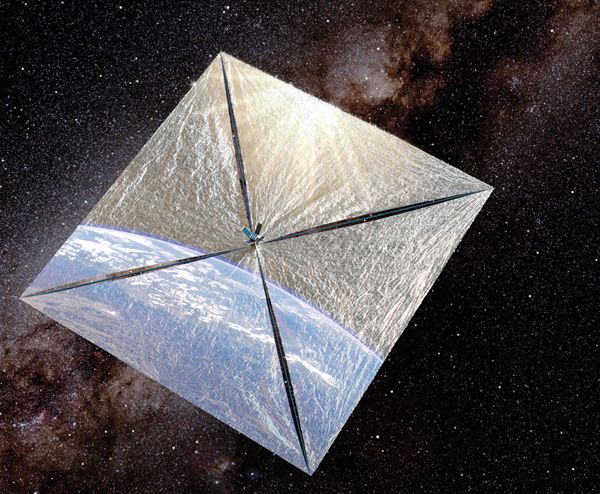
An artist's concept of The Planetary Society's LightSail spacecraft orbiting the Earth.
The Planetary Society

Bill Nye & Planetary Society Celebrate LightSail™ Spacecraft Test Launch (Press Release)

Citizen-funded solar sail CubeSat in orbit, awaits sail deployment stage

Cape Canaveral, FL (May 20, 2015) The Planetary Society’s citizen-funded LightSail™ spacecraft has launched into orbit aboard a United Launch Alliance (ULA) Atlas V rocket from Cape Canaveral Air Force Station. The spacecraft is part of a secondary payload dubbed ULTRASat aboard the U.S. Air Force mission AFSPC-5. The mission will test LightSail’s critical functions in low-Earth orbit, a precursor to a second mission set for 2016.

Bill Nye (The Science Guy®), CEO at The Planetary Society, witnessed the launch on site among Planetary Society staff and members. Nye stated:

“Today is an extraordinary day for The Planetary Society, our members, and space enthusiasts around the world: LightSail successfully launched into orbit. Our co-founders dreamt of this day. We've been working to get a solar sail into space since I joined The Planetary Society Board in 1997.

“While we celebrate this step, LightSail’s biggest tests are still ahead. Over the next days, we will be monitoring our CubeSat as we prepare for the big show: the day LightSail deploys its super shiny Mylar sails for flight on sunlight. Stay tuned; the best is about to happen.

“As we await that stage, we just get more excited. After all, we've been working on this for 39 years. LightSail would not be possible without our members, fans and citizens worldwide. We are all in this together. Let's see if we can give space exploration a strong nudge and change the world a little bit.”

Solar sailing works by using sunlight for propulsion. When solar photons strike LightSail's reflective Mylar® sails, their momentum is transferred to the spacecraft, gradually accelerating it through space. While the push from photons is miniscule, it is continuous and unlimited. Solar sails can eventually reach greater speeds than those obtained from chemical rockets.

LightSail is packaged into a small spacecraft called a CubeSat. CubeSats have made low-cost space missions a reality for universities and research groups. However, providing propulsion for these tiny satellites has been a challenge. LightSail will demonstrate the viability of solar sailing for CubeSats. During the May 2015 LightSail test launch, the LightSail team will address any technical issues and apply takeaways to the 2016 mission.

The 2015 test flight will not carry the spacecraft high enough to escape Earth's atmospheric drag, and will thus not demonstrate controlled solar sailing. Once in orbit, the spacecraft will go through a checkout and testing period of about four weeks before deploying its solar sails. After the sails unfurl, LightSail will study the behavior of the sails for a few days before it is pulled back into Earth’s atmosphere. Key images and data on the spacecraft's performance will be sent to ground stations at Cal Poly San Luis Obispo and Georgia Tech.

The spacecraft was designed by Stellar Exploration, Inc., in San Luis Obispo, Calif. LightSail's lead contractor for integration and testing is Pasadena, Calif.-based Ecliptic Enterprises Corporation, a space avionics and sensor systems firm best known for its popular RocketCam™ family of video systems used on rockets and spacecraft. The LightSail project is managed by Doug Stetson, founder and principal partner of the Space Science and Exploration Consulting Group.

The Planetary Society’s second LightSail spacecraft is scheduled to fly in 2016. This mission will build on the results of the test flight to conduct a full demonstration of solar sailing in Earth orbit. LightSail will be packaged inside a spacecraft called Prox-1 built by students at Georgia Tech. The spacecraft duo will be launched aboard a SpaceX Falcon Heavy rocket to an orbit of about 720 kilometers (450 miles).

Citizens around the world can be part of the 2016 LightSail mission. The “Selfies to Space” feature invites people to submit photographs for inclusion aboard the spacecraft at planetary.org/selfie.

Dr. Neil deGrasse Tyson, a member of The Planetary Society board of directors, joined Nye to launch a LightSail Kickstarter campiagn (planetary.org/kickstarter) in a video announcement, which led to immediate worldwide response. Funded entirely by private citizens, LightSail is the yield of collective support.

The Planetary Society's solar sailing involvement was started by Society co-founder Louis Friedman more than a decade ago. Co-founder Carl Sagan championed solar sailing on a famous 1976 episode of The Tonight Show with Johnny Carson. For complete coverage of the LightSail test flight, as well as the second LightSail mission scheduled for 2016, visit sail.planetary.org.

Source: The Planetary Society

****

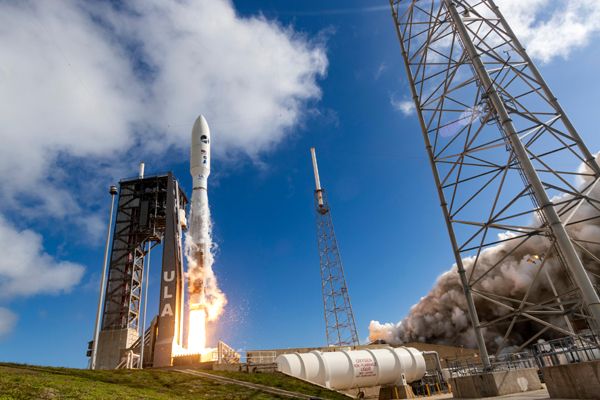
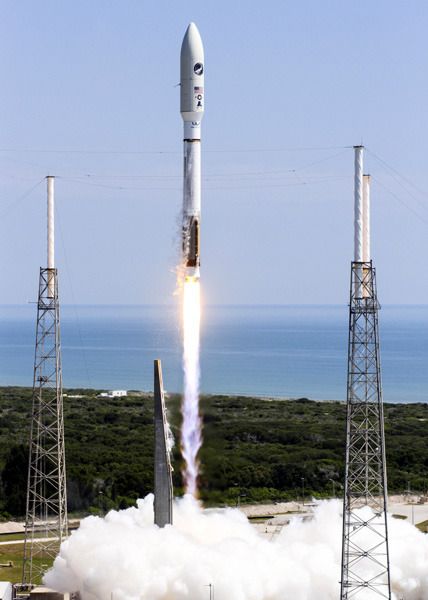
An Atlas V rocket carrying the U.S. Air Force's X-37B Orbital Test Vehicle and The Planetary Society's LightSail spacecraft lifts  off from Cape Canaveral Air Force Station in Florida...on May 20, 2015.
United Launch Alliance

Wednesday, December 12, 2012

An Atlas V rocket carrying the X-37B Orbital Test Vehicle (OTV-3) is launched from Cape Canaveral Air Force Station in Florida, on December 11, 2012.
United Launch Alliance

The X-37B lifts off once more... At 10:03 AM, Pacific Standard Time yesterday, an Atlas V rocket carrying the Orbital Test Vehicle (OTV) was launched from Cape Canaveral Air Force Station on a 9-month-plus journey in space. This is the third time since April of 2010 that the U.S. Air Force placed the OTV on a top secret mission in low-Earth orbit. In fact, this is the very same spacecraft (OTV-1) that completed a nearly 225-day flight above our planet two years ago. I would've posted an entry about this yesterday, but seeing as how today is 12/12/12 (even though the date isn't spelled out that way on this and all my other journal entries), just thought I'd wait 24 hours so I could blog on this somewhat meaningful day. That is all.

At Cape Canaveral Air Force Station's Space Launch Complex 41, the payload fairing carrying OTV-3 is about to be mated with the Atlas V rocket inside the Vertical Integration Facility.
United Launch Alliance

The Atlas V rocket carrying OTV-3 rolls out to Space Launch Complex 41 at Cape Canaveral Air Force Station in Florida, on December 10, 2012.
United Launch Alliance

The Atlas V rocket carrying OTV-3 is launched from Cape Canaveral Air Force Station in Florida, on December 11, 2012.
United Launch Alliance

Tuesday, June 19, 2012

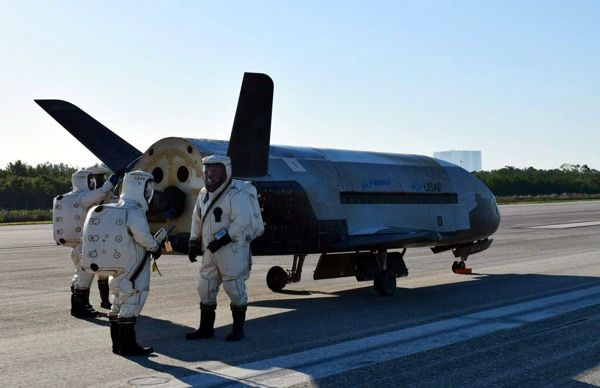
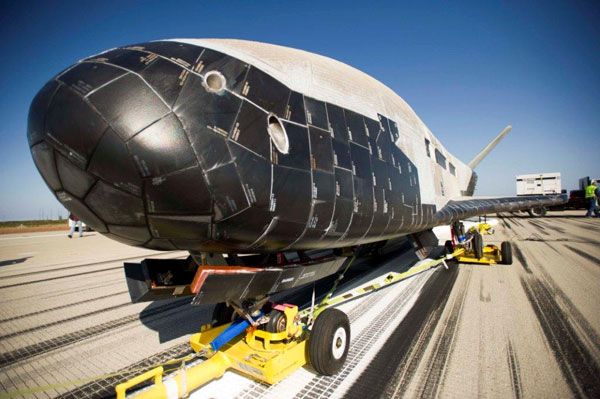
The X-37B Orbital Test Vehicle (OTV-2) on a runway at Vandenberg Air Force Base, California...after returning home from space on June 16, 2012.
U.S. Air Force

The X-37B Returns Home... After spending 468 days in space following its launch from Cape Canaveral Air Force Station in Florida on March 5, 2011, the X-37B Orbital Test Vehicle (OTV) safely returned to Earth last Saturday...concluding a presumably successful but clandestine mission for the U.S. Air Force. This is the second OTV (OTV-2) to fly into Earth orbit; the first so-called mini-shuttle, OTV-1, lifted off from Cape Canaveral Air Force Station in April of 2010 and successfully landed at Vandenberg Air Force Base in California that following December.

OTV-1 has been refurbished and will head back to Cape Canaveral Air Force Station to embark on a second flight into space. It is scheduled to launch aboard another Atlas V rocket this October.

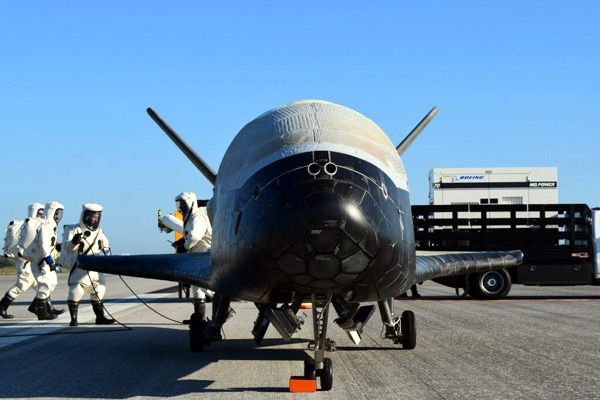
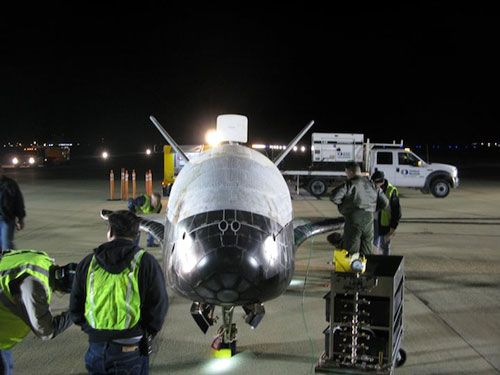
Five technicians wearing hazmat suits conduct a post-landing checkout on OTV-2 after its return home from space on June 16, 2012.
U.S. Air Force

OTV-2 is towed into a hangar at Vandenberg Air Force Base, California, after returning home from space on June 16, 2012.
U.S. Air Force

Sunday, March 06, 2011

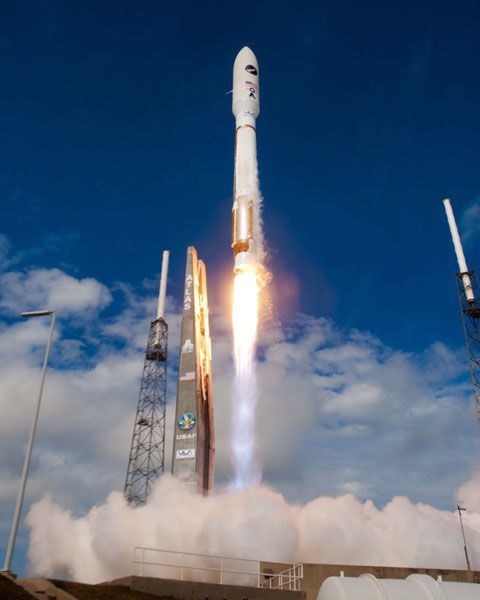
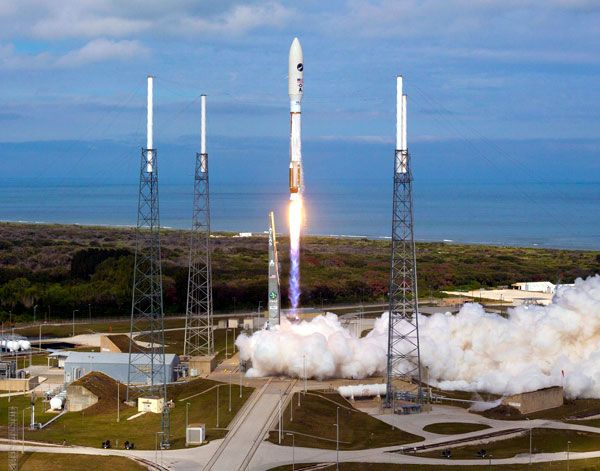
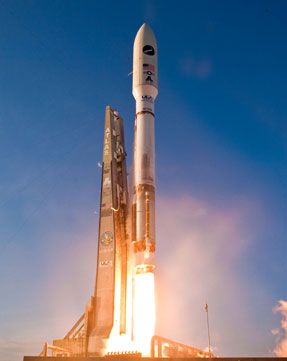
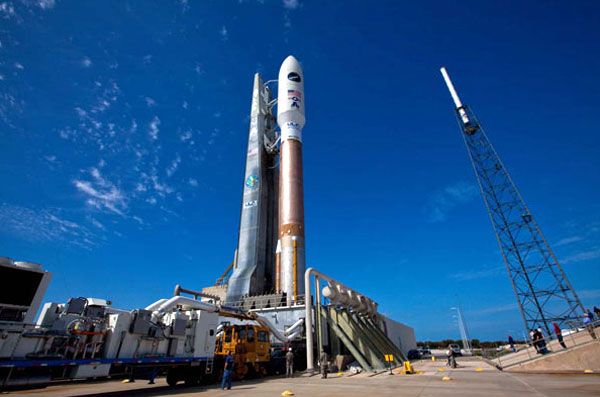
The Atlas V rocket carrying the X-37B Orbital Test Vehicle (OTV) is launched from Cape Canaveral Air Force Station in Florida, on March 5, 2011.
Pat Corkery / United Launch Alliance

PHOTOS OF THE DAY... Yesterday afternoon, an Atlas V rocket carrying the top-secret Orbital Test Vehicle (OTV) successfully launched from Cape Canaveral Air Force Station in Florida. Also known as the X-37B, this is actually a different space plane from the one that flew into space in April of last year. If it’s anything like the first OTV, this vehicle will stay in Earth orbit for at least 220 days and land at Vandenberg Air Force Base in California as early as November. Awesome. You can check out more photos of the OTV's launch on SpaceflightNow.com.

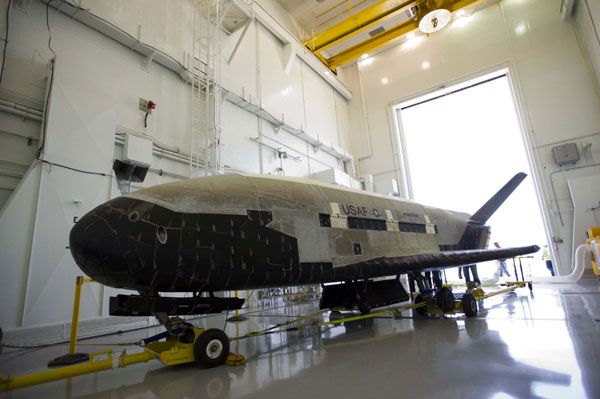
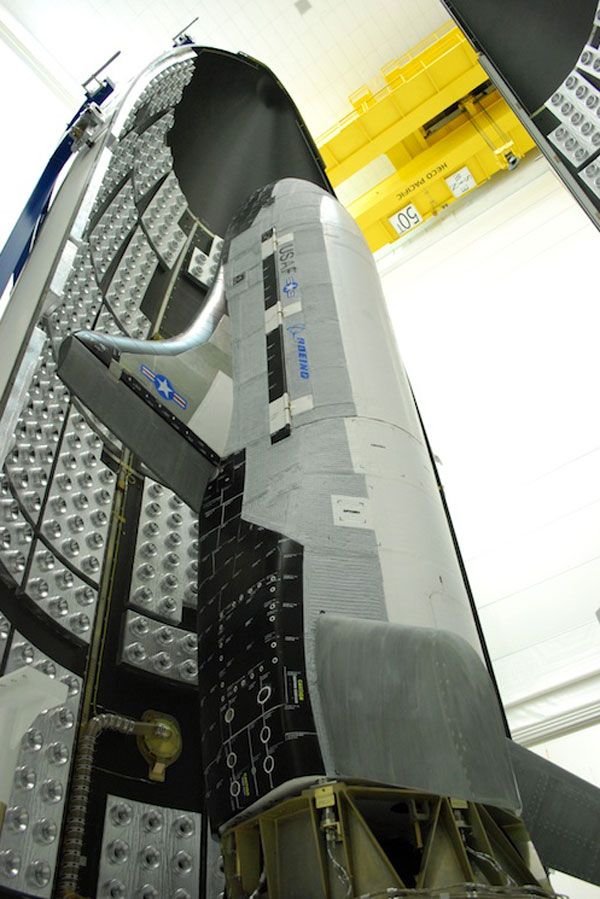
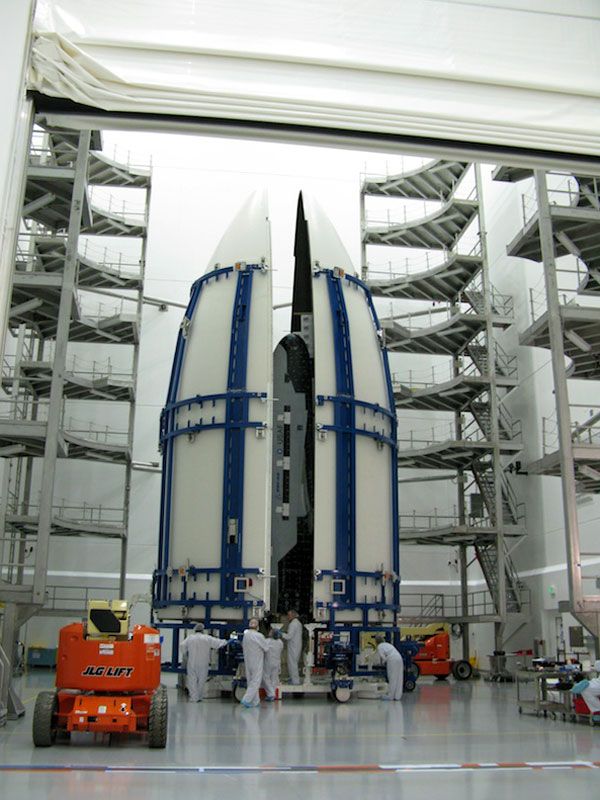
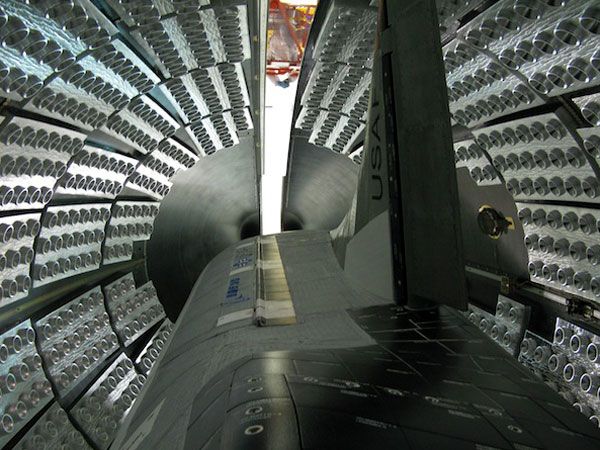
The OTV is shown inside its Atlas V payload fairing during encapsulation, ahead of its March 2011 launch from Cape Canaveral Air Force Station in Florida.
U.S. Air Force

The OTV is shown inside its Atlas V payload fairing during encapsulation, ahead of its March 2011 launch from Cape Canaveral Air Force Station in Florida.
U.S. Air Force

The OTV is shown inside its Atlas V payload fairing during encapsulation, ahead of its March 2011 launch from Cape Canaveral Air Force Station in Florida.
U.S. Air Force

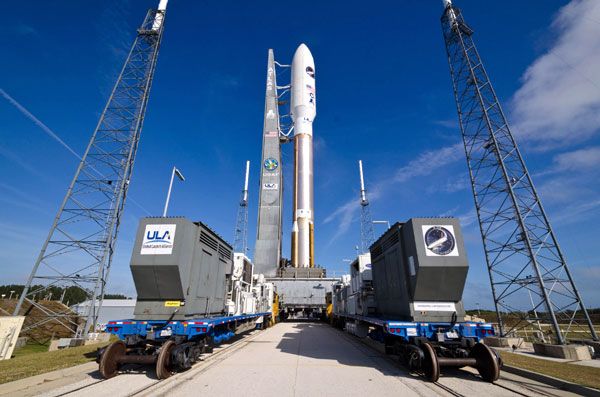
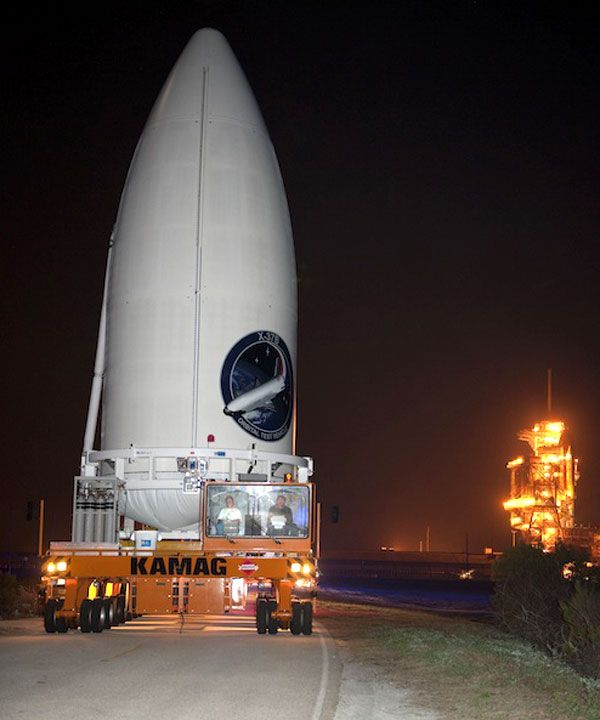
With space shuttle Discovery in the background, the Atlas V payload fairing carrying the OTV is transported to its launch pad, ahead of its March 2011 liftoff from Cape Canaveral Air Force Station in Florida.
U.S. Air Force

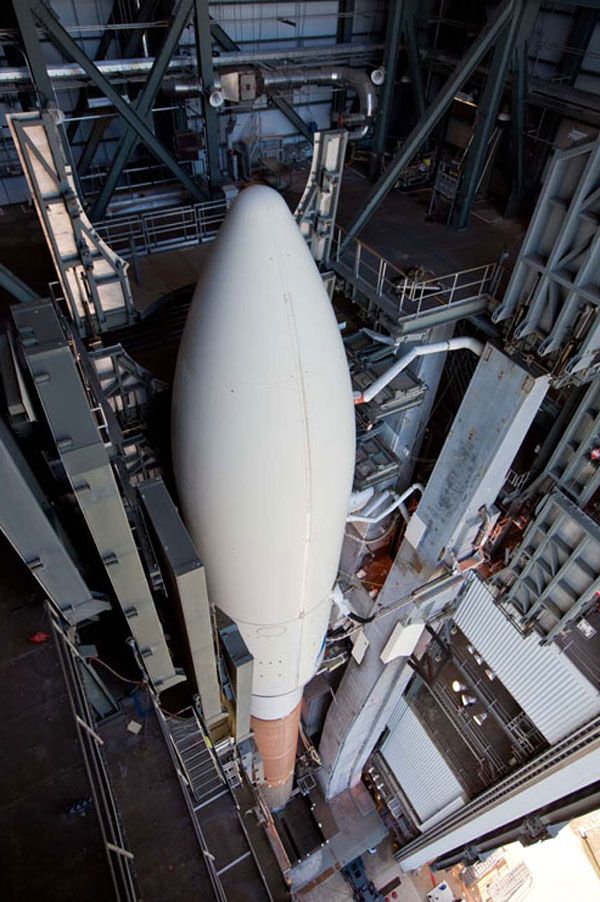
The Atlas V rocket carrying the OTV prepares to roll out of its Vertical Integration Facility at Cape Canaveral Air Force Station in Florida, on March 3, 2011.
Pat Corkery / United Launch Alliance

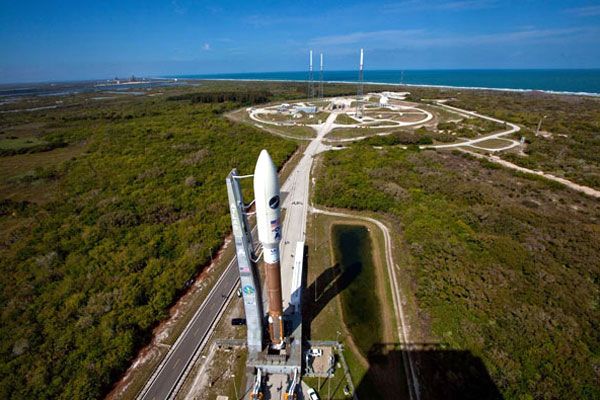
The Atlas V rocket carrying the OTV rolls out to its launch pad at Cape Canaveral Air Force Station in Florida, on March 3, 2011.
Pat Corkery / United Launch Alliance

The Atlas V rocket arrives at its launch pad at Cape Canaveral Air Force Station in Florida, on March 3, 2011.
Pat Corkery / United Launch Alliance

Thursday, December 09, 2010

TRANSFORMERS: DARK OF THE MOON.

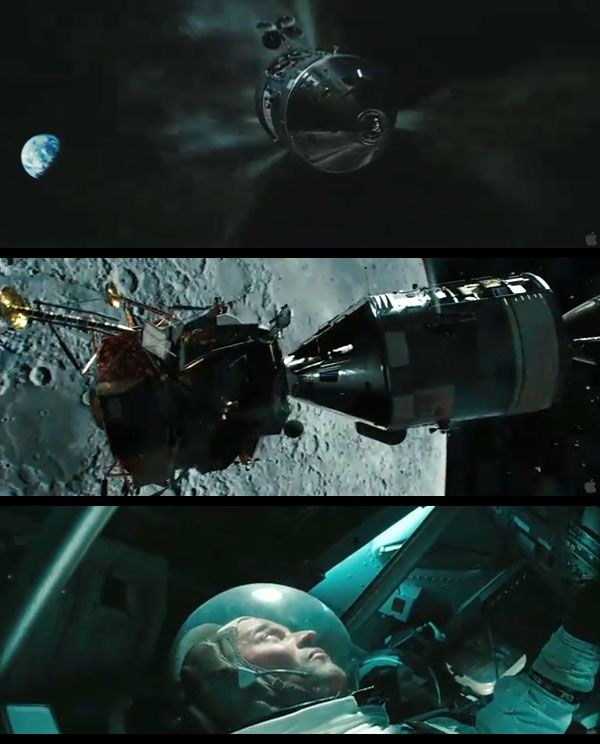
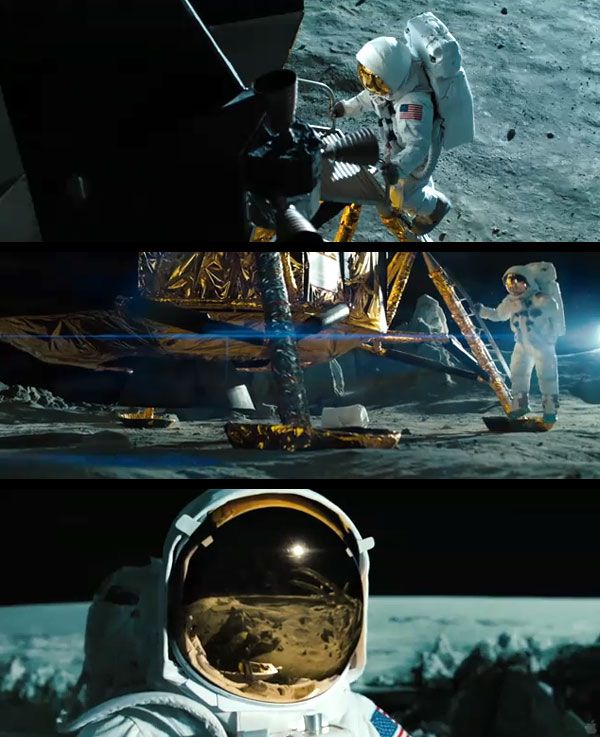
TRANSFORMERS 3 Update... In case you’ve been noticing the pattern regarding my last couple of journal entries (and my Blog as a whole for the past 4 years); this month has been very significant in regards to space-related news. From the astrobiology-related discovery that microbes may potentially thrive on deadly arsenic, the successful return of the Orbital Test Vehicle to Earth and the disappointment over Akatsuki at Venus, to yesterday’s historic launch of SpaceX's Falcon 9 and the Dragon spacecraft, any space geek out there would have lots of things to talk about since the beginning of December. And now, space exploration finds itself as a major theme in next year’s summer blockbuster movie, Transformers: Dark of the Moon. It’s apparent in the teaser trailer (and obviously the title), which was released online yesterday and can be viewed below...


The new Dark of the Moon trailer should be shown at the theaters in front of The Chronicles of Narnia: The Voyage of the Dawn Treader this Friday and Tron: Legacy on December 17. So apparently, Neil Armstrong and Buzz Aldrin had 21 minutes during the Apollo 11 mission to explore a derelict spaceship on the lunar surface. Presumably, this spaceship is The Ark—the Autobots’ mothership in the comics and original 1980’s cartoon, as well as the rival vessel to the Decepticons’ Nemesis...which was seen in last year's Transformers: Revenge of the Fallen (during that scene where a resurrected Megatron flies out to an alien planet and reunites with Starscream and The Fallen). And the Transformer that we see at the very end of this trailer is rumored to be Alpha Trion. Even if it ain’t Trion, it sure as heck ain’t Shockwave, the main bad guy in Dark of the Moon. Hopefully, we’ll take our first glimpse of this evil one-eyed purple ‘bot in the next theatrical trailer...or at least on a TV spot during next February’s Super Bowl XLV. That’s not too much to ask for. That is all.

TRANSFORMERS: DARK OF THE MOON.

Saturday, December 04, 2010

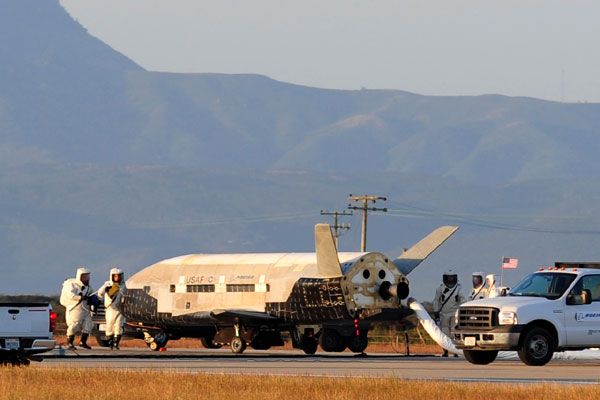
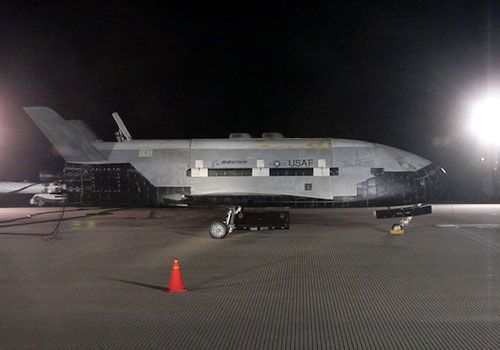
The X-37B Orbital Test Vehicle (OTV) on a runway at Vandenberg Air Force Base, California...after returning home from space on December 3, 2010.
U.S. Air Force

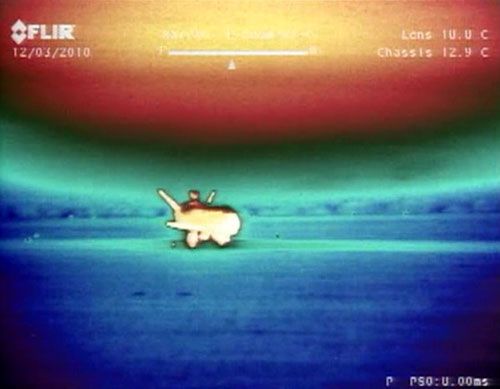
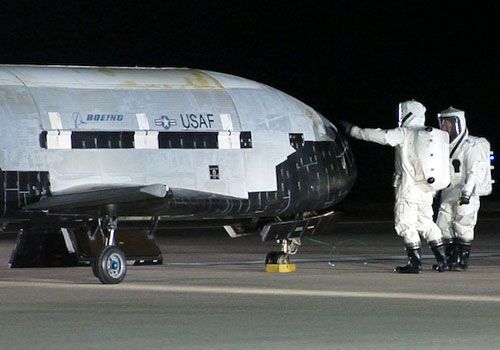
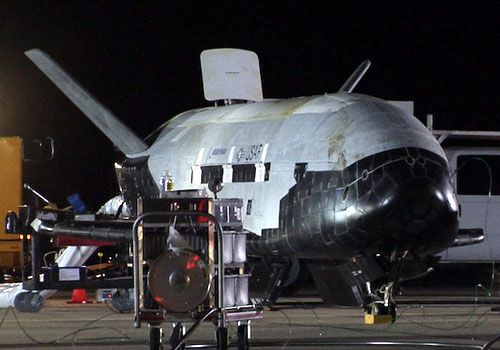
BACK ON THE GROUND... Yesterday morning, the U.S. Air Force’s newest space plane successfully touched down on a 15,000-foot-long runway at Vandenberg Air Force Base in California...after completing a nearly 225-day top secret mission that began with a launch from Florida last April. Below are photos of the X-37B Orbital Test Vehicle (OTV) as it came to a stop on the runway and given a post-flight checkout by technicians wearing protective hazmat (hazardous materials) suits. Directly below is the video showing infrared footage of the OTV rolling along the runway after its glide home from outer space...


A second OTV is currently being manufactured for a test flight that is scheduled to take place next year.

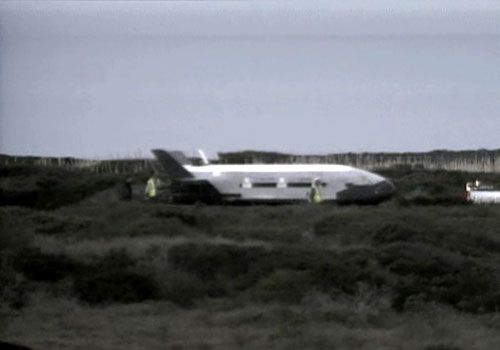
An infrared image of the OTV rolling along the runway at Vandenberg Air Force Base, California...after returning home from space on December 3, 2010.
U.S. Air Force

Two technicians wearing hazmat suits conduct a post-landing checkout on the OTV after its return home from space on December 3, 2010.
U.S. Air Force

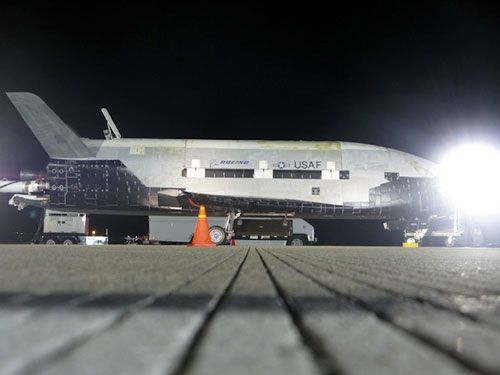
The OTV on the runway at Vandenberg Air Force Base, California...after returning home from space on December 3, 2010.
U.S. Air Force

The OTV on the runway at Vandenberg Air Force Base, California...after returning home from space on December 3, 2010.
Boeing Co.
Military personnel at Vandenberg Air Force Base, California, conduct a post-landing checkout on the OTV after its return home from space on December 3, 2010.
Boeing Co.
The OTV is towed from the runway at Vandenberg Air Force Base, California, after returning home from space on December 3, 2010.

U.S. Air Force