Tuesday, June 05, 2018

Back in the Day: My High School Graduation!

So today marks 20 years since I graduated from Bishop Amat Memorial High School in La Puente, California. How time flies! The group photo below was taken two days earlier on June 3, 1998. My class attended Grad Nite in Disneyland the following day. A pack of school buses drove us to the Happiest Place on Earth the night of June 4th, and returned to Bishop Amat the following morning. I took a nice nap when I got home before I had to get dressed and head back to Amat later in the day for my commencement ceremony—which was professionally recorded to a VHS tape that I purchased (I've been meaning to transfer it to a DVD). Our graduation song was Celine Dion's "Because You Loved Me."

I could go on about all of the memorable details and events that took place around the time I graduated...as well as the Summer of 1998 itself. But I won't 'cause this would be a pretty long Blog entry! All I'll say next is that my 20-year high school reunion is set to take place aboard a yacht in Newport Beach on October 6, but I'm still deciding whether I should go or not.

If you look closely at this pic, you can spot a red arrow I put that denotes my location in this group photo. Go Lancers!

A group photo that my class took two days before our graduation from Bishop Amat Memorial High School...which was on June 5, 1998.

Monday, June 04, 2018

Remembering Game 7 of the 2000 Western Conference Finals...

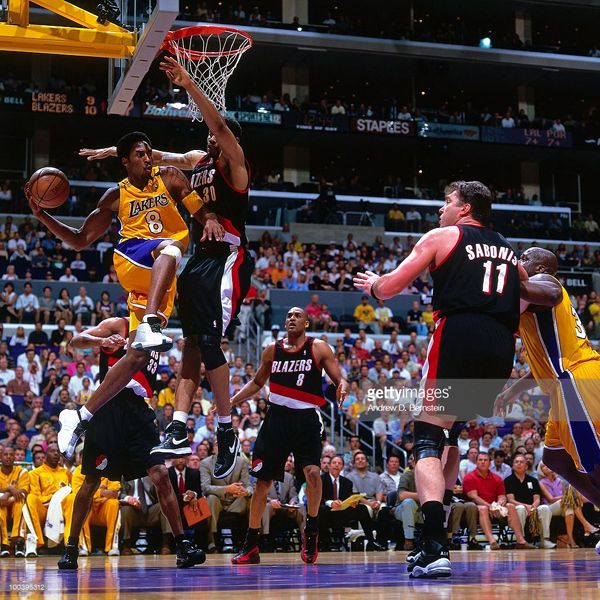
The L.A. Lakers' Kobe Bryant makes a play against the Portland Trailblazers' Rasheed Wallace in Game 7 of the Western Conference Finals...on June 4, 2000.

On this day 18 years ago, Kobe Bryant and Shaquille O'Neal triumphantly celebrated after the Los Angeles Lakers came back from a 15-point deficit in the 4th quarter to defeat the Portland Trailblazers, 89-84, in Game 7 of the 2000 Western Conference Finals. I probably shouldn't admit this ("Bandwagon jumper!"), but I remember angrily leaving the room around the end of the 3rd quarter thinking about becoming a Toronto Raptors fan (what with that season's slam dunk champion Vince Carter being on the team at the time) if the Lakers ended their playoff run in yet another failure. Suffice it to say, that fortunately wasn't the case as my family was still watching the game and celebrated when Shaq, Kobe, Glen Rice and company slowly crawled their way back to regaining the lead (or did they ever have the lead at any point in Game 7? Can't remember) before a rapturous crowd at STAPLES Center. And when Kobe lobbed the basketball to Shaq for that alley-oop dunk in the game's final minutes? Well... I knew that they were about to begin a new era of greatness for the Lakers franchise that Sunday night.

Shaquille O'Neal celebrates after the Lakers defeat the Trailblazers, 89-84, in Game 7 of the Western Conference Finals...on June 4, 2000.

So what did I do after the final buzzer sounded and the Lakers officially clinched their spot against the Indiana Pacers in the 2000 NBA Finals? Simple— I quickly stepped out of the front door of the house to scream like a raving lunatic (okay, maybe I'm exaggerating a little) as I couldn't wait for Game 1 of the championship series to begin. After three previous playoff runs that ended in Shaq and Kobe leaving the court in disappointment due to the Utah Jazz and San Antonio Spurs, they finally reached the promise land. Happy Monday!

Friday, June 01, 2018

InSight Update: "WALL-E" and "EVE" Refine Their Course to the Red Planet...

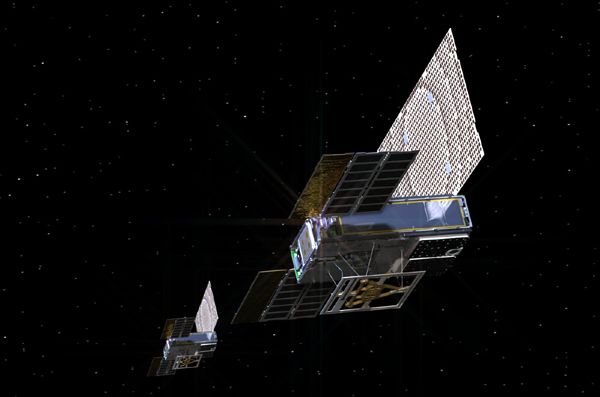
An artist's concept of the two MarCO CubeSats (nicknamed 'WALL-E' and 'EVE' after the two Disney-Pixar characters, respectively) flying through deep space.
NASA / JPL - Caltech

NASA CubeSats Steer Toward Mars (News Release)

NASA has achieved a first for the class of tiny spacecraft known as CubeSats, which are opening new access to space.

Over the past week, two CubeSats called MarCO-A and MarCO-B have been firing their propulsion systems to guide themselves toward Mars. This process, called a trajectory correction maneuver, allows a spacecraft to refine its path to Mars following launch. Both CubeSats successfully completed this maneuver; NASA's InSight spacecraft just completed the same process on May 22.

The pair of CubeSats that make up the Mars Cube One (MarCO) mission both launched on May 5, along with the InSight lander, which is headed toward a Nov. 26 touchdown on the Red Planet. They were designed to trail InSight on the way to Mars, aiming to relay back data about InSight as it enters the planet's atmosphere and attempts to land. The MarCOs were never intended to collect any science data; instead, they are a test of miniaturized communication and navigation technology that can blaze a path for future CubeSats sent to other planets.

Both MarCO-A and B successfully completed a set of communications tests in the past couple of weeks, said John Baker, program manager for planetary SmallSats at NASA's Jet Propulsion Laboratory, Pasadena, California. JPL built both MarCO CubeSats and leads the mission.

"Our broadest goal was to demonstrate how low-cost CubeSat technology can be used in deep space for the first time," Baker said. "With both MarCOs on their way to Mars, we've already traveled farther than any CubeSat before them."

While MarCO-A corrected its course to Mars relatively smoothly, MarCO-B faced some unexpected challenges. Its maneuver was smaller due to a leaky thruster valve that engineers have been monitoring for the past several weeks. The leak creates small trajectory changes on its own. Engineers have factored in these nudges so that MarCO-B can still perform a trajectory correction maneuver. It will take several more weeks of tracking to refine these nudges so that MarCO-B can follow InSight on its cruise through space.

"We're cautiously optimistic that MarCO-B can follow MarCO-A," said Joel Krajewski of JPL, MarCO's project manager. "But we wanted to take more time to understand the underlying issues before attempting the next course-correction maneuver."

Once the MarCO team has analyzed data, they'll know the size of follow-on maneuvers. Several more course corrections will be needed to reach the Red Planet.

Should the CubeSats make it all the way to Mars, they will attempt to relay data to Earth about InSight's landing. InSight won't rely on either CubeSat for that data relay, however; that job will fall to NASA's Mars Reconnaissance Orbiter.

Source: Jet Propulsion Laboratory

Thursday, May 31, 2018

Photos of the Day: The Mars 2020 'Skycrane' Up-close and Personal (Kinda)...

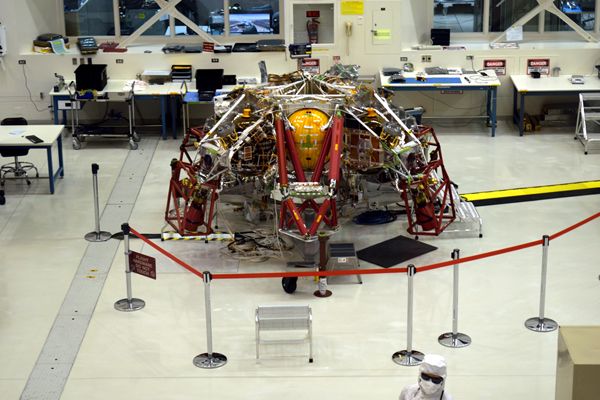
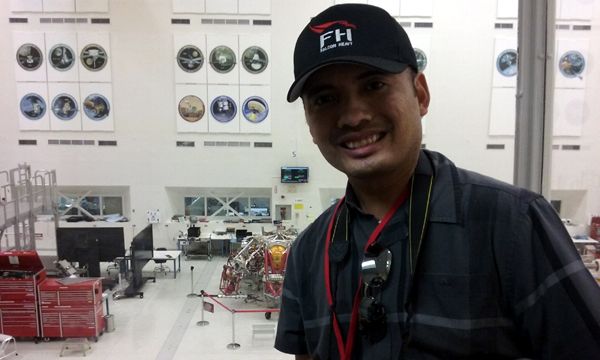
A snapshot that I took of the Mars 2020 descent stage at NASA's Jet Propulsion Laboratory near Pasadena, California...on May 30, 2018.

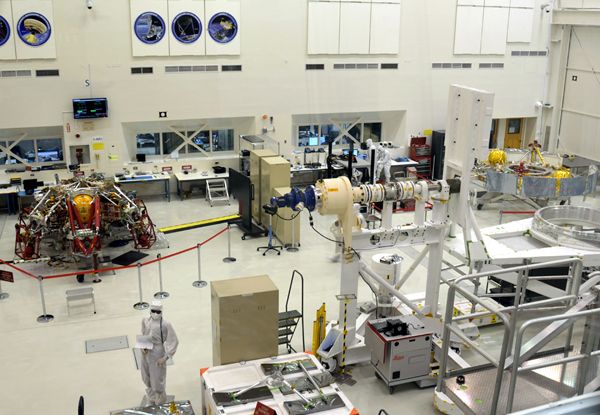
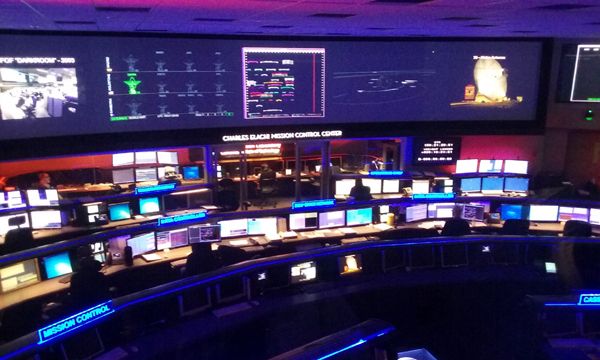
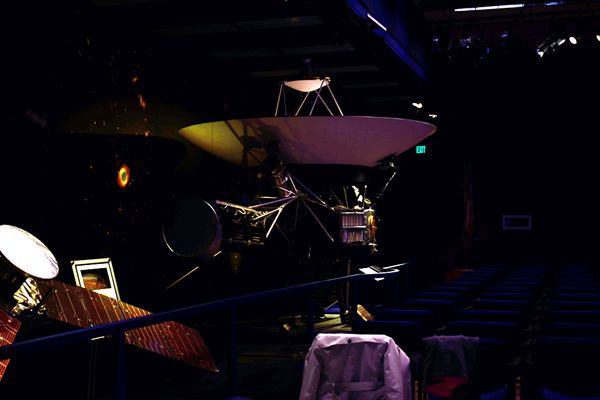
Just thought I'd end this month with these photos that I took during a tour I attended at NASA's Jet Propulsion Laboratory (JPL) near Pasadena, California yesterday. The pics above and below are of the 'Skycrane' descent stage that will be used to gently lower the Mars 2020 rover onto the surface of the Red Planet—just like Curiosity before her almost six years ago—in February of 2021 (the rover will launch from Cape Canaveral Air Force Station in Florida in the summer of 2020). Towards the right of the image directly below, you'll see the circular cruise stage for Mars 2020 also undergoing construction inside JPL's Spacecraft Assembly Facility (SAF). The rover itself will begin official assembly inside the SAF later this year. And of course, I couldn't overlook the obligatory snapshots that I took inside the historic Space Flight Operations Facility, as well as the full-size replica of the Voyager spacecraft in the Von Kármán Auditorium.

Three of these pics were taken with my Nikon D3300 DSLR camera. Guess which ones? Happy Thursday!

LINK: Additional photos that I took at the May 2018 JPL Tour

A snapshot that I took of the Mars 2020 descent stage (as well as the cruise stage to the right of this photo) at NASA's Jet Propulsion Laboratory near Pasadena, California...on May 30, 2018.

A snapshot that I took inside the Spacecraft Assembly Facility at NASA's Jet Propulsion Laboratory near Pasadena, California...on May 30, 2018.

A snapshot that I took inside the historic Space Flight Operations Facility at NASA's Jet Propulsion Laboratory near Pasadena, California...on May 30, 2018.

A snapshot that I took of a full-size Voyager spacecraft replica inside the Von Kármán Auditorium at NASA's Jet Propulsion Laboratory near Pasadena, California...on May 30, 2018.

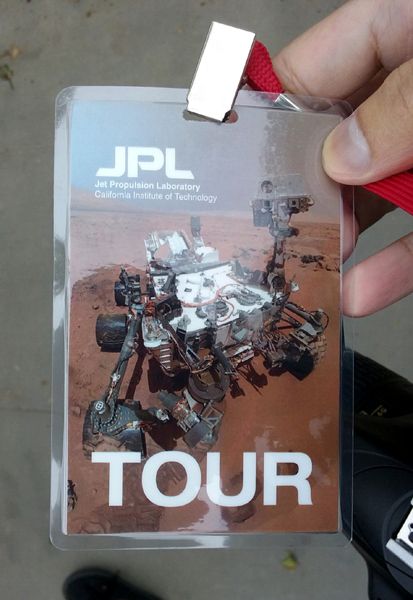
A snapshot that I took of my badge for the tour at NASA's Jet Propulsion Laboratory near Pasadena, California...on May 30, 2018.

Monday, May 28, 2018

Back in the Day: Portraying Nevada's Knights— Basketball-Style...

In honor of the Vegas Golden Knights reaching the Stanley Cup Finals for the first time in their one-year history (sweeping the Los Angeles Kings in the first round of the playoffs along the way, and defeating the Washington Capitals, 6-4, in Game 1 of the championship series tonight), just thought I'd share this really blurry-ass snapshot that I took of an artwork I drew in high school 20 years ago...of my own fictional NBA team, the Nevada Knights.

All I can say is, who do I sue in the NHL for stealing my idea? I kid.

My own fictional NBA team, the Nevada Knights.

Sunday, May 27, 2018

Photos of the Day: ASEAN Fest 2018...

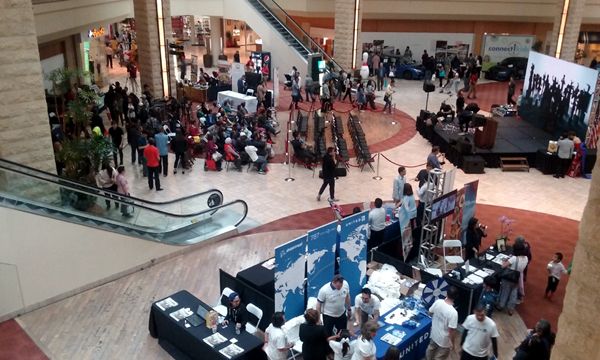
A snapshot of ASEAN Fest 2018 at Puente Hills Mall in City of Industry, California...on May 26, 2018.

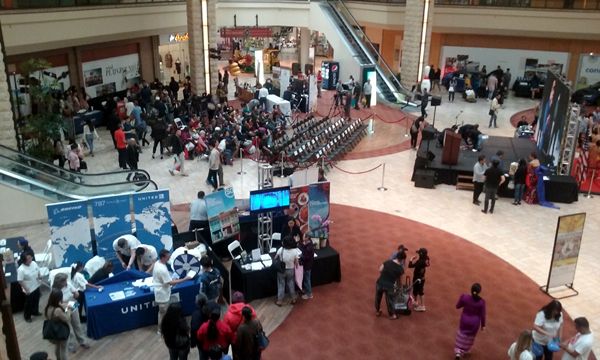
Yesterday, I took these photos at an Asian arts & culture expo inside Puente Hills Mall in City of Industry, California. Known as ASEAN Fest 2018, I had no idea that this event was occurring when I arrived. I watched Solo: A Star Wars Story at the AMC 20 theater inside the mall when this took place (you can ready my full movie review of Solo here). The festival seemed intriguing. Consuls from various Asian nations such as Cambodia and Thailand went up on stage to promote their country and what it offered for would-be visitors. And different airlines such as United and Philippine Airline set up booths at ASEAN Fest to encourage patrons to book flights with them. Needless to say, I didn't bother getting any cool stuff from those tables. But just like what I did at import car shows in the past (I can't remember the last time I attended one), I took snapshots of the lovely ladies near the tables who promoted these companies. Sooo...

SpoCom 2011That's the last import show I went to! Happy Memorial Day weekend.

Another snapshot of ASEAN Fest 2018 at Puente Hills Mall in City of Industry, California...on May 26, 2018.

Another snapshot of ASEAN Fest 2018 at Puente Hills Mall in City of Industry, California...on May 26, 2018.

A group of models pose for photos during ASEAN Fest 2018 at Puente Hills Mall in City of Industry, California...on May 26, 2018.

The group of models pose for more photos during ASEAN Fest 2018 at Puente Hills Mall in City of Industry, California...on May 26, 2018.

Posing with a model during ASEAN Fest 2018 at Puente Hills Mall in City of Industry, California...on May 26, 2018.

Saturday, May 26, 2018

The Curiosity Rover Can Now Resume Her Job as a Mobile Laboratory on the Surface of the Red Planet...

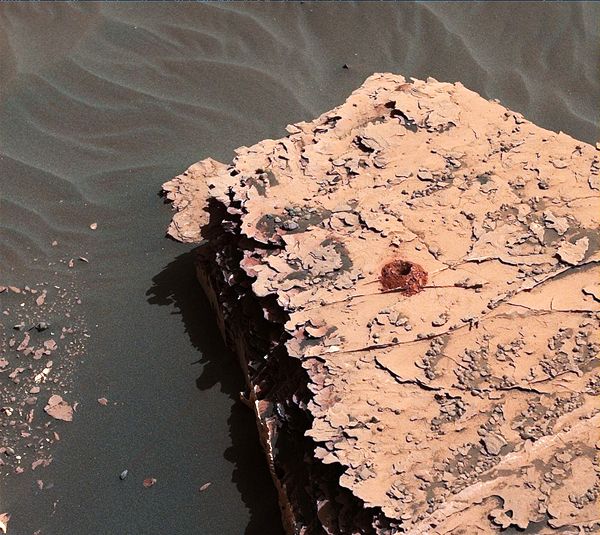
An image of a 2-inch hole (on a slab of rock called 'Duluth') that was created by the Curiosity Mars rover's drill on May 20, 2018.
NASA / JPL - Caltech / MSSS

Drilling Success: Curiosity is Collecting Mars Rocks (News Release - May 23)

Engineers working with NASA's Curiosity Mars rover have been hard at work testing a new way for the rover to drill rocks and extract powder from them. This past weekend, that effort produced the first drilled sample on Mars in more than a year.

Curiosity tested percussive drilling this past weekend, penetrating about 2 inches (50 millimeters) into a target called "Duluth."

NASA's Jet Propulsion Laboratory in Pasadena, California, has been testing this drilling technique since a mechanical problem took Curiosity's drill offline in December of 2016. This technique, called Feed Extended Drilling, keeps the drill's bit extended out past two stabilizer posts that were originally used to steady the drill against Martian rocks. It lets Curiosity drill using the force of its robotic arm, a little more like the way a human would drill into a wall at home.

"The team used tremendous ingenuity to devise a new drilling technique and implement it on another planet," said Curiosity Deputy Project Manager Steve Lee of JPL. "Those are two vital inches of innovation from 60 million miles away. We're thrilled that the result was so successful."

Drilling is a vitally important part of Curiosity's capabilities to study Mars. Inside the rover are two laboratories that are able to conduct chemical and mineralogical analyses of rock and soil samples. The samples are acquired from Gale Crater, which the rover has been exploring since 2012.

Curiosity's science team has been eager to get the drill working before the rover leaves its current location near Vera Rubin Ridge. Fortunately, it was near enough to drill targets like Duluth to drive back down the ridge. Sunday's drill sample represents a quick taste of the region before Curiosity moves on.

Demonstrating that Curiosity's percussive drilling technique works is a milestone in itself. But that doesn't mean the work is over for engineers at JPL.

"We've been developing this new drilling technique for over a year, but our job isn't done once a sample has been collected on Mars," said JPL's Tom Green, a systems engineer who helped develop and test Curiosity's new drilling method. "With each new test, we closely examine the data to look for improvements we can make and then head back to our test bed to iterate on the process."

There's also the next step to work on: delivering the rock sample from the drill bit to the two laboratories inside the rover. Having captured enough powder inside the drill, engineers will now use the rover's cameras to estimate how much trickles out while running the drill backwards. The drill's percussion mechanism is also used to tap out powder.

Source: Jet Propulsion Laboratory

Friday, May 25, 2018

Back in the Day: Celebrating a Decade Since the Phoenix Lander Safely Touched Down on Mars...

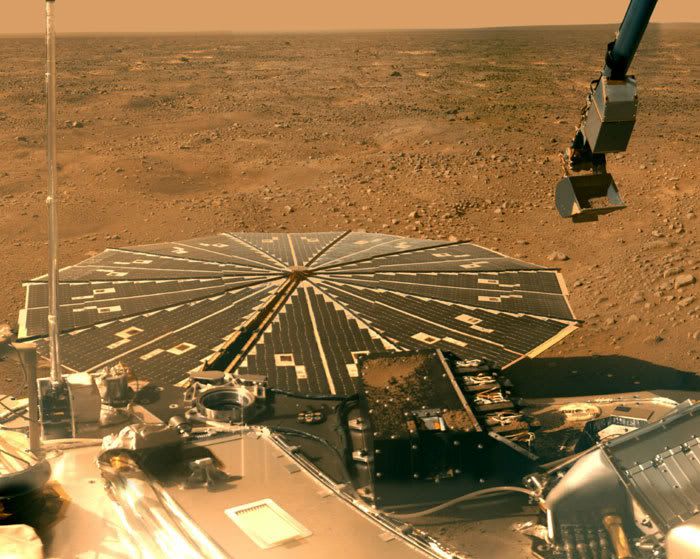
The Martian northern plain, with one of Phoenix's solar panels and a portion of the lander's flight deck visible in the foreground.

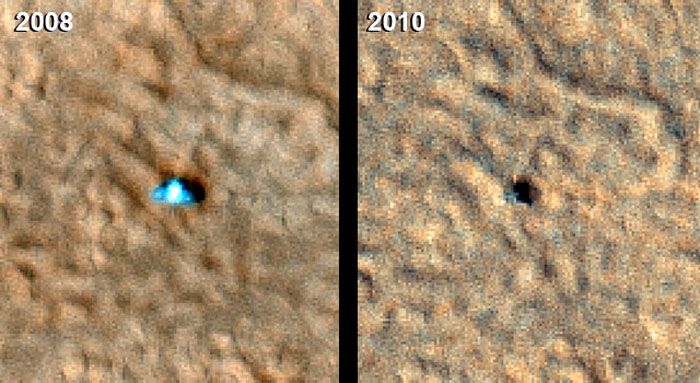
TEN YEARS AGO TODAY, the Phoenix Mars lander safely touched down on the Red Planet...starting a very successful mission that almost lasted 6 months even though it was only suppose to survive for 3. During its mission, Phoenix came in contact with water ice at its landing site on the Martian northern plain, which is why NASA sent the spacecraft there in the first place. The space agency had hoped the lander would come back to life after the mission came to an end on November 10, 2008 (due to low power being generated by Phoenix’s twin solar panels because of the onset of Martian winter), but an image taken by the Mars Reconnaissance Orbiter in 2010 showed that there was no chance that Phoenix would ever come back to life.

Before-and-after shots showing the Phoenix lander on the Martian surface in 2008 and 2010, respectively.

Even though Phoenix now lies dormant near the Martian north pole, its legacy continues. Its successor—the InSight Mars lander—successfully launched from Vandenberg Air Force Base in California 20 days ago, and is set to touch down at Elysium Planitia on the Red Planet this Cyber Monday (November 26). Here's hoping that 2008 completely repeats itself with a successful arrival by InSight six months from now, and this lander joins the Curiosity and Opportunity rovers as the only active spacecraft on the surface of Mars. Happy Friday!

All images above courtesy of NASA / JPL - Caltech / University of Arizona / Texas A&M University

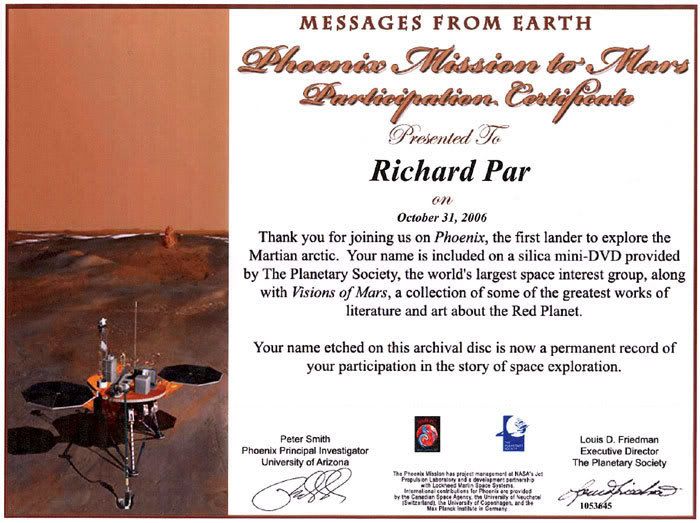
A certificate commemorating the fact that my name is now freezing on the North Pole of Mars.

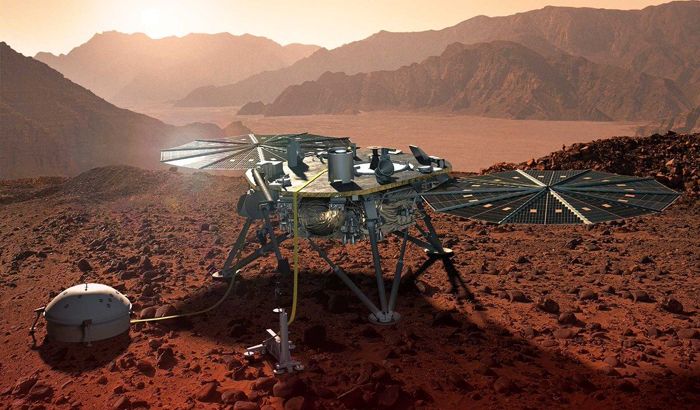
An artist's concept of NASA's InSight lander on the surface of Mars.
Lockheed Martin

Thursday, May 24, 2018

America's Next Mars Lander Officially Sets Course for the Red Planet...

An animated GIF depicting NASA's InSight Mars lander, which is encased in an aeroshell, cruising through deep space.
NASA / JPL - CalTech

InSight Steers Toward Mars (News Release - May 23)

NASA's InSight lander has made its first course correction toward Mars.

InSight, short for Interior Exploration using Seismic Investigations, Geodesy and Heat Transport, is the first mission dedicated to exploring the deep interior of Mars.

The lander is currently encapsulated in a protective aeroshell, which launched on top of an Atlas V 401 rocket on May 5 from Vandenberg Air Force Base in Central California. Yesterday, the spacecraft fired its thrusters for the first time to change its flight path. This activity, called a trajectory correction maneuver, will happen a maximum of six times to guide the lander to Mars.

Every launch starts with a rocket. That's necessary to get a spacecraft out past Earth's gravity -- but rockets don't complete the journey to other planets. Before launch, every piece of hardware headed to Mars is cleaned, limiting the number of Earth microbes that might travel on the spacecraft. However, the rocket and its upper stage, called a Centaur, don’t get the same special treatment.

As a result, Mars launches involve aiming the rocket just off-target so that it flies off into space. Separately, the spacecraft performs a series of trajectory correction maneuvers guiding it to the Red Planet. This makes sure that only the clean spacecraft lands on the planet, while the upper stage does not come close.

Precise calculations are required for InSight to arrive at exactly the right spot in Mars' atmosphere at exactly the right time, resulting in a landing on Nov. 26. Every step of the way, a team of navigators estimates the position and velocity of the spacecraft. Then they design maneuvers to deliver it to an entry point at Mars. That navigation team is based at NASA's Jet Propulsion Laboratory in Pasadena, California, which leads the InSight mission.

"This first maneuver is the largest we'll conduct," said Fernando Abilleira of JPL, InSight's Deputy Mission Design and Navigation Manager. "The thrusters will fire for about 40 seconds to impart a velocity change of 3.8 meters per second (8.5 mph) to the spacecraft. That will put us in the right ballpark as we aim for Mars."

Especially at the beginning of that cruise, navigators rely on NASA's Deep Space Network (DSN) to track the spacecraft. The DSN is a system of antennas located at three sites around the Earth. As the planet rotates, each of these sites comes into range of NASA's spacecraft, pinging them with radio signals to track their positions. The antennas also send and receive data this way.

The DSN can give very accurate measurements about spacecraft position and velocity. But predicting where InSight will be after it fires its thrusters requires lots of modeling, Abilleira said. As the cruise to Mars progresses, navigators have more information about the forces acting on a spacecraft. That lets them further refine their models. Combined with DSN tracking measurements, these models allow them to precisely drive the spacecraft to the desired entry point.

"Navigation is all about statistics, probability and uncertainty," Abilleira said. "As we gather more information on the forces acting on the spacecraft, we can better predict how it's moving and how future maneuvers will affect its path."

Yesterday's 40-second burn relies on four of eight thrusters on the spacecraft. A separate group of four is autonomously fired on a daily basis to keep the spacecraft's solar panels trained on the Sun and its antennas pointed at Earth. While necessary to maintain orientation, these small, daily firings also introduce errors that navigators have to account for and counterbalance.

"Everyone has been working hard since launch to assess what these small forces have done to the trajectory," said Allen Halsell of JPL, InSight's navigation team chief. "People have worked lots of hours to look at that. For engineers, it's a very interesting problem, and fun to try to figure out."

When the spacecraft is just a few hours from Mars, the planet's gravitational pull, or gravity well, will begin to reel the spacecraft in. At that point, InSight's team will prepare for the next milestone after cruise: entering Mars' atmosphere, descending to the surface and sticking InSight's landing.

JPL, a division of Caltech in Pasadena, California, manages InSight for NASA's Science Mission Directorate in Washington. InSight is part of NASA's Discovery Program, managed by the agency's Marshall Space Flight Center in Huntsville, Alabama. The InSight spacecraft, including cruise stage and lander, was built and tested by Lockheed Martin Space in Denver.

Source: Jet Propulsion Laboratory

Wednesday, May 23, 2018

Photos of the Day #2: A Cool-Lookin' Gig Stick...

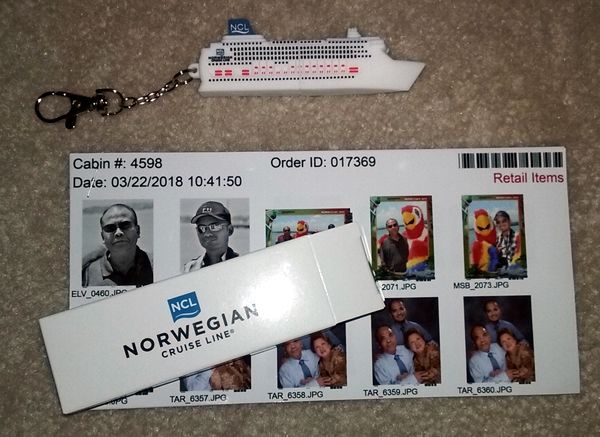
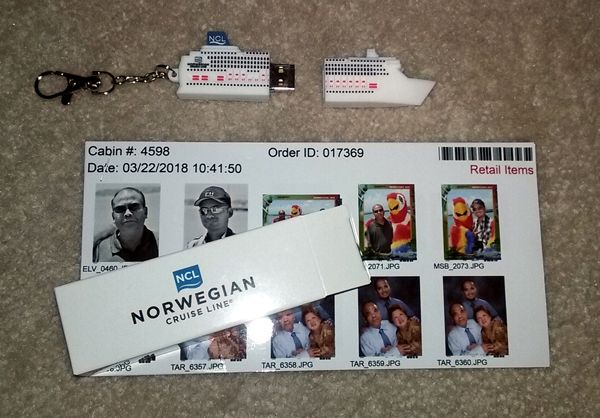
A USB drive that I got during my 11-day Norwegian Cruise Line trip to Central America.

Today marks two months since I returned home from an 11-day cruise to Central America. It was only now that I opened the box containing a USB drive that contains the professionally-shot photos my folks and I took aboard our ship—the Norwegian Jade—and on the dock at Puerto Limón, Costa Rica (on March 16) and Costa Maya, Mexico (on March 21) during the trip.

All I can say is, this is one of the coolest-lookin' USB drives that I've ever seen! I'm easily impressed.

LINK: Photos I took during my cruise to Central America

The USB drive with its cap removed.