Monday, September 30, 2013

Sleepy Hollow...

Police lieutenant Abbie Mills (Nicole Beharie) is pursued by the Sandman in SLEEPY HOLLOW.

Did Sam and Dean Winchester ever take on the Sandman in the CW's hit series, Supernatural? No? Well anyways... The 'Dream Demon' looked pretty cool on tonight's episode of Sleepy Hollow. This show is awesome.

The Sandman only hunts those who harbor dark secrets in SLEEPY HOLLOW.

Friday, September 27, 2013

MAVEN Spreads Its Wings One Last Time Before Launch...

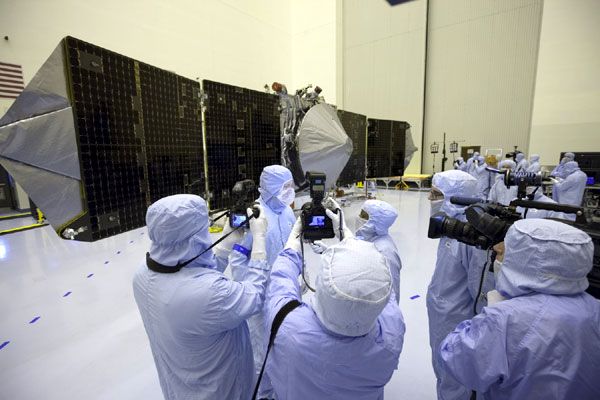
Reporters and photographers gather in front of NASA's MAVEN spacecraft as it was put on display for the media to see at the Kennedy Space Center in Florida, on September 27, 2013.
NASA / Kim Shiflett

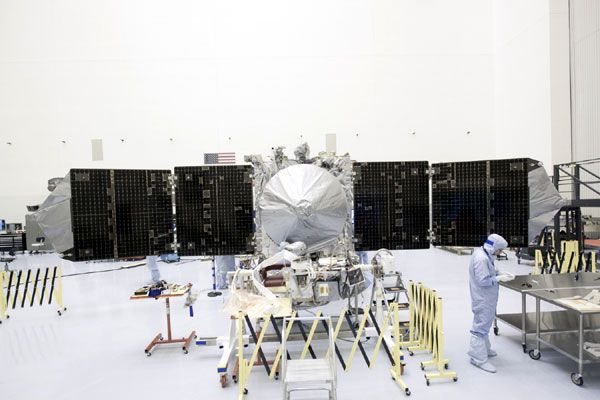
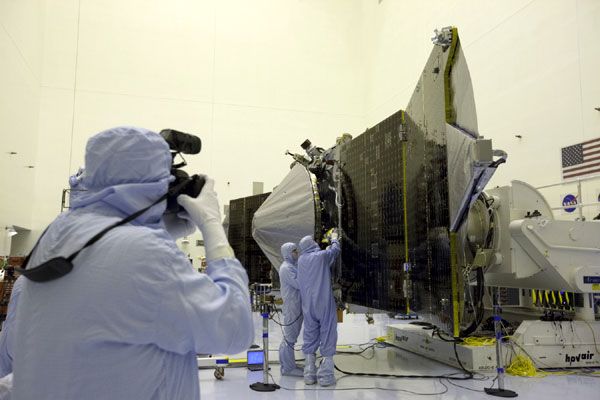
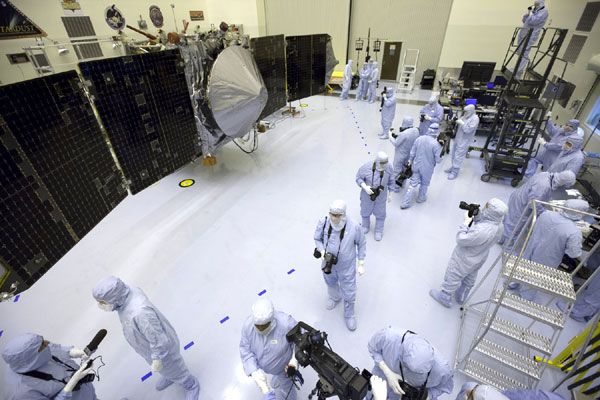
Almost two months after arriving at Cape Canaveral in Florida (and exactly six years after NASA's Dawn spacecraft launched on its mission to explore the Asteroid Belt), the MAVEN spacecraft is now fully assembled and less than two months away from soaring to Mars aboard an Atlas V rocket. Check out these photos taken earlier today as the media got to visit MAVEN at NASA's Kennedy Space Center before the orbiter undergoes a final series of tests prior to being loaded with fuel (scheduled for next month) and then being mated with the Atlas V (scheduled for early November). The MAVEN team has entered home stretch for launch preparations, just before lift-off is set to occur from Cape Canaveral Air Force Station on November 18.

NASA's MAVEN spacecraft is prepped for display at the Kennedy Space Center in Florida, on September 24, 2013.
NASA / Jim Grossmann

NASA's MAVEN spacecraft is put on display for the media to see at the Kennedy Space Center in Florida, on September 27, 2013.
NASA / Kim Shiflett

Reporters and photographers gather in front of NASA's MAVEN spacecraft as it was put on display for the media to see at the Kennedy Space Center in Florida, on September 27, 2013.
NASA / Kim Shiflett

Saturday, September 21, 2013

The End of Deep Impact

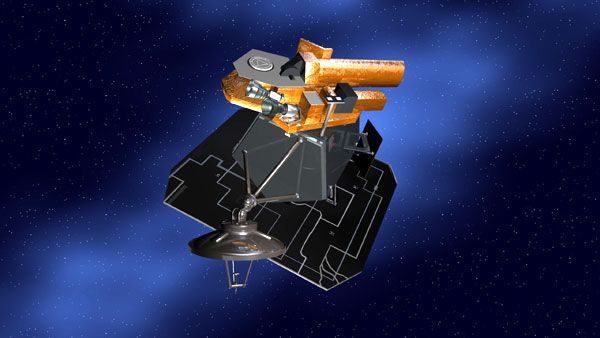
An artist's concept of the Deep Impact spacecraft.
NASA / JPL

Overlooking the fact I was annoyed that a CD bearing the names of 625,000 people (including mine) was only placed on the so-called Impactor that smashed into a comet in 2005, it's still sad to see a prolific mission like Deep Impact finally come to an end. Oh well— It's not like it runs the risk of being intentionally rammed into an asteroid or something... Thanks NASA.

****

NASA's Deep Space Comet Hunter Mission Comes to an End (Press Release - September 20)

PASADENA, Calif. - After almost 9 years in space that included an unprecedented July 4th impact and subsequent flyby of a comet, an additional comet flyby, and the return of approximately 500,000 images of celestial objects, NASA's Deep Impact mission has ended.

The project team at NASA's Jet Propulsion Laboratory in Pasadena, Calif., has reluctantly pronounced the mission at an end after being unable to communicate with the spacecraft for over a month. The last communication with the probe was Aug. 8. Deep Impact was history's most traveled comet research mission, going about 4.7 billion miles (7.58 billion kilometers).

"Deep Impact has been a fantastic, long-lasting spacecraft that has produced far more data than we had planned," said Mike A'Hearn, the Deep Impact principal investigator at the University of Maryland in College Park. "It has revolutionized our understanding of comets and their activity."

Deep Impact successfully completed its original bold mission of six months in 2005 to investigate both the surface and interior composition of a comet, and a subsequent extended mission of another comet flyby and observations of planets around other stars that lasted from July 2007 to December 2010. Since then, the spacecraft has been continually used as a space-borne planetary observatory to capture images and other scientific data on several targets of opportunity with its telescopes and instrumentation.

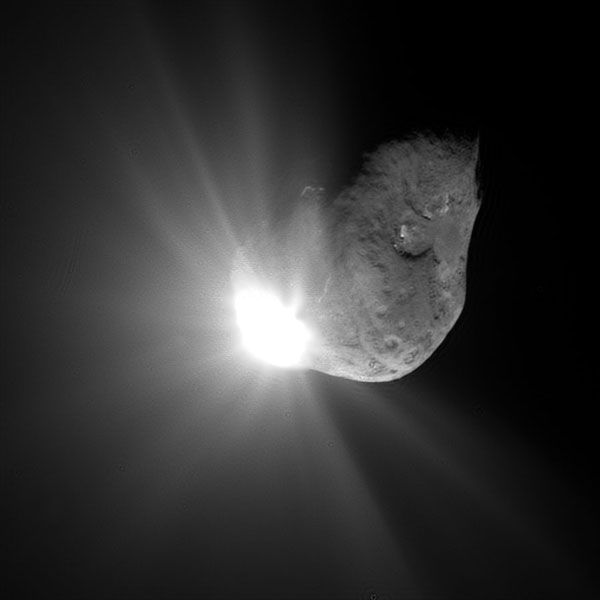
Launched in January 2005, the spacecraft first traveled about 268 million miles (431 million kilometers) to the vicinity of comet Tempel 1. On July 3, 2005, the spacecraft deployed an impactor into the path of comet to essentially be run over by its nucleus on July 4. This caused material from below the comet's surface to be blasted out into space where it could be examined by the telescopes and instrumentation of the flyby spacecraft. Sixteen days after that comet encounter, the Deep Impact team placed the spacecraft on a trajectory to fly back past Earth in late December 2007 to put it on course to encounter another comet, Hartley 2 in November 2010.

"Six months after launch, this spacecraft had already completed its planned mission to study comet Tempel 1," said Tim Larson, project manager of Deep Impact at JPL. "But the science team kept finding interesting things to do, and through the ingenuity of our mission team and navigators and support of NASA's Discovery Program, this spacecraft kept it up for more than eight years, producing amazing results all along the way."

The spacecraft's extended mission culminated in the successful flyby of comet Hartley 2 on Nov. 4, 2010. Along the way, it also observed six different stars to confirm the motion of planets orbiting them, and took images and data of Earth, the moon and Mars. These data helped to confirm the existence of water on the moon, and attempted to confirm the methane signature in the atmosphere of Mars. One sequence of images is a breathtaking view of the moon transiting across the face of Earth.

In January 2012, Deep Impact performed imaging and accessed the composition of distant comet C/2009 P1 (Garradd). It took images of comet ISON this year and collected early images of ISON in June.

After losing contact with the spacecraft last month, mission controllers spent several weeks trying to uplink commands to reactivate its onboard systems. Although the exact cause of the loss is not known, analysis has uncovered a potential problem with computer time tagging that could have led to loss of control for Deep Impact's orientation. That would then affect the positioning of its radio antennas, making communication difficult, as well as its solar arrays, which would in turn prevent the spacecraft from getting power and allow cold temperatures to ruin onboard equipment, essentially freezing its battery and propulsion systems.

"Despite this unexpected final curtain call, Deep Impact already achieved much more than ever was envisioned," said Lindley Johnson, the Discovery Program Executive at NASA Headquarters, and the Program Executive for the mission since a year before it launched. "Deep Impact has completely overturned what we thought we knew about comets and also provided a treasure trove of additional planetary science that will be the source data of research for years to come."

The mission is part of the Discovery Program managed at NASA's Marshall Space Flight Center in Huntsville, Ala. JPL manages the Deep Impact mission for NASA's Science Mission Directorate in Washington. Ball Aerospace & Technologies Corp. of Boulder, Colo., built the spacecraft. The California Institute of Technology in Pasadena manages JPL for NASA.

Source: Jet Propulsion Laboratory

****

The comet (named 9P/Tempel 1) that the Impactor smashed into during the Deep Impact mission in 2005.
NASA / JPL - Caltech / UMD

Thursday, September 19, 2013

Kung Fu Kobe...

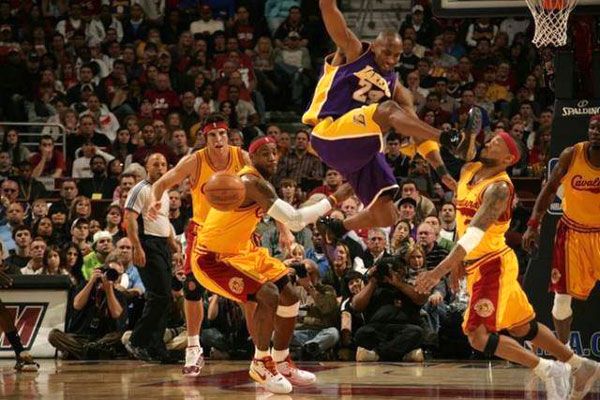
A better tagline for this photo would be Kung Fu Mamba...but since someone else already came up with that caption on Facebook (where I found this image on), I'll stick with what's in the title above. Technically, Kobe is pulling a Hurricane Kick (a la Ryu or Ken from Street Fighter II) on the wrong person here—LeBron is standing right behind you, KB24—but seeing as how the Lakers had the Cleveland Cavaliers' number in the last two years L.A. was the champion (2009 and 2010), we should let that one slide. The 2013-'14 NBA training camp will start soon! Not that it means anything to the Lake Show this year...or the Clippers. With such a loaded team, maybe CP3 and company will actually make it to the second round of the playoffs next spring. Maybe. That is all.

Kobe Bryant pulls a martial arts move during an L.A. Lakers game against the Cleveland Cavaliers.
Photo courtesy of Lakers Nation - Facebook.com

Wednesday, September 18, 2013

Happy Birthday, U.S. Air Force!

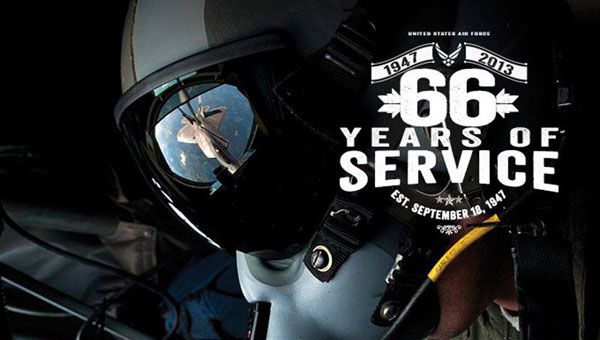
I'm posting this because 1.) It really is cool that the USAF is celebrating its 66th birthday today, 2.) This pilot's flight helmet and oxygen mask brings back pleasant memories of my HALO jump last April and 3.) An F-22 Raptor is reflected on the visor of this aviator...who if you're military-savvy is apparently working the refueling boom on a KC-135 Stratotanker. But I like this pic mostly because it reminds me of my high-altitude skydive last spring. Now where's the birthday cake?

Happy 66th Birthday, U.S. Air Force!
Photo courtesy of Pacific Battleship Center - Facebook.com

Monday, September 16, 2013

Sleepy Hollow...

The Headless Horseman welds an automatic rifle in SLEEPY HOLLOW.

So I watched the newest sci-fi thriller on FOX tonight, and all I can say is: The Headless Horseman welds an M-16?? I'm sold. Bring on next week's episode of Sleepy Hollow!

This show is The Following (the Bible's Book of Revelations plays an integral role in explaining the villains of Sleepy Hollow the same way Edgar Allan Poe's poems motivated Joe Carroll's cult followers in the Kevin Bacon TV drama) and Supernatural (like the CW show, Sleepy Hollow will hopefully last long enough for Death and his fellow Horsemen to almost succeed in bringing about the Apocalypse to the world) both rolled into one. (There are definitely other TV shows that this can be compared to, but I don't watch them so they don't count.) Awesome.

The main cast of SLEEPY HOLLOW.

This British Redcoat isn't what he appears to be in SLEEPY HOLLOW.

The British Redcoat is dressed as the Revolutionary War version of Bane (from THE DARK KNIGHT RISES) in SLEEPY HOLLOW.

Never bring a knife to a gunfight in SLEEPY HOLLOW. An axe whose blade is heated to 500 degrees, on the other hand...

It's obviously too late for John Cho to figure out that it's not wise to make a deal with the devil...especially in SLEEPY HOLLOW.

Welding an M-16, the Headless Horseman rides off into the sunset—err, sunrise, in SLEEPY HOLLOW.

Death and his fellow Horsemen are ready to bring about the Apocalypse in SLEEPY HOLLOW.

Sunday, September 15, 2013

My Jaegers for Pacific Rim (Part 3)!

My own PACIFIC RIM Jaeger...known as the Manila Assassin.

Just thought I'd share a few more Pacific Rim posters that I created recently. I promise that these Jaeger images will be the last ones I blog about...for today. Carry on!

LINK: Click here to view all of the Pacific Rim Jaegers that I created

My own PACIFIC RIM Jaeger...known as the Manila Assassin.

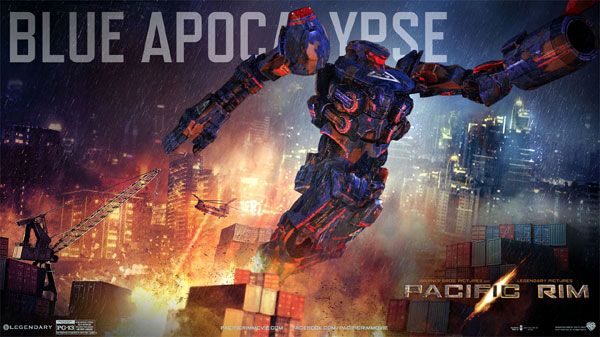
My own PACIFIC RIM Jaeger...known as the Blue Apocalypse.

My own PACIFIC RIM Jaeger...known as the Blue Apocalypse.

Friday, September 13, 2013

Voyager 1: Making Star Trek a Reality...(Kinda)

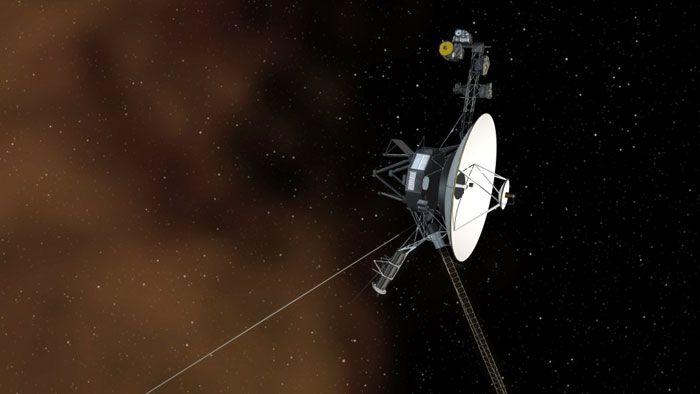
An art concept showing a Voyager spacecraft cruising through deep space.
NASA / JPL - Caltech

Note to Russian President Vladimir Putin: This is the newest reason why America is exceptional. Go NASA!

****

NASA Spacecraft Embarks on Historic Journey into Interstellar Space (Press Release - September 12)

NASA's Voyager 1 spacecraft officially is the first human-made object to venture into interstellar space. The 36-year-old probe is about 12 billion miles (19 billion kilometers) from our sun.

New and unexpected data indicate Voyager 1 has been traveling for about one year through plasma, or ionized gas, present in the space between stars. Voyager is in a transitional region immediately outside the solar bubble, where some effects from our sun are still evident. A report on the analysis of this new data, an effort led by Don Gurnett and the plasma wave science team at the University of Iowa, Iowa City, is published in Thursday's edition of the journal Science.

"Now that we have new, key data, we believe this is mankind's historic leap into interstellar space," said Ed Stone, Voyager project scientist based at the California Institute of Technology, Pasadena. "The Voyager team needed time to analyze those observations and make sense of them. But we can now answer the question we've all been asking -- 'Are we there yet?' Yes, we are."

Voyager 1 first detected the increased pressure of interstellar space on the heliosphere, the bubble of charged particles surrounding the sun that reaches far beyond the outer planets, in 2004. Scientists then ramped up their search for evidence of the spacecraft's interstellar arrival, knowing the data analysis and interpretation could take months or years.

Voyager 1 does not have a working plasma sensor, so scientists needed a different way to measure the spacecraft's plasma environment to make a definitive determination of its location. A coronal mass ejection, or a massive burst of solar wind and magnetic fields, that erupted from the sun in March 2012 provided scientists the data they needed. When this unexpected gift from the sun eventually arrived at Voyager 1's location 13 months later, in April 2013, the plasma around the spacecraft began to vibrate like a violin string. On April 9, Voyager 1's plasma wave instrument detected the movement. The pitch of the oscillations helped scientists determine the density of the plasma. The particular oscillations meant the spacecraft was bathed in plasma more than 40 times denser than what they had encountered in the outer layer of the heliosphere. Density of this sort is to be expected in interstellar space.

The plasma wave science team reviewed its data and found an earlier, fainter set of oscillations in October and November 2012. Through extrapolation of measured plasma densities from both events, the team determined Voyager 1 first entered interstellar space in August 2012.

"We literally jumped out of our seats when we saw these oscillations in our data -- they showed us the spacecraft was in an entirely new region, comparable to what was expected in interstellar space, and totally different than in the solar bubble," Gurnett said. "Clearly we had passed through the heliopause, which is the long-hypothesized boundary between the solar plasma and the interstellar plasma."

The new plasma data suggested a timeframe consistent with abrupt, durable changes in the density of energetic particles that were first detected on Aug. 25, 2012. The Voyager team generally accepts this date as the date of interstellar arrival. The charged particle and plasma changes were what would have been expected during a crossing of the heliopause.

"The team's hard work to build durable spacecraft and carefully manage the Voyager spacecraft's limited resources paid off in another first for NASA and humanity," said Suzanne Dodd, Voyager project manager, based at NASA's Jet Propulsion Laboratory (JPL), Pasadena, Calif. "We expect the fields and particles science instruments on Voyager will continue to send back data through at least 2020. We can't wait to see what the Voyager instruments show us next about deep space."

Voyager 1 and its twin, Voyager 2, were launched 16 days apart in 1977. Both spacecraft flew by Jupiter and Saturn. Voyager 2 also flew by Uranus and Neptune. Voyager 2, launched before Voyager 1, is the longest continuously operated spacecraft. It is about 9.5 billion miles (15 billion kilometers) away from our sun.

Voyager mission controllers still talk to or receive data from Voyager 1 and Voyager 2 every day, though the emitted signals are currently very dim, at about 23 watts -- the power of a refrigerator light bulb. By the time the signals get to Earth, they are a fraction of a billion-billionth of a watt. Data from Voyager 1's instruments are transmitted to Earth typically at 160 bits per second, and captured by 34- and 70-meter NASA Deep Space Network (DSN) stations. Traveling at the speed of light, a signal from Voyager 1 takes about 17 hours to travel to Earth. After the data are transmitted to JPL and processed by the science teams, Voyager data are made publicly available.

"Voyager has boldly gone where no probe has gone before, marking one of the most significant technological achievements in the annals of the history of science, and adding a new chapter in human scientific dreams and endeavors," said John Grunsfeld, NASA's associate administrator for science in Washington. "Perhaps some future deep space explorers will catch up with Voyager, our first interstellar envoy, and reflect on how this intrepid spacecraft helped enable their journey."

Scientists do not know when Voyager 1 will reach the undisturbed part of interstellar space where there is no influence from our sun. They also are not certain when Voyager 2 is expected to cross into interstellar space, but they believe it is not very far behind.

JPL built and operates the twin Voyager spacecraft. The Voyagers Interstellar Mission is a part of NASA's Heliophysics System Observatory, sponsored by the Heliophysics Division of NASA's Science Mission Directorate in Washington. NASA's DSN, managed by JPL, is an international network of antennas that supports interplanetary spacecraft missions and radio and radar astronomy observations for the exploration of the solar system and the universe. The network also supports selected Earth-orbiting missions.

The cost of the Voyager 1 and Voyager 2 missions -- including launch, mission operations and the spacecraft’s nuclear batteries, which were provided by the Department of Energy -- is about $988 million through September.

Source: NASA.Gov

****
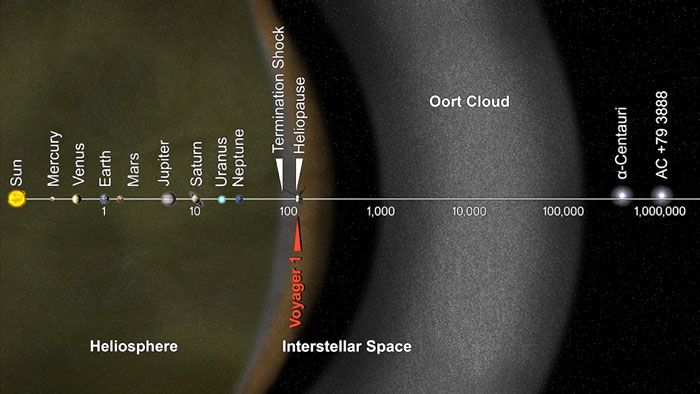
An art concept showing Voyager 1's current position out in deep space. The scale bar is measured in Astronomical Units, or AU (1 AU equals 93 million miles, or the distance between the Earth and the Sun).
NASA / JPL - Caltech

Thursday, September 12, 2013

MasterChef: Season 4

Much props to Luca Manfé for winning the top prize on the hit FOX TV show last night. The fact that Manfé was eliminated early on in Season 3 of MasterChef (in fact, I don't think he even made it past the auditions), only to try again this year and win $250,000 plus his own cookbook (and a trophy), shows what a feel-good American story this is...overlooking the fact that Manfé is European (change that to South African if Natasha Crnjac was the one who won yesterday, respectively). Anyways, Viva l'Italia!

Luca Manfé competes against Natasha Crnjac in the Season 4 finale of FOX's MASTERCHEF...on September 11, 2013.

Wednesday, September 11, 2013

12 Years Later...

God Bless America.

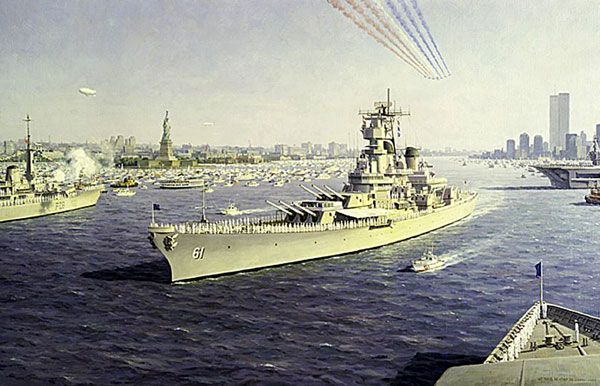
Just thought I'd commemorate 9/11 by posting these two pics—one new, one old—of New York City that I stumbled upon on Facebook today. The image directly below shows the USS Iowa sailing past the island of Manhattan with the Twin Towers of the World Trade Center looming in the background. In the very last photo of this entry, the new 1 World Trade Center stands majestically above the rest of the New York skyline...in a pic that was taken late last month. My fellow Americans should definitely be proud that we can get back up and recover after trying to be taken down by those who are threatened and/or jealous of our freedom. Go USA!

The USS Iowa sails past the island of Manhattan in this archival photo.
Photo courtesy of Pacific Battleship Center - Facebook.com

The 1 World Trade Center in New York City...as seen on August 30, 2013.
Photo courtesy of WTC Progress - Facebook.com