Saturday, May 31, 2014

One Earth: New Horizons Message...

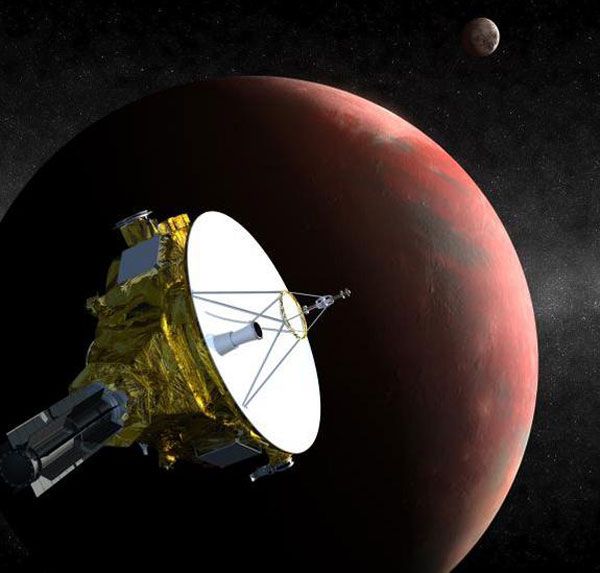
An artist's concept of NASA's New Horizons spacecraft approaching Pluto.
NASA

Two weeks ago today, the team behind the New Horizons Message Initiative (NHMI) announced that NASA has approved the project...paving the way for people around the world to submit photos, music and/or other files for this message beginning in late August. Now known as the One Earth: New Horizons Message (NHM), this crowd-sourced time capsule would be the digital version of the Golden Record heading into interstellar space aboard the twin Voyager spacecraft; the only difference being that anyone with an Internet connection can present anything (obscene material obviously excluded) that they feel best represents their idea of life on Earth. Images or songs by um, artists like Justin Bieber or Miley Cyrus could possibly be uploaded...though the NHMI team would not necessarily approve them for inclusion (seeing as how copyright issues would be involved). Click on any of the next two images below to visit the One Earth: NHM website to sign up and suggest one word that you feel should convey a particular theme about this planet in the message.

Support the One Earth: New Horizons Message.
Click above to visit the One Earth: New Horizons Message Website

The One Earth: NHM webpage becomes active on August 25...which marks 25 years since Voyager 2 flew past the giant planet Neptune, and will also be the day that the New Horizons spacecraft itself crosses the ice giant's orbit on its way to its primary destination: the dwarf planet Pluto. The message could be transmitted to New Horizons as early as late 2016—when all data from next year's Pluto encounter should be downloaded from the distant probe. However, the message's transmission could be delayed for a few years if the New Horizons mission team finds a suitable Kuiper Belt Object (KBO) to explore after the Pluto flyby. However, the mission team is currently having a hard time finding a KBO since any potential target is blocked out by starlight in the Milky Way's galactic center (towards which New Horizons is eventually headed). The New Horizons mission team is hoping that using the Hubble Space Telescope (which the team is applying for observing time on) will finally help them find a KBO.
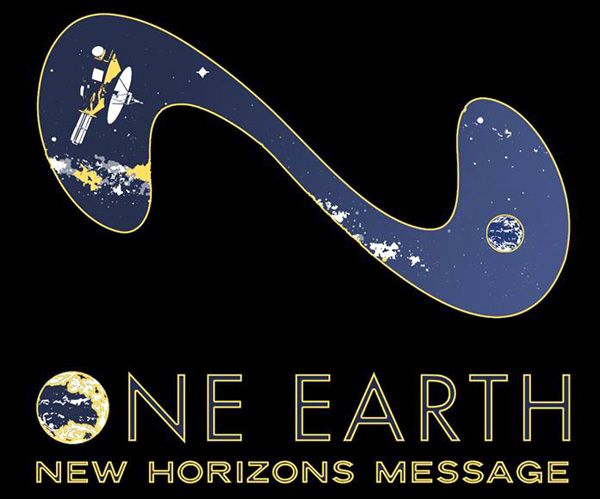
Support the One Earth: New Horizons Message.
Click above to visit the One Earth: New Horizons Message Website

Not being able to find a KBO for New Horizons to fly past is both a good and bad thing... It's a bad thing in that Pluto will be the only planetary body in the Kuiper Belt that a man-made object visits for at least the next three decades or so. It's a good thing in that the lack of another KBO target to explore all but brings New Horizons' mission to an end after 2016...thus paving the way for it to officially become a time capsule that has the chance to outlive the Third Rock from the Sun (a.k.a. Earth) from which it came. This totally sounds exciting—though I'm hoping that a KBO is eventually found for New Horizons to venture to. I've waited about nine years for an opportunity like this to present itself; I can wait a few more.
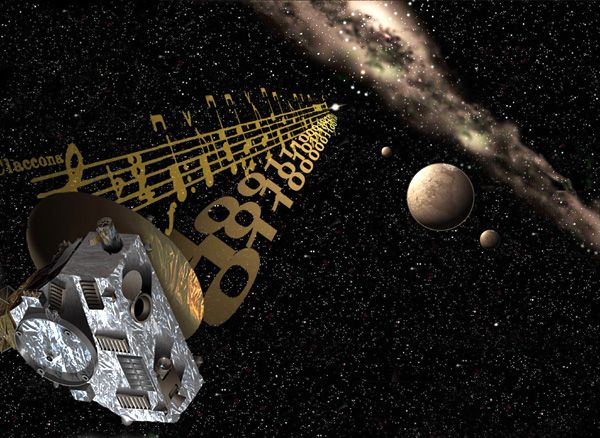
One Earth: New Horizons Message artwork.
Image courtesy of New Horizons Message Fan Page - Facebook.com

Wednesday, May 28, 2014

10 Years Ago, Today!

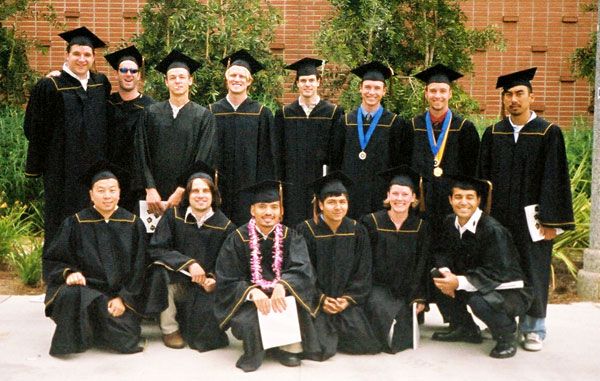
On this day in 2004, I graduated from Cal State Long Beach after studying at this awesome campus since August of 1998. I posted a previous entry four years ago about what I accomplished since my commencement ceremony at CSULB...but this obviously doesn't include the background acting and production assistant gigs that I've starting doing in mid-2011. You can visit my IMDb page to see some of the shows I've worked on over the last three years. And yes, I'm still working at that marketing firm that does test screenings for some of the major film studios. Happy Hump Day, folks!

My classmates and I (with the purple lei) pose for a group photo after our graduation ceremony at Cal State Long Beach, on May 28, 2004.

Monday, May 26, 2014

Photo of the Day...

One of my friends posted this on Facebook today. So I guess some of us should be ashamed of ourselves for caring about how much X-Men: Days of Future Past and Godzilla made at the box office during this 4-day weekend, eh? Just being facetious.

Remembering the true meaning of Memorial Day.

Sunday, May 25, 2014

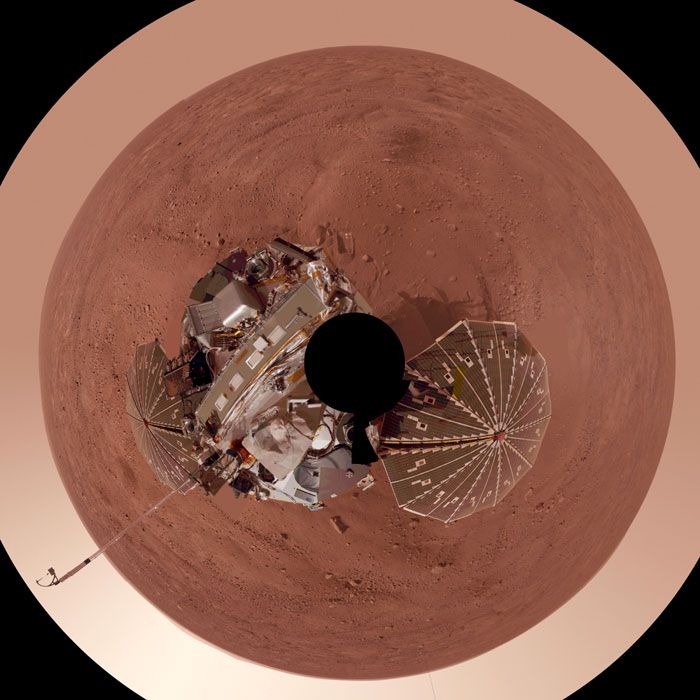
Hail Phoenix!

A bird's-eye view of the Phoenix lander on Mars.
NASA / JPL

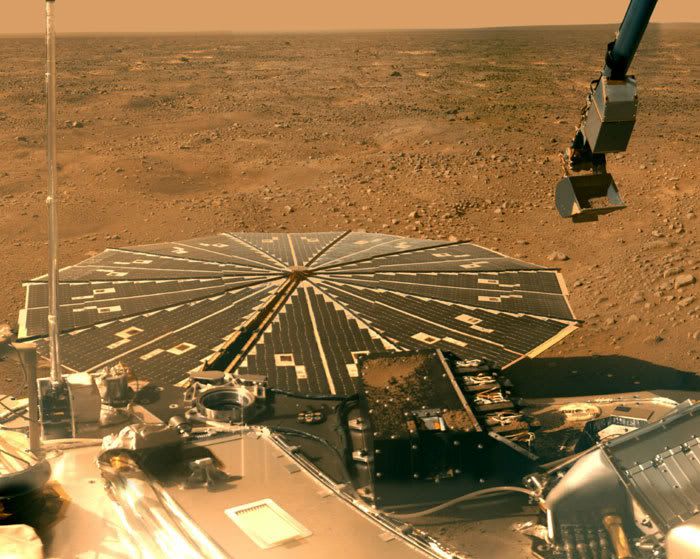
Today marks six years since NASA's Phoenix lander successfully touched down at the north polar region on Mars. Here's hoping history repeats itself when the InSight lander (whose design will be based on that of Phoenix...but with some mission-related differences to the hardware) arrives at the Red Planet two years from now...

The Martian northern plain, with one of Phoenix's solar panels and a portion of the lander's flight deck visible in the foreground.
NASA / JPL

Friday, May 23, 2014

Have A Happy Memorial Day Weekend, Everyone!

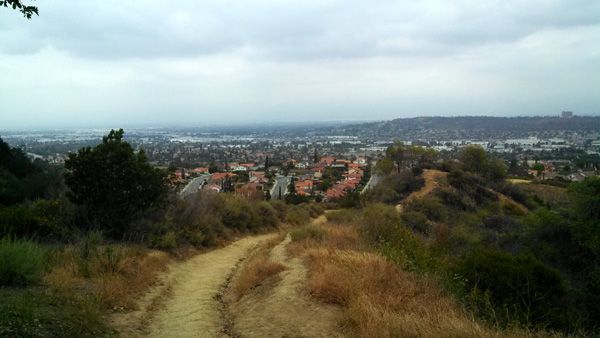
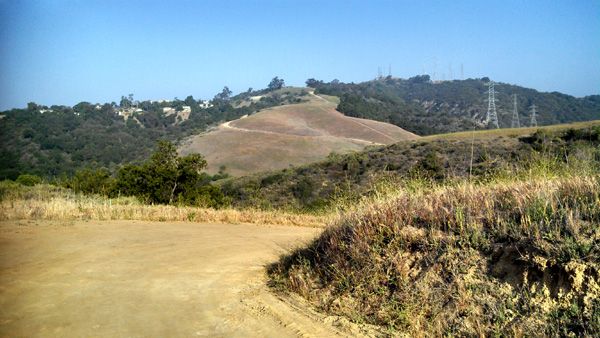
Just thought I'd share this smartphone pic that I took while I went hiking with Nancy (yes, we finally hung out after more than a week of texting her to see if she was free to do um, anything) this morning. This is a great view from a park that's only a few miles from my house. Won't tell you which city specifically...only that the 626 area code rules, so don't talk smack, yo! Yea, that was lame. Anyways, I'm wondering when's the next time I'll go hiking with Nancy—and where? Joshua Tree? San Diego? Pacific Palisades (which was one of the other choices for today's hike...despite the fact it's 60 miles from my house and about 80 miles from where Nancy lives)? Either way, I don't mind commuting as long as I chill with my girl again. Carry on.

A view of my hometown from a trail Nancy and I used for our hike...on May 23, 2014.

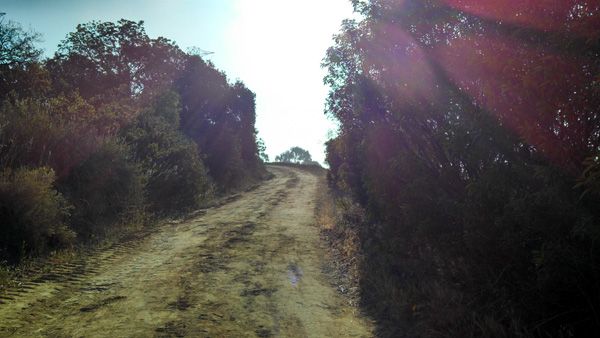
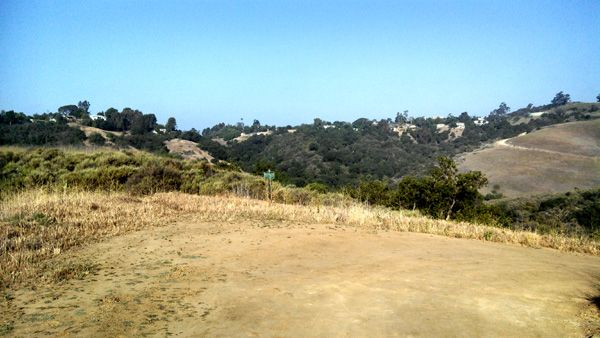
UPDATE (May 26 - Memorial Day): I went hiking with Nancy again at a different trail this morning. Originally, we were to meet up around 6 AM, but we both showed up around 7 AM and hiked for two hours. Here are photos from today's excursion... All that needs to happen now is for us to get together for a cup of coffee, hah.

A view from the trail Nancy and I used for our hike on May 26, 2014.

Another view from the trail Nancy and I used for our hike on May 26, 2014.

Another view from the trail Nancy and I used for our hike on May 26, 2014.

Wednesday, May 21, 2014

Photo of the Day...

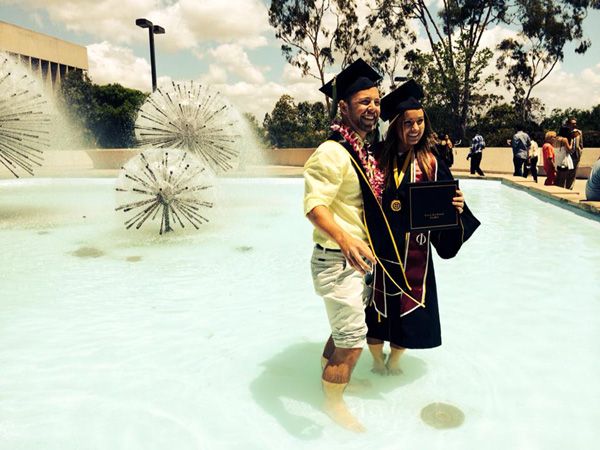
This week marked the start of commencement ceremonies for all of the departments at Cal State Long Beach...with the 10-year anniversary of my graduation from CSULB's Film & Electronic Arts Department rapidly approaching (on May 28). What I want to know is, since when were students (or at least graduates) allowed to stand inside the Lyman Lough Fountain outside of Brotman Hall and take photos? I think many of you would agree with me when I say that all of the cool things always happen after we've graduated from school—whether it's college or high school or whatever. Just being facetious...

And Go Beach!

A graduate poses for a photo inside the Lyman Lough Fountain outside of CSULB's Brotman Hall, on May 20, 2014.
Image courtesy of California State University, Long Beach Fan Page - Facebook.com

Monday, May 19, 2014

Building InSight About the Red Planet...

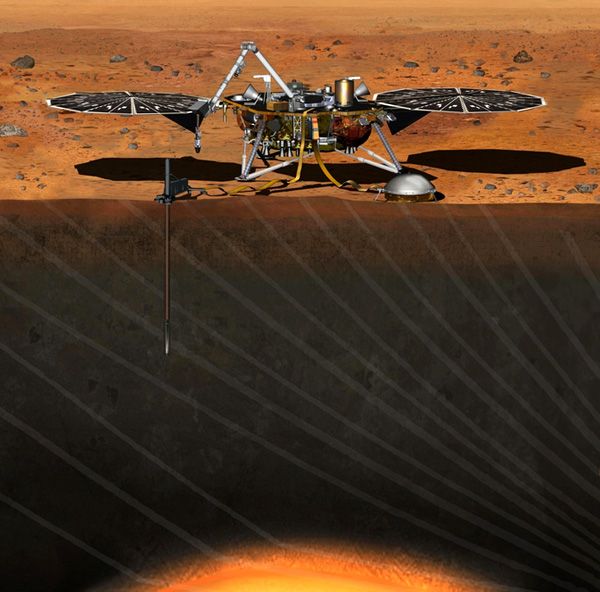
An artist's concept of the InSight lander on the surface of Mars.
NASA / JPL

Construction to Begin on NASA Mars Lander Scheduled to Launch in 2016 (Press Release)

NASA and its international partners now have the go-ahead to begin construction on a new Mars lander after it completed a successful Mission Critical Design Review on Friday.

NASA’s Interior Exploration Using Seismic Investigations, Geodesy and Heat Transport (InSight) mission will pierce beneath the Martian surface to study its interior. The mission will investigate how Earth-like planets formed and developed their layered inner structure of core, mantle and crust, and will collect information about those interior zones using instruments never before used on Mars.

InSight will launch from Vandenberg Air Force Base, on the central California coast near Lompoc, in March 2016. This will be the first interplanetary mission ever to launch from California. The mission will help inform the agency’s goal of sending a human mission to Mars in the 2030s.

InSight team leaders presented mission-design results last week to a NASA review board, which approved advancing to the next stage of preparation.

“Our partners across the globe have made significant progress in getting to this point and are fully prepared to deliver their hardware to system integration starting this November, which is the next major milestone for the project," said Tom Hoffman, InSight Project Manager of NASA's Jet Propulsion Laboratory (JPL), Pasadena, California. "We now move from doing the design and analysis to building and testing the hardware and software that will get us to Mars and collect the science that we need to achieve mission success."

To investigate the planet's interior, the stationary lander will carry a robotic arm that will deploy surface and burrowing instruments contributed by France and Germany. The national space agencies of France and Germany -- Centre National d’Etudes Spatiales (CNES) and Deutsches Zentrum für Luft- und Raumfahrt (DLR) -- are partnering with NASA by providing InSight's two main science instruments.

The Seismic Experiment for Interior Structure (SEIS) will be built by CNES in partnership with DLR and the space agencies of Switzerland and the United Kingdom. It will measure waves of ground motion carried through the interior of the planet, from "marsquakes" and meteor impacts. The Heat Flow and Physical Properties Package, from DLR, will measure heat coming toward the surface from the planet's interior.

"Mars actually offers an advantage over Earth itself for understanding how habitable planetary surfaces can form," said Bruce Banerdt, InSight Principal Investigator from JPL. "Both planets underwent the same early processes. But Mars, being smaller, cooled faster and became less active while Earth kept churning. So Mars better preserves the evidence about the early stages of rocky planets' development."

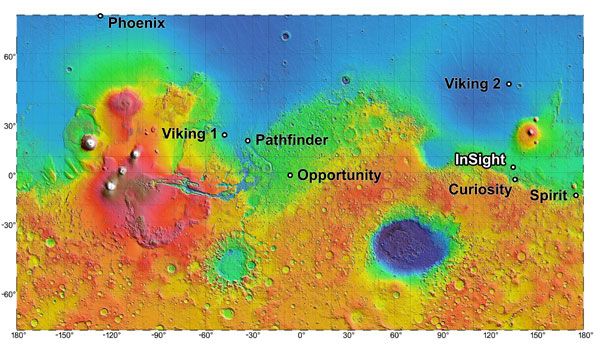
The three-legged lander will go to a site near the Martian equator and provide information for a planned mission length of 720 days -- about two years. InSight adapts a design from the successful NASA Phoenix Mars Lander, which examined ice and soil on far-northern Mars in 2008.

"We will incorporate many features from our Phoenix spacecraft into InSight, but the differences between the missions require some differences in the InSight spacecraft," said InSight Program Manager Stu Spath of Lockheed Martin Space Systems Company, Denver, Colorado. "For example, the InSight mission duration is 630 days longer than Phoenix, which means the lander will have to endure a wider range of environmental conditions on the surface."

Guided by images of the surroundings taken by the lander, InSight's robotic arm will place the seismometer on the surface and then place a protective covering over it to minimize effects of wind and temperature on the sensitive instrument. The arm will also put the heat-flow probe in position to hammer itself into the ground to a depth of 3 to 5 yards (2.7 to 4 1/2 meters).

Another experiment will use the radio link between InSight and NASA's Deep Space Network antennas on Earth to precisely measure a wobble in Mars' rotation that could reveal whether Mars has a molten or solid core. Wind and temperature sensors from Spain's Centro de Astrobiologia and a pressure sensor will monitor weather at the landing site, and a magnetometer will measure magnetic disturbances caused by the Martian ionosphere.

InSight's international science team is made up of researchers from Austria, Belgium, Canada, France, Germany, Japan, Poland, Spain, Switzerland, the United Kingdom and the United States. JPL manages InSight for NASA's Science Mission Directorate, Washington. InSight is part of NASA's Discovery Program of competitively selected missions. NASA's Marshall Space Flight Center in Huntsville, Alabama, manages the Discovery Program. Lockheed Martin will build the lander and other parts of the spacecraft at its Littleton, Colorado, facility near Denver.

Source: NASA.Gov

****

A Martian map showing InSight's future landing site as well as the locations of past and present NASA spacecraft on the Red Planet's surface.
NASA / JPL - Caltech

Friday, May 16, 2014

Cool Space Stuff To Happen Above Hawaii...

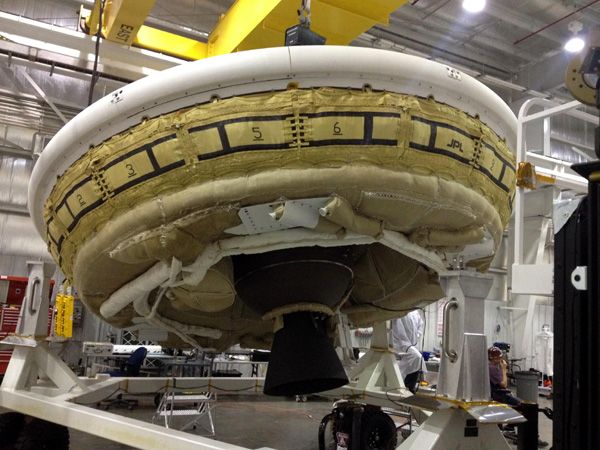
NASA's Supersonic Flight Dynamics Test Vehicle is prepped for its flight at the U.S. Navy's Pacific Missile Range Facility in Kauai, Hawaii.
NASA / JPL - Caltech

NASA's Saucer-Shaped Craft Preps for Flight Test (Press Release)

NASA's Low-Density Supersonic Decelerator (LDSD) project, a rocket-powered, saucer-shaped test vehicle, has completed final assembly at the U.S. Navy's Pacific Missile Range Facility in Kauai, Hawaii.

This experimental flight test is designed to investigate breakthrough technologies that will benefit future Mars missions, including those involving human exploration. Three weeks of testing, simulations and rehearsals are planned before the first launch opportunity on the morning of June 3. LDSD was built at NASA's Jet Propulsion Laboratory, Pasadena, California, and shipped to Kauai for final assembly and preparations.

"Our Supersonic Flight Dynamics Test Vehicle number 1 arrived at the Navy's Pacific Missile Range Facility on April 17," said Mark Adler, project manager of the Low Density Supersonic Decelerator project from JPL. "Since then, we have been preparing it for flight. One of the last big assemblies occurred on April 30, when we mated the vehicle with its Star-48 booster rocket."

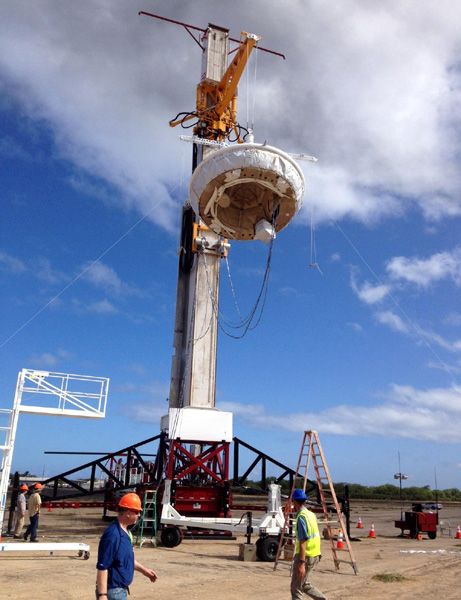
During the June experimental flight test, a balloon will carry the test vehicle from the Hawaii Navy facility to an altitude of about 120,000 feet. There, it will be dropped and its booster rocket will quickly kick in and carry it to 180,000 feet, accelerating to Mach 4. Once in the very rarified air high above the Pacific, the saucer will begin a series of automated tests of two breakthrough technologies.

In order to get larger payloads to Mars, and to pave the way for future human explorers, cutting-edge technologies like LDSD are critical. Among other applications, this new space technology will enable delivery of the supplies and materials needed for long-duration missions to the Red Planet.

The upper layers of Earth's stratosphere are the most similar environment available to match the properties of the thin atmosphere of Mars. The Low Density Supersonic Decelerator mission developed this test method to ensure the best prospects for effective testing of the new and improved technologies here on Earth.

Anyone with Internet access will be able to watch live as video from the June test is relayed from the vehicle to the ground. The low-resolution images from the saucer are expected to show the vehicle dropping away from its high-altitude balloon mothership and then rocketing up to the very edge of the stratosphere. The test vehicle will then deploy an inflatable Kevlar tube around itself, called the Supersonic Inflatable Aerodynamic Decelerator (SIAD). After the SIAD inflates, the test vehicle will deploy a mammoth parachute called the Supersonic Disk Sail Parachute.

While people watching at home may be fascinated by how these two new technologies operate, the NASA flight team will actually be concentrating on a more fundamental question - "Will the test vehicle work as planned?"

"This first test is a true experimental flight test," said Ian Clark, the LDSD principal investigator from JPL. "Our goal is to get this first-of-its-kind test vehicle to operate correctly at very high speeds and very high altitudes."

Although there is no guarantee that this first test will be successful, regardless of the outcome, the LDSD team expects to learn a great deal from the test. NASA has two more saucer-shaped test vehicles in the pipeline, with plans to test them from Hawaii in summer of 2015.

"We are pushing the envelope on what we know," said Clark. "We are accepting higher risk with these test flights than we would with a space mission, such as the Mars Science Laboratory. We will learn a great deal even if these tests, conducted here in Earth's atmosphere at relatively low cost, fail to meet some of the mission objectives."

As NASA plans increasingly ambitious robotic missions to Mars, laying the groundwork for even more complex human science expeditions to come, the spacecraft needed to land safely on the Red Planet's surface will become larger and heavier. This new technology will enable those important missions.

Source: Jet Propulsion Laboratory

NASA's Supersonic Flight Dynamics Test Vehicle undergoes a Range Compatibility Test at the U.S. Navy's Pacific Missile Range Facility in Kauai, Hawaii.
NASA / JPL - Caltech

Tuesday, May 13, 2014

Food for Thought...

Apparently, I'm meant to do a HALO jump in Tennessee but not chillin' with a girl I like at work and getting free ice cream with her in Los Angeles this evening. Yep, I'm talking about Nancy. And no, I never spent time with her outside of work before. The plan to hang out today was set up last Thursday but quickly fell through like a tree crashing through the roof of a mobile home in an Oklahoma tornado about two hours ago. (Great analogy, eh?) I'm typing this entry while still feeling the disappointment... Carry on.

Sunday, May 11, 2014

Meme of the Day, Part 2...

The image below made its round on Facebook last week. Here's an answer to this question: Most inmates don't receive cash allowances in prison and the chances of students shanking each other and rioting over a lack of food isn't very high unless they enjoy the prospect of suspension and/or expulsion from the school. That's why sack lunches were invented, smart alecks...

Oh, and Happy Mother's Day! Carry on.

Captain Picard of STAR TREK is the subject of this faulty meme.
Image courtesy of Mandatory Fan Page - Facebook.com